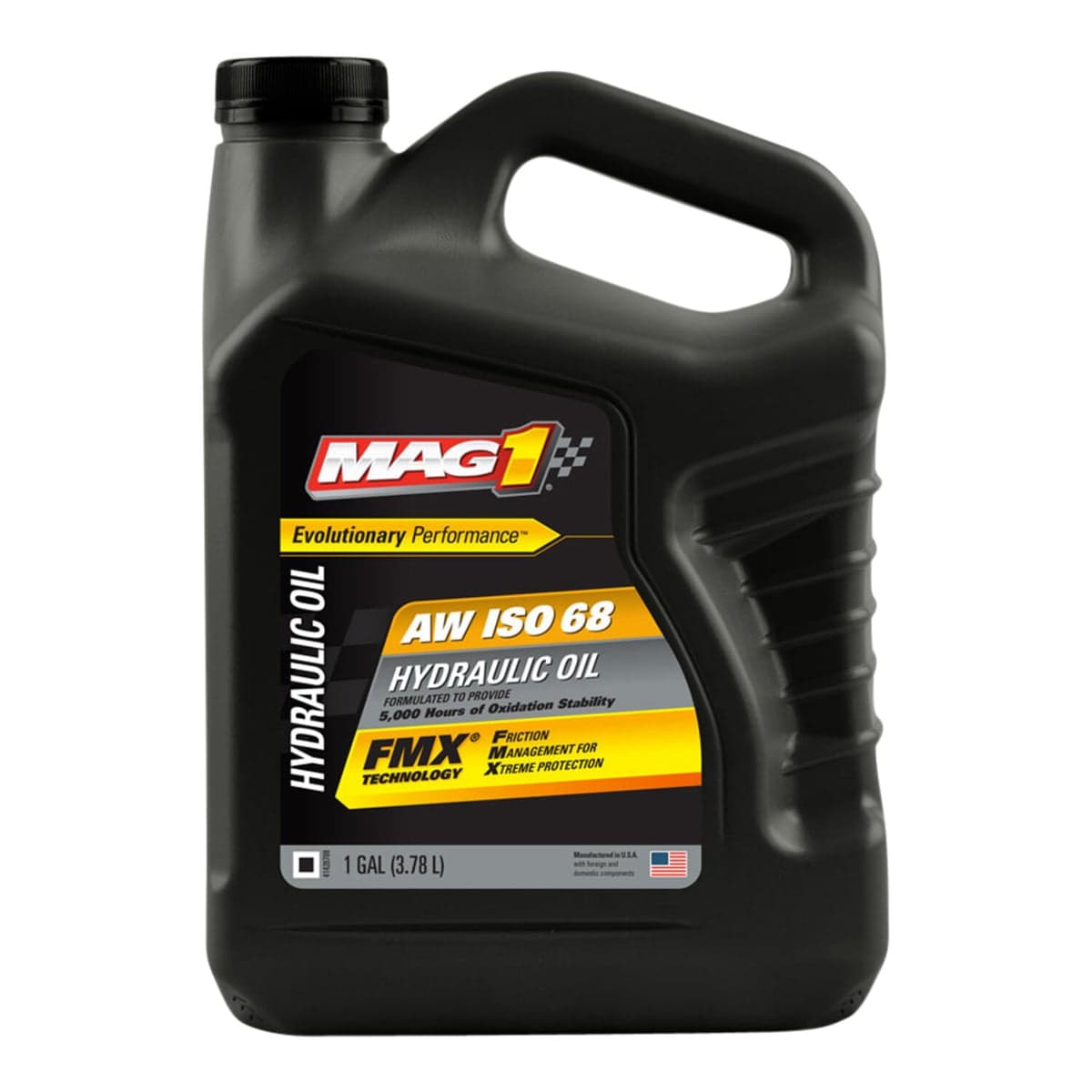
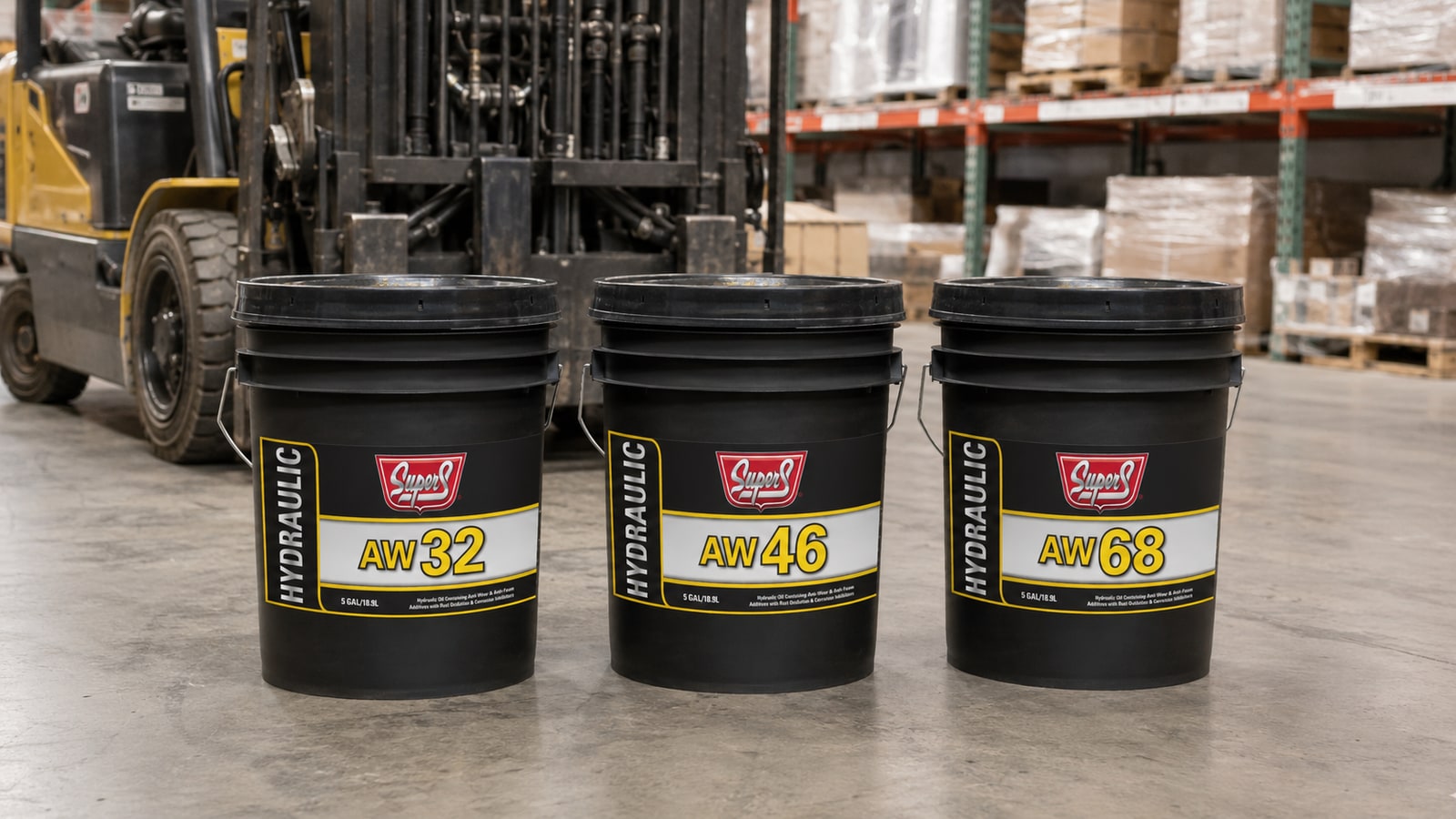
Match the grade to the machine and the ambient temperature: AW 32 for cold climates and high-speed systems, AW 46 as the all-around default for most mobile equipment in moderate to warm conditions, and AW 68 for heavy or hot-running gear where you need a thicker film. The numbers are ISO viscosity grades (ISO VG 32, 46, 68), and the real answer is almost always written on your machine's hydraulic reservoir cap or in the operator's manual. We stock all three as American Oil anti-wear hydraulic oil in 5-gallon pail, 55-gallon drum, and tote, and a quick reading of this guide plus the spec on your tank tells you which to put on your shelf. If you already know your grade, open a wholesale account at aoilw.com and we will quote you by the drum or tote.
What the AW number actually means
AW stands for anti-wear, the additive package (typically zinc-based ZDDP) that protects pumps and valves under pressure. The number after it is the ISO viscosity grade, defined by ISO 3448, measured in centistokes at 40 degrees Celsius. AW 32 is roughly 32 cSt at 40 C, AW 46 is roughly 46 cSt, and AW 68 is roughly 68 cSt. Higher number means a thicker oil at operating temperature.
That is the whole logic: thinner oil flows faster and runs cooler in cold weather, thicker oil holds a stronger film under heat and load. ISO VG 46 sits in the middle, which is why it is the most common grade on the shelf.
The fast answer by machine and climate
Most hydraulic equipment is engineered around one of these three grades. When in doubt, the manual wins, but here is how the field generally breaks down.
AW 32: cold and fast
- High-speed hydraulic systems and many machine-tool power units that spin fast and want a thinner oil.
- Outdoor equipment in genuinely cold winter climates, where AW 46 would be too stiff at start-up.
- Some Bobcat and older skid-steer hydraulic systems spec a 32-weight in cold regions; check the door decal.
A thinner oil in cold weather means the pump is not fighting a cold, stiff fluid every morning, which reduces cavitation and start-up wear.
AW 46: the all-around default
- Mobile construction equipment in moderate to warm climates: most excavators, backhoes, skid steers, and wheel loaders.
- Caterpillar, John Deere, Case, and Komatsu mobile hydraulics commonly accept an ISO VG 46 in temperate conditions.
- Industrial power units, presses, and injection-molding machines running indoors at stable temperatures.
If you run a mixed fleet in South Florida or anywhere warm and you want to carry one hydraulic grade, AW 46 is the one that covers the most machines. We stock it heaviest for exactly that reason.
AW 68: heavy, hot, and hard-working
- Equipment running in sustained high heat or under heavy continuous load, where AW 46 would thin out too far.
- Many log splitters call for AW 46 or AW 68, and AW 68 is the safer pick for one worked hard in summer heat.
- Older or high-clearance pumps that have loosened with wear and benefit from a thicker film to hold pressure.
- Some forklift hydraulic and transmission systems and industrial gearboxes that specify an ISO VG 68.
In hot climates and on machines that never get a break, the thicker film of AW 68 is cheap insurance against pump wear.
How to read your machine instead of guessing
The grade is not a preference, it is an engineering call the manufacturer already made. Find it in one of these places before you order:
- The reservoir cap or a decal on the hydraulic tank.
- The operator's or service manual, under hydraulic fluid specifications.
- The OEM's fluid bulletin, which often lists an ISO VG range plus an ambient-temperature chart.
If the manual gives a temperature chart, use it. A machine that sees both a cold morning and a hot afternoon may list AW 32 below a cutoff and AW 46 or AW 68 above it. Pick for the conditions the machine actually works in most.
Can you mix or substitute grades?
Anti-wear hydraulic oils of the same type and additive chemistry are generally miscible, so topping off an AW 46 system with a little AW 46 from a different supplier will not hurt anything. Mixing grades, say AW 32 into an AW 68 system, shifts the effective viscosity and is something to avoid except as a short-term get-home measure. When you switch grades deliberately, the clean way is to drain and refill rather than blend.
If a customer asks for a brand we do not carry, we match it to the equivalent ISO VG in our American Oil anti-wear line and note it as ours. The ISO grade is the spec that has to match; the label on the pail does not.
Why volume buyers lean to drums and totes
For a shop or fleet that goes through hydraulic oil steadily, the container is a margin decision. A pail is right for a single machine or a slow-moving grade you keep on hand. Once a grade turns over fast enough that you are opening pails every week, the drum and then the tote lower your cost per gallon and cut the number of empties you handle and dispose of.
The math is simple: the more of a grade you actually use, the bigger the format should be. AW 46 is usually the first grade worth buying by the tote because it moves the fastest. AW 32 and AW 68, unless you run a lot of cold-climate or heavy-duty equipment, often make sense by the drum. We carry all three in pail, drum, and tote so you can size each grade to its own turnover instead of overbuying the slow ones.
Open a wholesale account
Tell us your fleet and the grades you run, and we will set you up with American Oil AW 32, AW 46, and AW 68 sized to your turnover, pail to tote. Open a wholesale account at aoilw.com and we will quote you by the drum and tote.
By Danilo Hernandez, CFO, American Oil Wholesale and Distribution.
Sources
- ISO 3448: Industrial liquid lubricants, ISO viscosity classification (the standard that defines VG 32, 46, and 68).
- API and SAE technical references on hydraulic fluid viscosity and anti-wear (ZDDP) additive function.
- OEM hydraulic fluid bulletins and operator manuals (Caterpillar, John Deere, Case, Komatsu, Bobcat) for machine-specific ISO VG and ambient-temperature recommendations.