European vehicles require oil that meets ACEA performance categories and, in most cases, a manufacturer-specific approval code, and API SP certification alone does not satisfy those requirements. A shop in South Florida servicing BMW, Mercedes-Benz, Volkswagen, Audi, or Porsche needs dedicated European-spec grades alongside its standard API lineup, and stocking the wrong oil means putting an unapproved lubricant into a warranty-covered engine. American Oil Wholesale and Distribution (aoilw.com), a Hialeah-based full-line distributor, carries European-spec motor oil by the case and drum on the same wholesale account as your standard API grades, DEF, and coolant.
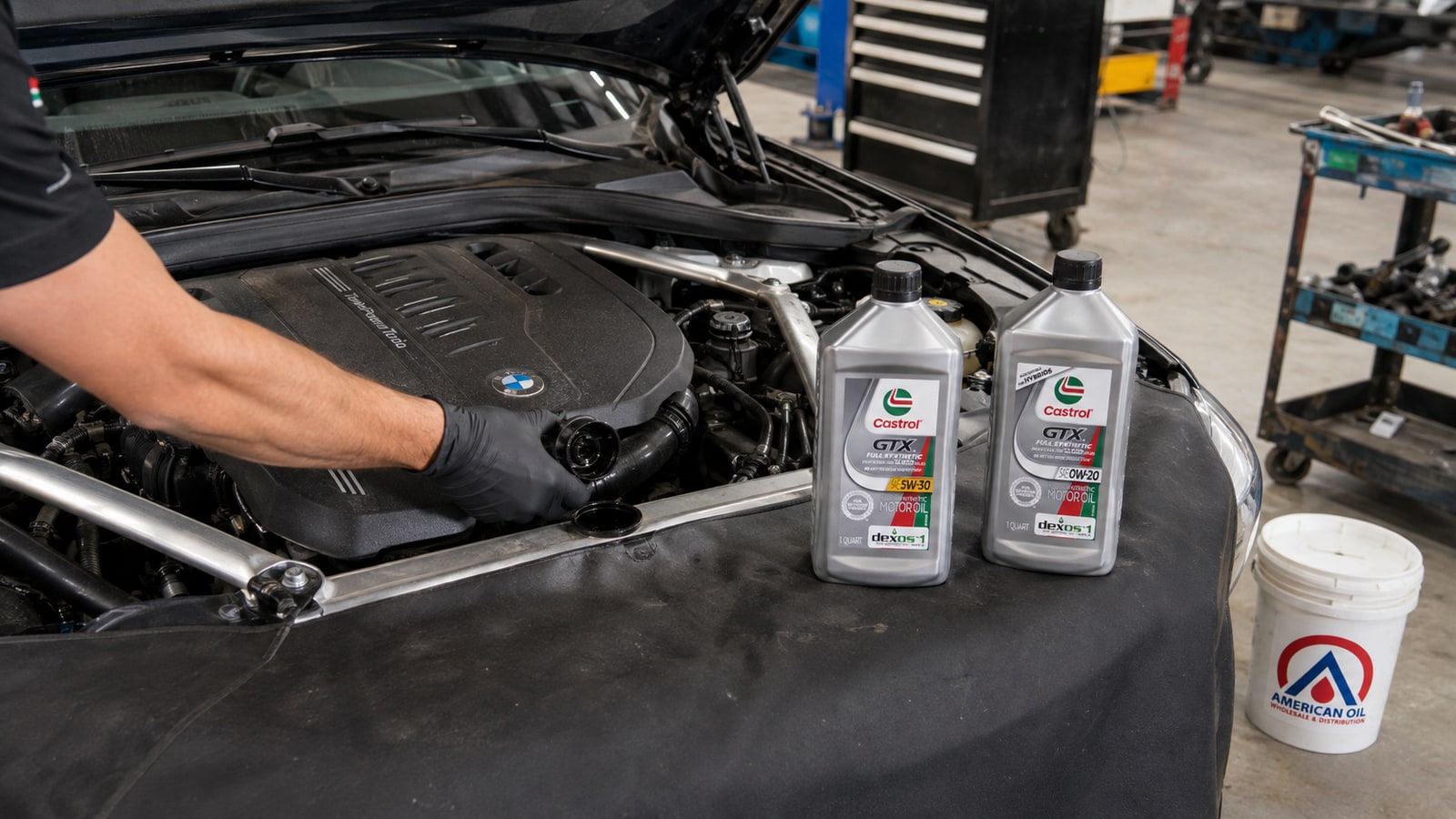
If you run a shop in Coral Gables, Brickell, Aventura, or anywhere in Miami-Dade where European vehicles are a steady share of the customer mix, you have already seen the situation: a BMW 3 Series owner hands you a bottle of full synthetic that says 0W-40, and the question is whether that bottle is the right 0W-40 for that engine. The answer is not in the API donut. This guide explains how the ACEA spec system works, which categories and approvals come up most often for a South Florida shop, what to stock, and how to order it wholesale.
What ACEA is and why it exists alongside API
ACEA stands for Association des Constructeurs Européens d'Automobiles, the European Automobile Manufacturers' Association. ACEA publishes the European Oil Sequences, the performance framework that European OEMs use to define their engine oil requirements. The sequences are independent of the API/ILSAC system: an oil carrying API SP is not automatically ACEA-compliant, and meeting an ACEA category does not replace a manufacturer-specific approval.
The gap between the systems exists because European OEMs, particularly German manufacturers, developed tighter engine oil requirements around extended drain intervals, particulate filter protection, and turbocharger performance. ACEA filled that gap with its own performance categories, and OEMs built their branded approvals on top of the ACEA baseline.
The practical result for a shop: every European vehicle has a spec hierarchy. At the base is the ACEA category. On top of that is usually an OEM approval code. The vehicle owner's manual names the OEM approval, and that approval is the authoritative requirement.
The ACEA categories that matter for a South Florida shop
ACEA 2021 European Oil Sequences defines several categories. For a shop servicing the European vehicles common in South Florida, three are relevant.
A3/B4 is the high-performance category for gasoline (A) and diesel (B) light-duty engines. ACEA sets the minimum high-temperature high-shear viscosity (HTHS, the measure of film protection under heat and load) at 3.5 mPa·s for A3/B4, measured at 150°C per the ACEA 2021 European Oil Sequences. This level suits extended drain intervals and higher-output engines. BMW LL-01 and Porsche A40 approvals align with A3/B4 performance. Typical grades: 0W-40 and 5W-40.
C3 is the catalyst-compatible, low-SAPS category that is now the most widely required spec for modern European vehicles. HTHS minimum is also 3.5 mPa·s (ACEA 2021), meaning C3 protects the engine film at the same level as A3/B4, but it reduces sulfated ash, phosphorus, and sulfur content to protect diesel particulate filters and three-way catalysts. BMW LL-04 and Mercedes-Benz 229.51 both require C3 performance or better. Typical grades: 0W-40, 5W-30, 5W-40.
C2 is another catalyst-compatible category with a lower HTHS minimum of 2.9 mPa·s (ACEA 2021). It appears in some French brand OEM specs. For most South Florida shops primarily servicing German brands, C2 is a spec to recognize rather than a frontline stocking item.
The ACEA category does not replace the OEM approval. A bottle carrying ACEA C3 is a necessary but not sufficient step; the specific OEM approval on the label confirms the oil has been tested and licensed by that manufacturer.
OEM approvals: the codes on the bottle that matter most
BMW LL-04 is BMW's approval introduced in 2004, initially for DPF-equipped diesel engines and extended to particulate filter-equipped gasoline vehicles in later model years. It requires ACEA C3 performance and low-SAPS chemistry, and appears as the required spec across BMW 1, 3, 5, 7, X, and Z series models, particularly diesels and more recent gasoline engines. BMW LL-01, introduced in 2001 for gasoline engines without particulate filter restrictions, aligns with A3/B4 performance. Always check the oil filler cap or the owner's manual, since diesels and gasoline engines in the same model family can call for different approvals.
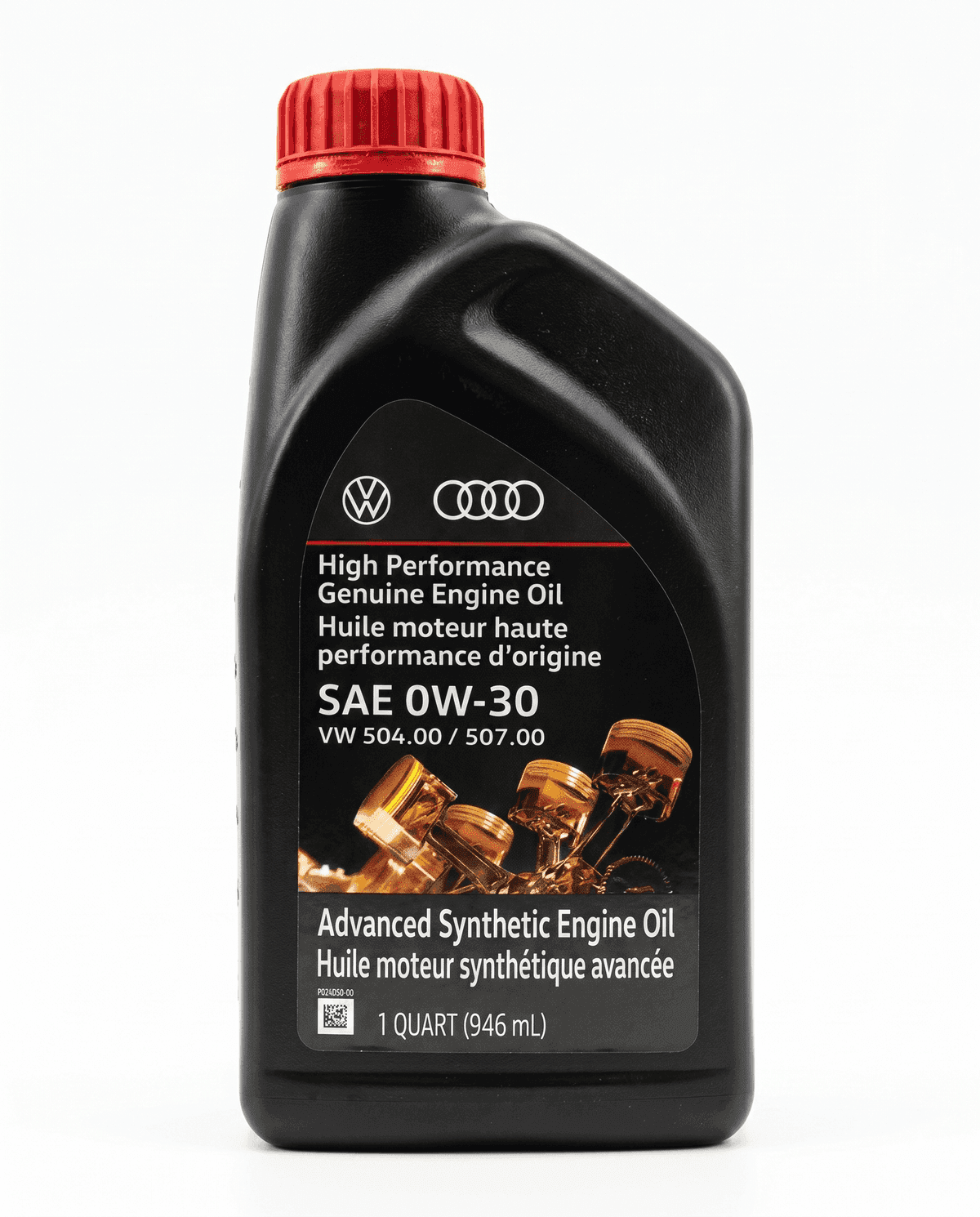
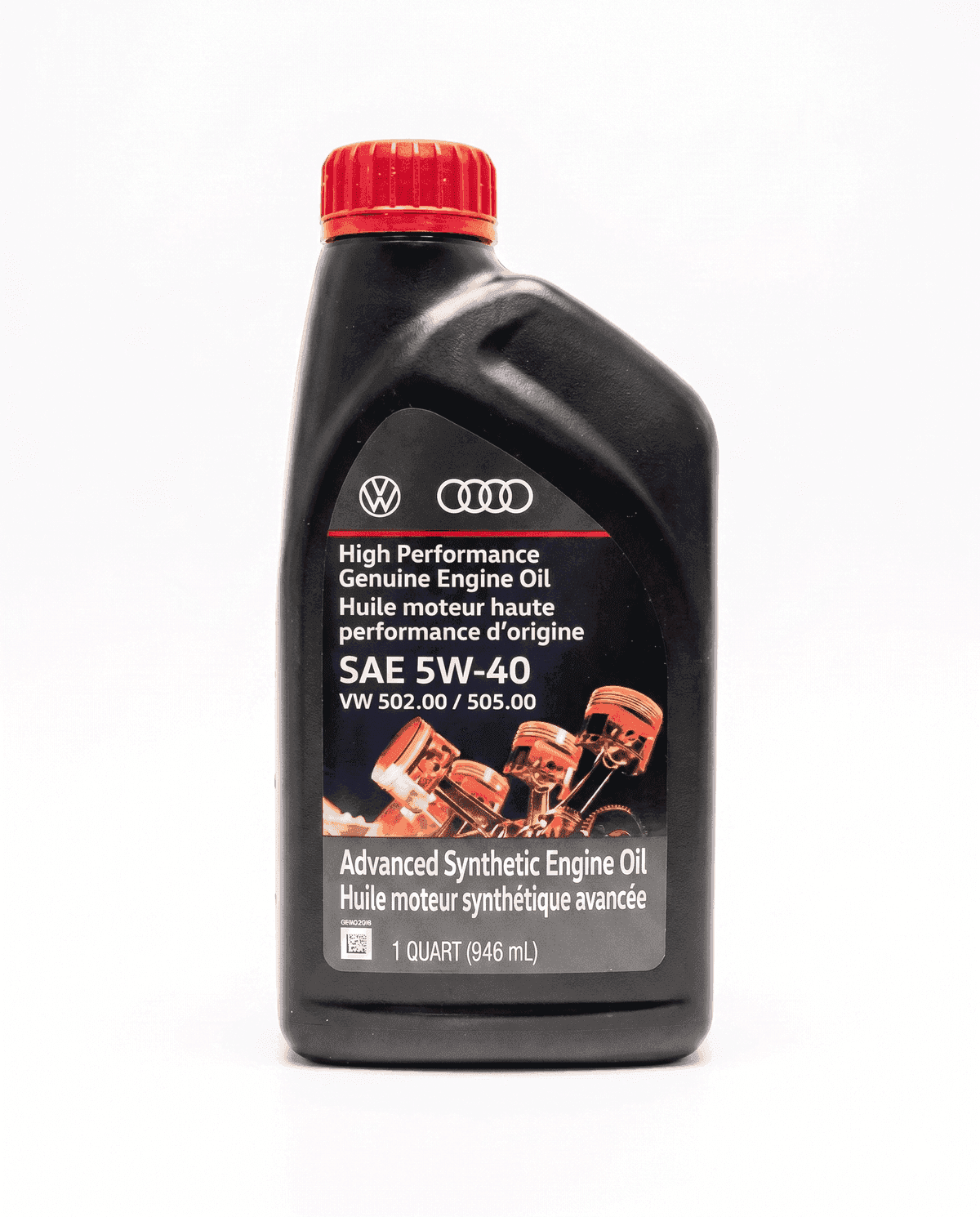
VW Group specs (504.00 / 507.00) are Volkswagen Group's proprietary approval codes published by VW Group directly. VW 504.00 covers gasoline engines with extended drain intervals; VW 507.00 covers diesel engines. Both are low-SAPS specs tied to VW Group's own bench tests. A bottle that carries a VW 504.00 or 507.00 approval has passed VW Group's own testing. Older VW Group specs such as 502.00 and 505.01 are still required for earlier model years; the manual wins.
Mercedes-Benz 229.5 and 229.51 are MB's two main approvals for light-duty vehicles. MB 229.5 aligns with A3/B4 performance and is common on older and higher-output MB engines running 0W-40 or 5W-40. MB 229.51 requires low-SAPS performance in line with C3 and is required on newer Mercedes engines to protect the catalyst and DPF systems.
Porsche A40 is Porsche's approval for engines requiring A3/B4 performance or better, typically at 0W-40 or 5W-40. Many oils carrying both BMW LL-04 and MB 229.5 approvals also carry Porsche A40; the owner's manual is the check.
What to stock for the South Florida European car market
A shop doing steady European work needs a minimum of two or three dedicated European-spec grades. The practical core shelf is:
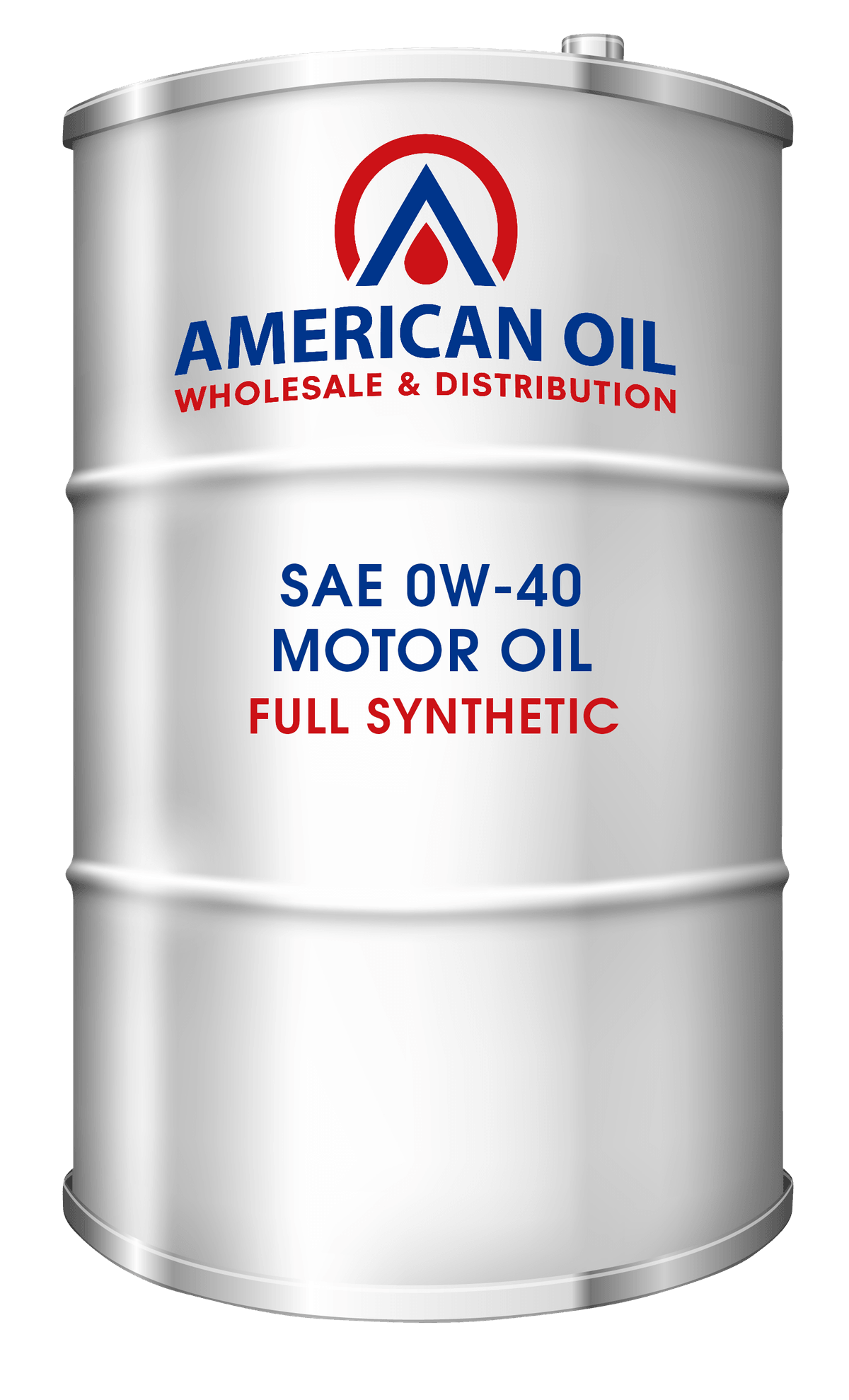
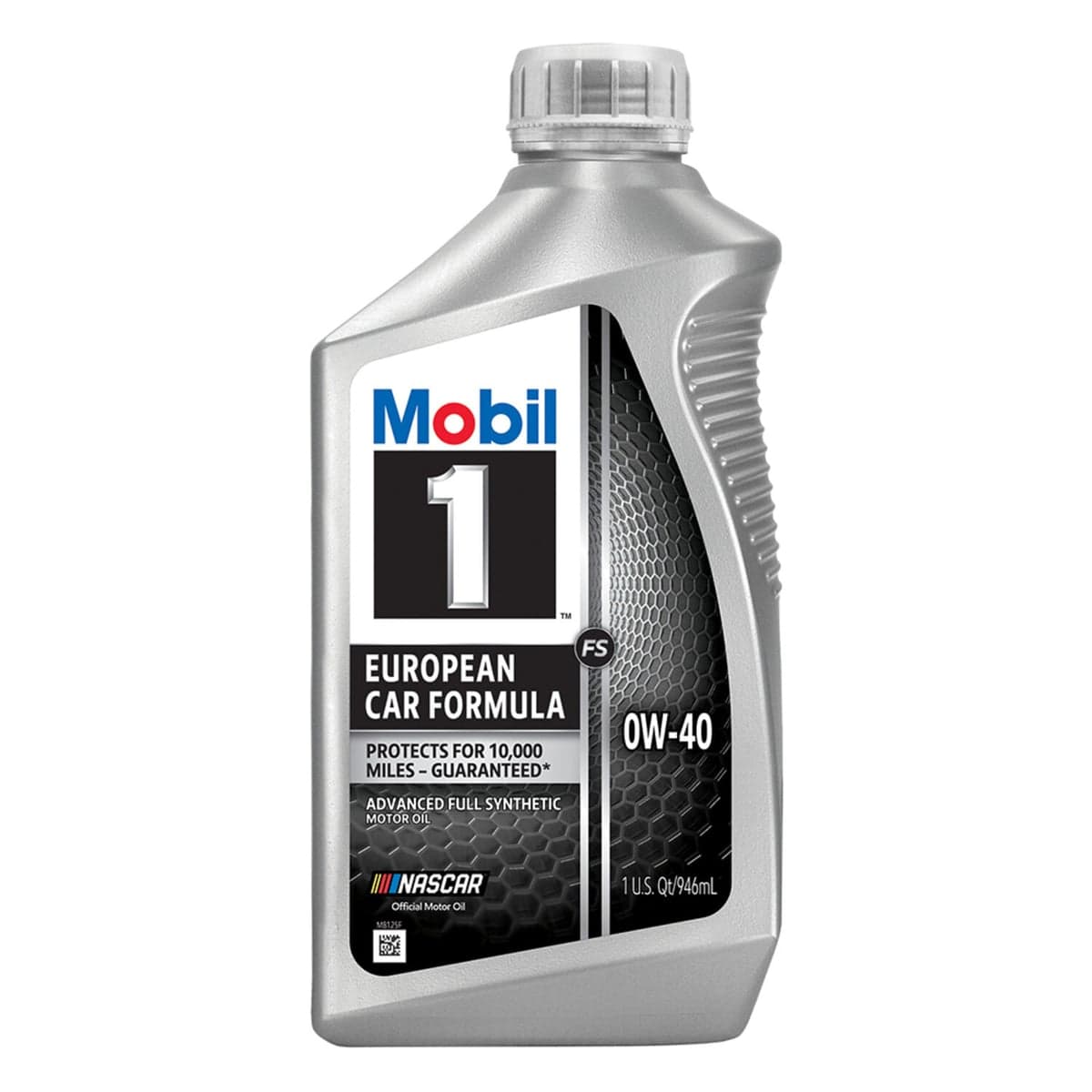
- A 0W-40 or 5W-40 that carries ACEA A3/B4 and C3 approvals covers the widest European brand spread, including MB 229.5 and BMW LL-04 vehicles, when the specific product is licensed for those approvals. We carry Mobil 1 FS European Car Formula Full Synthetic Motor Oil SAE 0W-40 in 3/5 Qt and 6/1 Qt cases, and American Oil Full Synthetic Euro Motor Oil SAE 0W-40 and SAE 5W-40 in 55-gallon drums for higher-volume shops.
- A VW Group-specific grade is needed when the manual calls for VW 504.00 or 507.00. We carry Volkswagen / Audi Full Synthetic Motor Oil SAE 0W-30 (6/1 Qt cases) and Volkswagen / Audi Full Synthetic Motor Oil SAE 5W-40 (6/1 Qt cases). The 0W-30 covers most VW 504.00 gasoline engine applications; the 5W-40 covers higher-output VW/Audi gasoline and certain diesel applications.
For European-spec oils, most shops stock by the case because European oil changes are less frequent and the per-change volume is similar to domestic cars. A shop with steady BMW or Mercedes-Benz volume can step up to a 55-gallon drum of American Oil Full Synthetic Euro Motor Oil SAE 0W-40 or 5W-40, which holds 220 quarts (55 gallons times 4 quarts per gallon) and lowers the cost per quart against buying cases of the same grade.
Buying European-spec oil wholesale from American Oil
We carry European-spec motor oil in case and drum formats on the same wholesale account that covers your API grades, DEF, coolant, grease, and gear oil. There is no separate European specialty order; the grades above ship on your regular delivery from West Palm Beach to Homestead. Open a wholesale account and your rep will quote the grades and pack sizes that match your European vehicle service volume. COD terms are available on new accounts, and we export by case and container to Caribbean and Latin America markets, so shops in Aruba, Curacao, or Trinidad can source the same European-spec grades through us.
Sources
- ACEA (Association des Constructeurs Européens d'Automobiles), 2021 European Oil Sequences. https://www.acea.auto
- SAE International, SAE J300 engine oil viscosity classification. https://www.sae.org
- API (American Petroleum Institute), SP service category. https://www.api.org