The short answer is no: most grease thickener types are chemically incompatible with each other. If you pump new grease on top of a different thickener type without purging or repacking first, the two can react, soften into a runny mass, seize into a hard deposit, or bleed base oil out of the thickener structure entirely, all of which lead to bearing failure. Before you switch grease products at your shop or on your fleet, you need to know what thickener type is already in the fitting and whether your new product is compatible with it. American Oil Wholesale and Distribution (aoilw.com), a Hialeah-based full-line lubricant distributor, carries grease by the case and pail for shops and fleets across Miami-Dade and Broward, and our team can pull thickener specs for any product we stock.
Why the thickener type is what determines compatibility
Grease is a three-part system: base oil (where lubrication happens), a thickener network (the soap or clay matrix that holds oil in the bearing), and an additive package (EP agents, rust inhibitors, antioxidants). The thickener is the structure. When two greases with different thickener chemistries contact each other, those structures interact, and the interaction is often destructive.
The National Lubricating Grease Institute (NLGI) publishes a thickener compatibility chart that rates common pairings as compatible, borderline, or incompatible. Reviewing the chart, most cross-thickener combinations fall in the borderline or incompatible zones (nlgi.org). Lithium soap and polyurea are rated incompatible. Lithium soap and calcium complex are borderline. Even within the lithium family, lithium soap and lithium complex are borderline, not fully compatible, meaning even a same-family switch can carry risk without verification.
What incompatibility looks like in the bearing
NLGI consistency grades are defined by worked penetration under ASTM D217. NLGI 2, the most common grade used in wheel bearings, chassis fittings, and general shop applications, has a worked penetration of 265 to 295 tenths of a millimeter per ASTM D217. Incompatible mixing can push a blended grease well outside that range in either direction.
Three failure modes are most common:
- Softening: The thickener network breaks down and the grease flows out of the bearing under normal heat and load, leaving the rolling element running on bare oil or nothing at all.
- Hardening: The blend stiffens into a crust-like deposit that restricts grease flow and starves the bearing of lubrication.
- Oil bleed: The base oil separates from the thickener matrix faster than normal, leaving the thickener dry and the bearing unprotected. ASTM D6184 is the standard test method for oil separation from lubricating grease and is one of the lab indicators used to flag thickener incompatibility.
In South Florida, the consequences arrive faster than in a dry inland climate. Salt air, humidity, and the thermal cycling between air-conditioned facilities and outdoor heat stress grease integrity constantly. For wheel bearings on vehicles serving port routes, refrigerated fleet trucks, and equipment operating near Biscayne Bay or Port Everglades, a compromised grease film means accelerated corrosion on top of the mechanical failure.
Thickener types in our catalog
Two of the most clearly identified thickener types in our grease lineup:
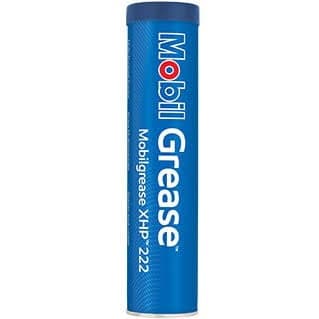
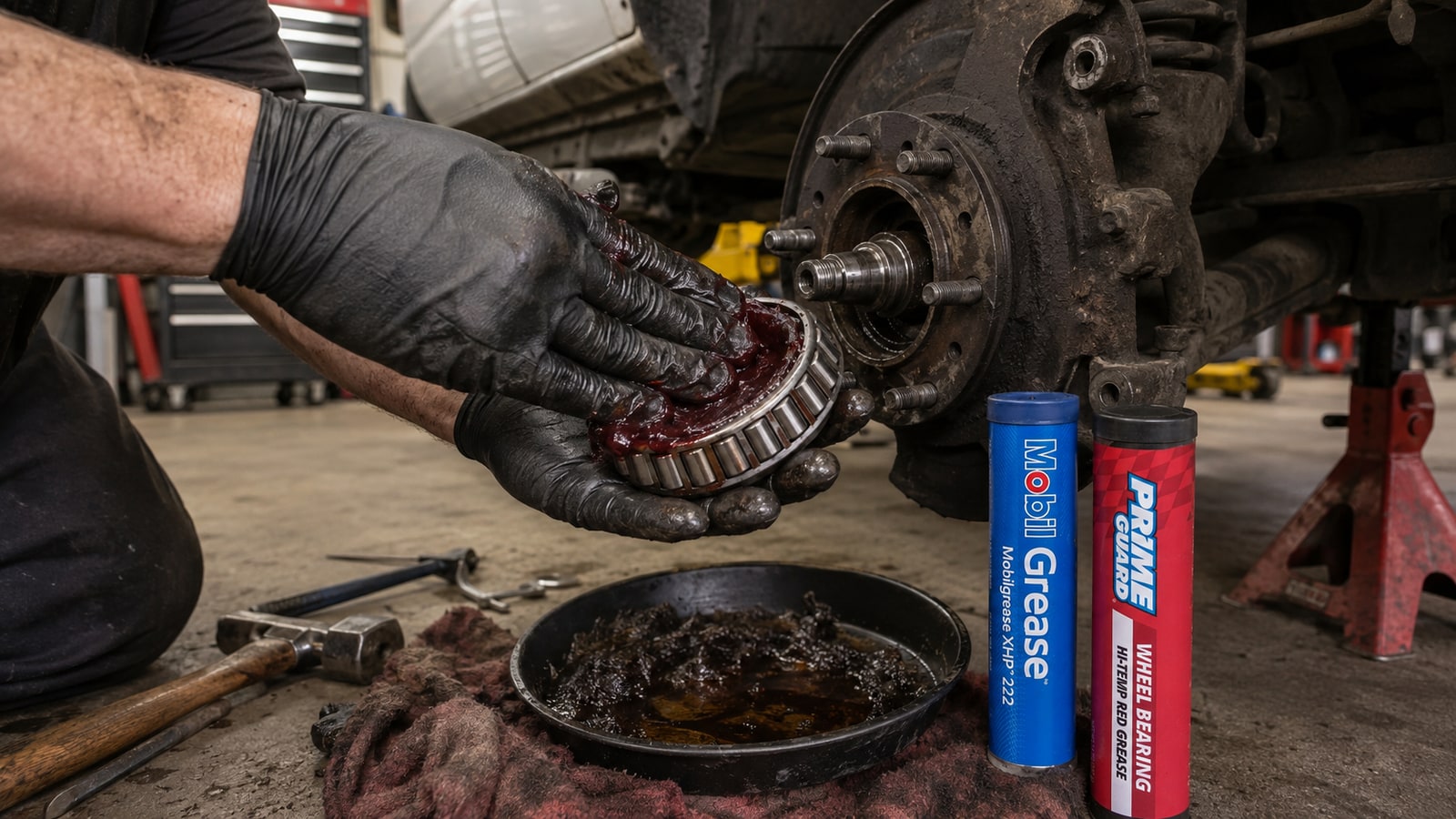
- Mobil Grease XHP 222 Lithium Complex: the thickener type is named in the product. Compatible with other lithium complex products; borderline with standard lithium soap greases.
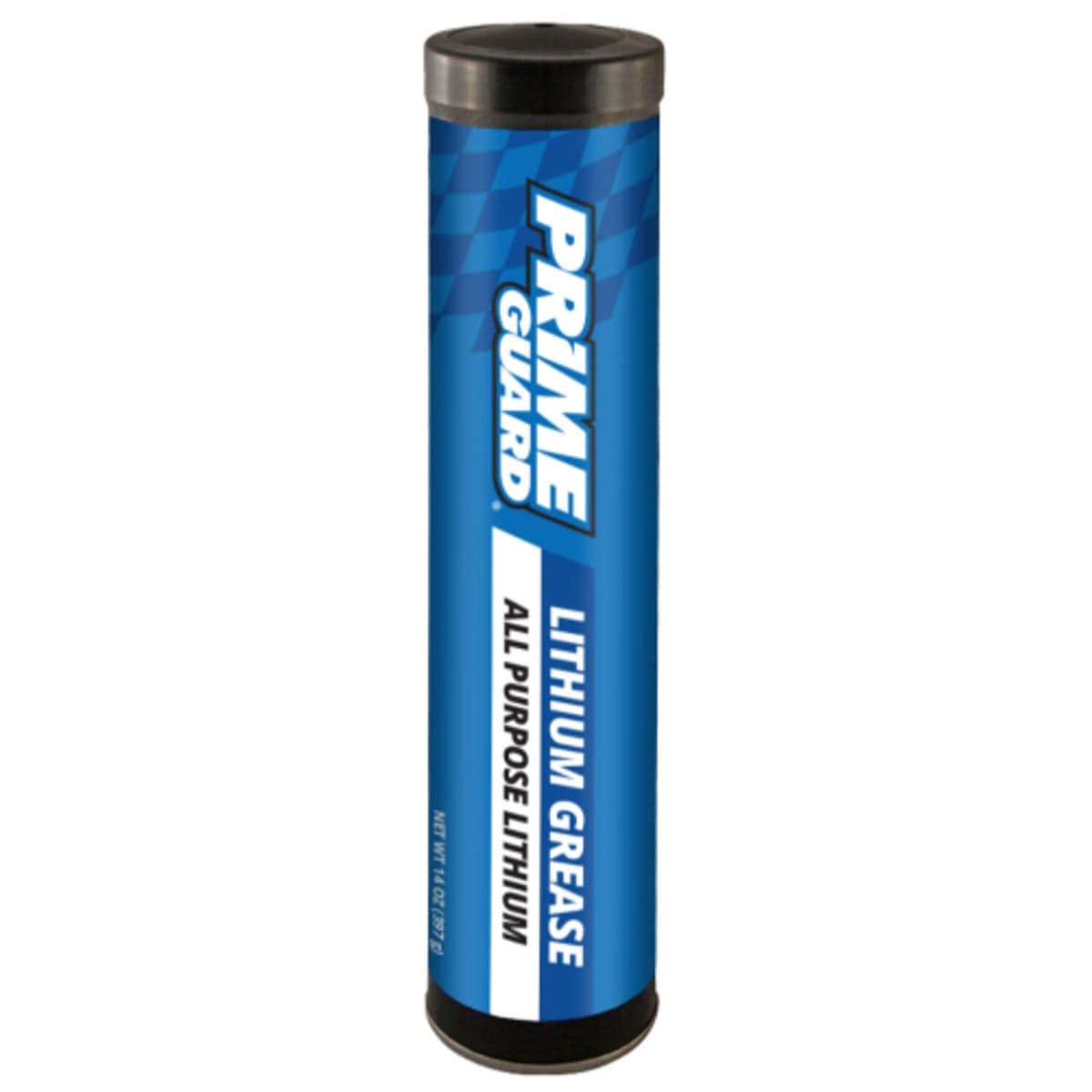
- Prime Guard Lithium Grease: standard lithium soap. Compatible with other lithium-soap greases; borderline with lithium complex.
For all other greases in our lineup, request the technical data sheet before mixing. The TDS lists the thickener type in the first technical section. If you are switching suppliers or consolidating your grease products, call us at (305) 825-2788 and we will pull the thickener specs for the exact SKU before you place the order.
How to switch grease safely
When you need to change grease products, two methods work. The right one depends on the application.
Purging means pumping new grease into the fitting until only the new product exits the relief point. This is practical for chassis fittings with accessible relief ports and lower-stakes applications where some residual mixing is acceptable. For wheel bearings, purging is unreliable because old grease packed in race corners and cage pockets does not clear with a few pumps from a gun.
Disassemble and repack is the correct method for wheel bearings, industrial equipment, and any application where thickener incompatibility carries real risk. Remove the bearing, wipe all old grease from races, rollers, and housing, repack with the new product, and reinstall. It takes more time, but it is the only way to guarantee you are not running a blended product with unknown behavior.
The practical rule: if the application is a wheel bearing or carries any significant load, disassemble and repack. If it is a chassis fitting that gets regular service intervals anyway, a thorough purge may be acceptable, but verify the thickener types against the NLGI chart first.
One thickener type per application
The cleanest policy for a shop or fleet is to standardize on one thickener type per application and stay in that family across every brand you carry for it. If your wheel bearing grease is lithium complex, every product you stock for that application should be lithium complex. Label your grease guns by thickener type and do not cross-use them between applications running different thickener families.
When you are ready to consolidate your grease line or switch products, we can match thickener types across the brands we carry and get you consistent specs from case to pail. Request a wholesale quote at aoilw.com/quote, or call us at (305) 825-2788 or email Info@aoilw.com. We are at 8090 W 30th Ct, Hialeah, FL 33018. Minimum order is $250 for domestic delivery and $1,250 for export. Next-day delivery is available within Miami-Dade County; Broward and Palm Beach County customers ship on your next scheduled route day.
Sources
- National Lubricating Grease Institute (NLGI), Thickener Compatibility Chart. https://www.nlgi.org
- ASTM International, ASTM D217 Standard Test Methods for Cone Penetration of Lubricating Grease. https://www.astm.org
- ASTM International, ASTM D6184 Standard Test Method for Oil Separation from Lubricating Grease (Conical Sieve Method). https://www.astm.org