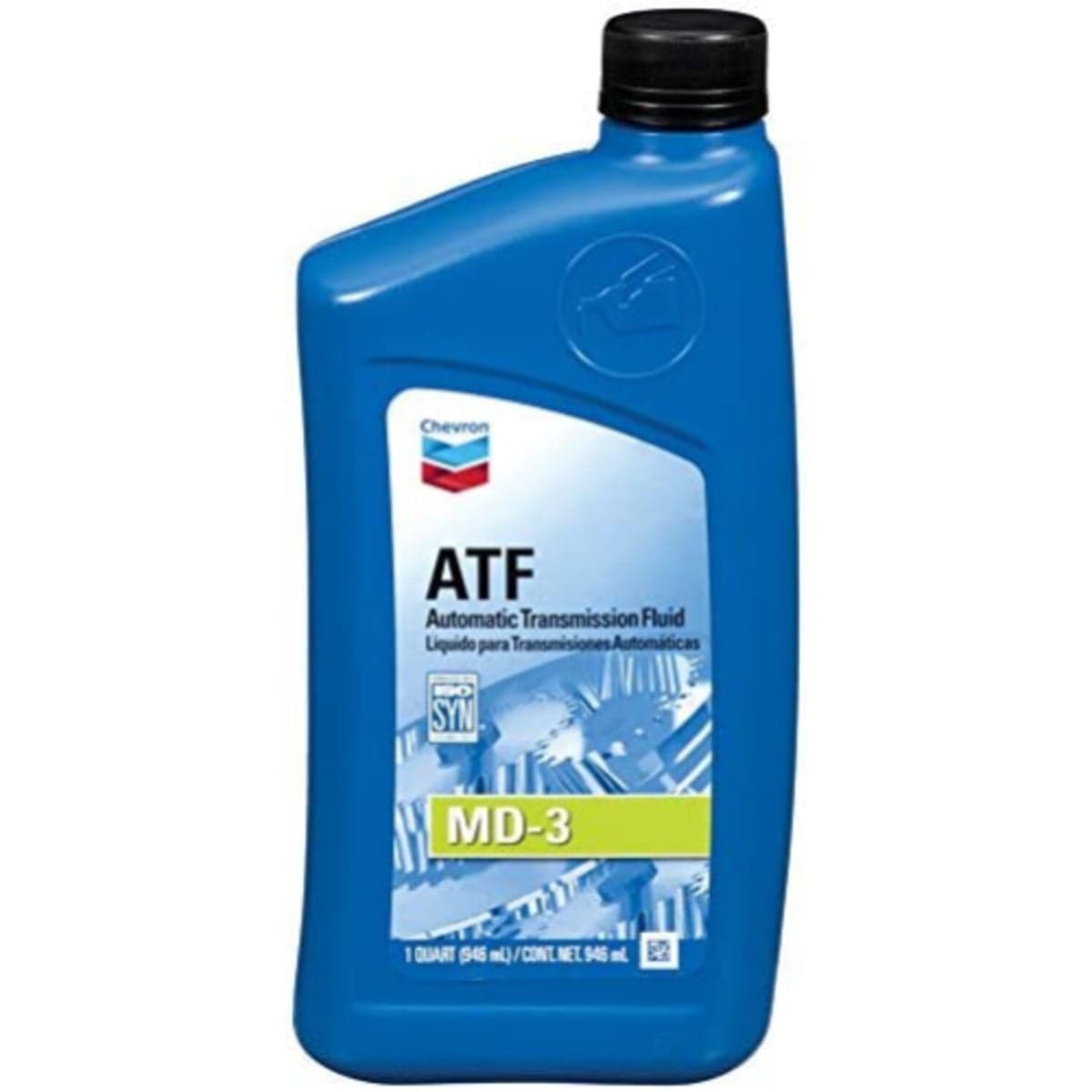
The first rule of ATF is that the transmission maker's spec overrides everything else: you match the fluid to what the vehicle maker requires for that specific transmission, not to a universal category or to a color on the bottle. Once you know the spec, American Oil Wholesale and Distribution (aoilw.com), a Hialeah-based full-line lubricant distributor, can supply the right ATF by the case, drum, or tote at account pricing, on the same invoice as your motor oil, DEF, and coolant.
If you run an auto shop or a fleet in South Florida, ATF is one of the trickier lubricants to stock. The spec landscape is fragmented across OEM brands, multi-vehicle fluids cover some applications but not all, and the cost of using the wrong product is a transmission failure or a warranty dispute. This guide explains the main ATF spec categories, what a South Florida shop should have on the shelf, how to avoid the common mismatches, and how buying wholesale by the case or drum drops your cost.
Why ATF specs are more fragmented than motor oil
Motor oil has a single, independent certification framework: the API sets the service category, SAE J300 defines the viscosity grade, and ILSAC sets the gasoline-engine performance standard. ATF works differently. Each major automaker licenses its own fluid specification, and transmission engineers build the clutch packs, bands, and friction materials to work with their licensed fluid's specific viscosity, friction coefficient, and additive chemistry. That is why the label on a bottle of ATF names an OEM approval ("meets DEXRON VI" or "approved for Toyota WS") rather than only a universal industry standard.
The practical result for a shop: stocking the right ATF requires knowing which OEM spec each vehicle's transmission requires, not just a grade or a color.
The main ATF spec categories a shop needs to know
These are the major approval lines a South Florida shop will encounter on the service drive.
GM and the DEXRON family. DEXRON VI is GM's current licensed ATF spec for most of its automatic transmissions. Older vehicles may reference earlier DEXRON numbers, and many DEXRON VI-licensed products carry backward-compatibility coverage, but confirm the licensed product's specific coverage before using it in an older application. GM's newest transmissions may carry separate spec designations; verify against the vehicle's owner manual before ordering.
Ford and the MERCON family. Ford's current ATF for most of its 6-speed and later automatic transmissions is MERCON LV (low viscosity). Earlier Fords may reference MERCON V or MERCON SP. These Ford specs are distinct and are not interchangeable; check the vehicle's owner manual or Ford's service resource before stocking for a Ford-heavy service mix.
Toyota and the WS spec. Toyota's current ATF spec for most of its automatics is WS (World Standard). Older Toyotas used T-IV. WS is a low-viscosity, long-drain fluid; T-IV is a different formulation. Do not substitute WS for T-IV or vice versa without confirming the application.
Honda and DW-1. Honda's current licensed ATF is DW-1. Older Hondas used Z-1 and earlier numbered specs. Honda transmissions are built for Honda-licensed ATF, and a generic multi-vehicle fluid is not always an approved substitute.
Allison and TES-295. Allison transmissions, common in commercial trucks, transit buses, and heavy equipment, require a fluid licensed under Allison's TES-295 specification as the current standard. If your shop or fleet services Allison-equipped commercial vehicles, you need a TES-295-licensed fluid on the shelf as its own SKU, separate from your passenger-car ATF lines.
European OEM specs. European makes use their own OEM approval lines. ZF transmissions (found in many BMW, Land Rover, and other European vehicles) specify ZF Lifeguard fluids by generation. Mercedes-Benz uses MB-Approval 236.xx numbered specs. If you service European vehicles regularly, stock to those OEM lines and confirm the approval number.
CVT fluid. Continuously variable transmission fluid is NOT ATF and is not interchangeable with any ATF specification. Each CVT OEM also has its own licensed spec. Using ATF in a CVT is a transmission-damaging error; keep CVT fluid on a separate shelf and a separate reorder track.
Multi-vehicle ATF: where it helps and where it does not
Multi-vehicle ATF products are licensed to cover multiple OEM specs in a single SKU, which simplifies inventory for a shop that services a wide mix of vehicles. They are a legitimate stocking tool when the vehicle's required spec is included in the product's licensed coverage and the label or data sheet confirms that coverage.
Where multi-vehicle ATF does not help: transmissions where the OEM has not authorized a multi-vehicle substitute, and CVT transmissions (no multi-vehicle ATF covers a CVT). For those applications, you need the specific OEM-approved product. The safe rule is to verify the coverage claim on the data sheet rather than assuming "multi-vehicle" means universal.
What a South Florida shop should stock
South Florida's vehicle mix tilts toward Japanese brands (Toyota, Honda, Nissan, Lexus, Acura), with a large domestic base (GM, Ford) and a growing European segment (BMW, Mercedes-Benz, Audi). Fleet service adds commercial trucks, including Allison-equipped units. A practical starting shelf for a general South Florida shop:
- A DEXRON VI-licensed fluid for GM applications
- A MERCON LV-licensed fluid for recent Ford automatics
- Toyota WS-approved fluid
- Honda DW-1-approved fluid
- A TES-295-licensed fluid if you service commercial vehicles with Allison transmissions
- CVT fluid covering the OEM spec or specs your customer mix requires (at minimum a product covering the major Japanese-brand CVT specs if those makes are common in your bays)
- A multi-vehicle ATF that bridges DEXRON and MERCON coverage for older mixed-make vehicles, where the data sheet confirms those approvals
We carry the major ATF lines and can quote you by case or drum once you tell us your monthly volume by spec. Tell us which specs you need and how much of each you move per month, and we will point you to the right package tier for each line.
Packaging: case, drum, and tote for ATF
Most shops buy ATF by the case (quart or gallon bottles), because they carry several different specs and the turnover on each is lower than on their highest-volume motor oil grade. Cases keep each spec in its own labeled bottles, which prevents mix-up at the bay. For a fleet with high volume on a single spec, a drum (55-gallon) can make economic sense: you spread one wholesale rate across 220 quarts rather than paying a per-bottle markup on cases. A tote (about 275 to 330 gallons) is the right call only when a single spec runs at very high volume and the shop has the storage infrastructure: a pump, dedicated IBC storage, and rigorous labeling, because a contaminated or mislabeled tote of ATF is an expensive error. For most shops, the case is the right ATF format, with a drum as the step up when one spec becomes a clear volume leader.
Open your wholesale account at aoilw.com to order ATF by the case or drum at account pricing. Tell us your specs and your monthly volume by spec and we will quote the package tier that fits how your shop actually runs.
Stock the right ATF and buy it right, with American Oil
Start with the OEM spec: look up what the transmission maker requires for each vehicle, not just the grade, and stock to that specification. Once you know your mix of specs and monthly volume, open your wholesale account at aoilw.com, or call American Oil Wholesale and Distribution, and we will quote you by case or drum on each ATF line, delivered from West Palm Beach County to Homestead, with Caribbean and Latin America export available.
Sources
- General Motors, DEXRON VI Automatic Transmission Fluid specification and licensing program. gm.com
- Ford Motor Company, MERCON LV Automatic Transmission Fluid specification. ford.com
- Toyota Motor Corporation, ATF WS (World Standard) specification. toyota.com
- American Honda Motor Co., ATF DW-1 specification. honda.com
- Allison Transmission, TES-295 Transmission Fluid Specification. allisontransmission.com