For most rotary screw shop compressors, ISO VG 46 is the right compressor oil; for reciprocating piston units running hotter, the right grade is ISO VG 100. Both fall under ISO 6743-3, the international standard for compressor lubricants, which specifies an additive package built for compressor discharge conditions that differs from both hydraulic oil (ISO 6743-4) and engine oil. At American Oil Wholesale we supply auto shops and industrial operations across South Florida with lubricants by the case, pail, and drum, and this guide covers what we tell buyers who ask about compressor oil.
The compressor in your shop needs its own dedicated product, not a leftover pail of hydraulic fluid or motor oil from the back shelf.
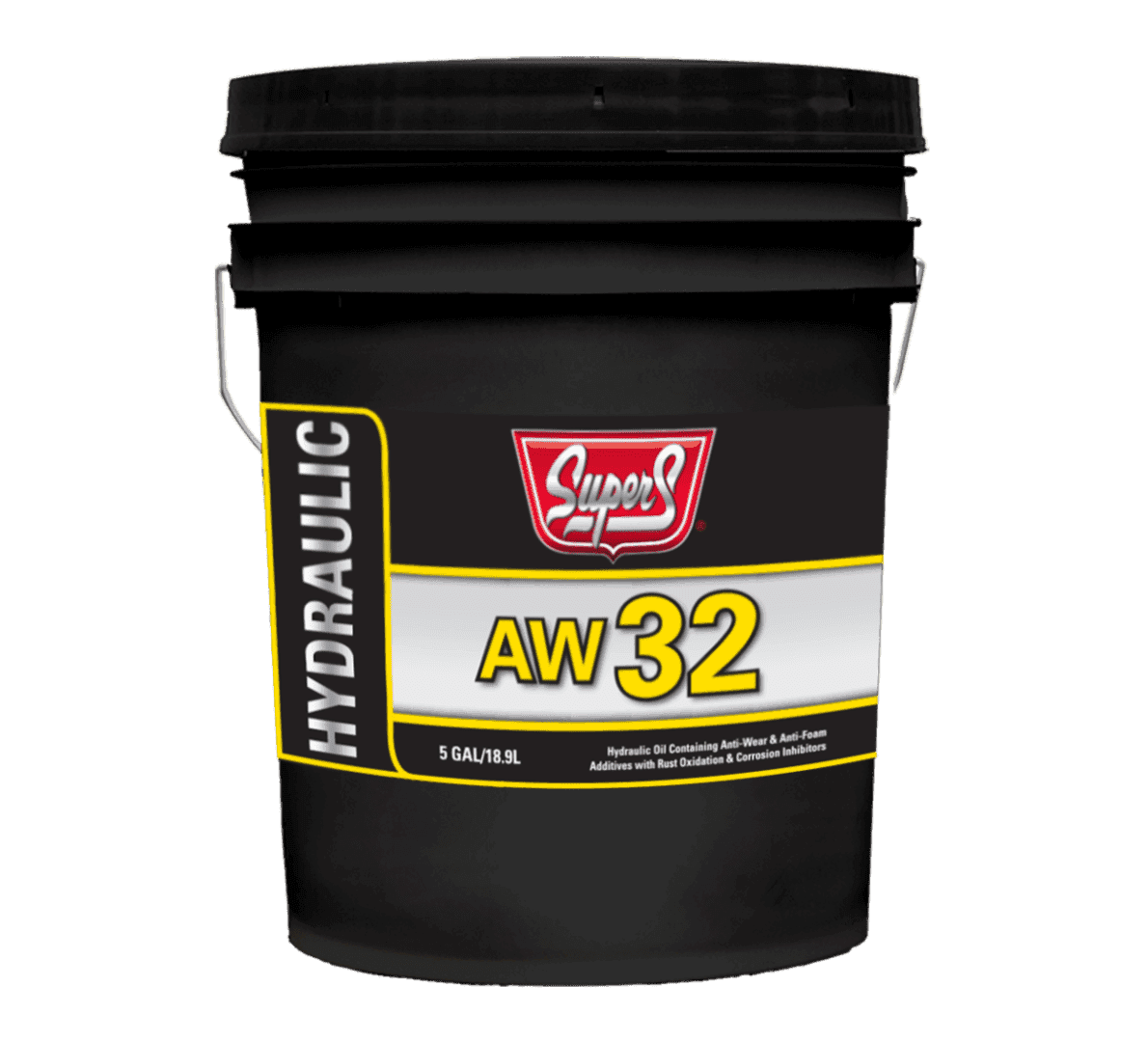
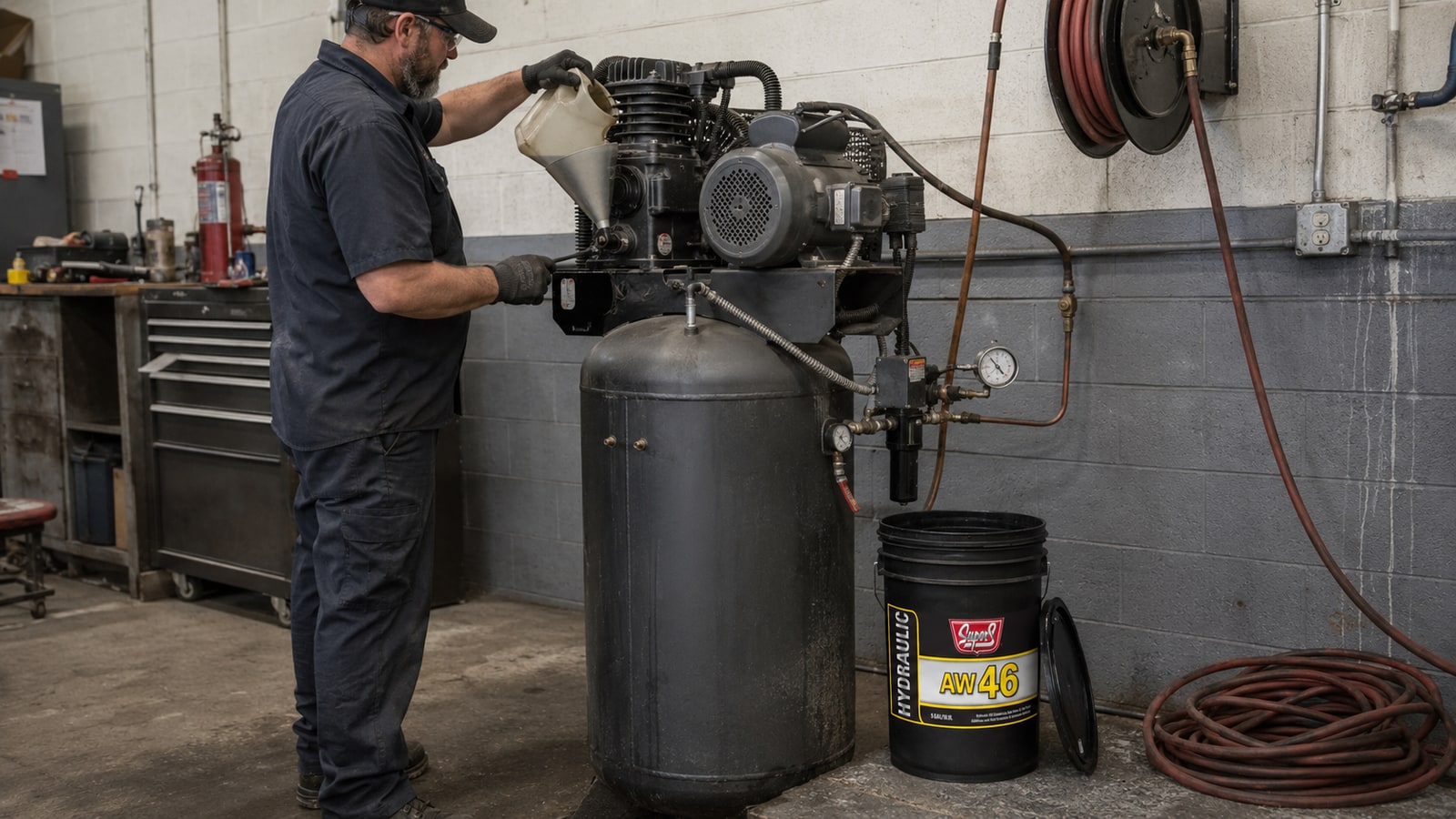
Using the wrong product in an air compressor is not a routine substitution. Hydraulic oil carries anti-wear additive concentrations that form carbon deposits on compressor valves and discharge lines at the temperatures a compressor reaches. Motor oil contains detergent and dispersant chemistry that does not belong in a compressor circuit. The practical result is fouled valves, carbon buildup in discharge tubing, shortened filter life, and in reciprocating units a real fire risk if carbon deposits ignite in the discharge line. The fix is simple: stock the right ISO 6743-3 compressor oil in the grade your OEM specifies, and treat it as a dedicated line item on your supply order.
What ISO 6743-3 actually covers
ISO 6743-3 is the international standard that classifies lubricants specifically for compressors. It separates compressor lubricants into families by base fluid and application, from mineral-oil grades for standard air service to synthetic grades for higher temperatures and extended drain intervals. The key fact for a buyer is that a product formulated to ISO 6743-3 is built to resist oxidation and carbon formation at compressor discharge temperatures, not to meet the anti-wear and fire-resistance priorities that drive hydraulic oil chemistry. An ISO VG 46 hydraulic oil and an ISO VG 46 compressor oil share the same viscosity number, defined in ISO 3448 as a kinematic viscosity of 46 mm²/s at 40°C, but they are not the same product and are not interchangeable. The VG number tells you how thick the oil is; the ISO 6743 family number tells you what it is built for. It is the same logic behind our lubricant cross-reference chart: match the controlling specification first, then the viscosity.
VG 46 vs VG 100: which grade for which compressor
The grade that fits your unit depends on the compressor type: rotary screw units almost universally take ISO VG 46, and most reciprocating units take ISO VG 100, with the OEM manual as the final authority.
Rotary screw compressors are the standard for modern shop installations. They run at lower, more stable discharge temperatures than piston units, and major rotary screw brands including Atlas Copco, Ingersoll Rand, and Quincy list VG 46 as the standard mineral-oil fill for most of their shop-class units.
Reciprocating (piston) compressors run hotter at the cylinder head because the compression cycle is intermittent and peak temperatures are higher. Most single-stage and two-stage reciprocating units specify ISO VG 100; confirm the exact fill in your OEM manual before ordering. Running a VG 46 in a hot reciprocating compressor means the oil film thins at discharge temperature and deposits carbon faster than a heavier grade would.
If you have a rotary screw unit and you are not certain of the grade, start with VG 46 and confirm in the manual. Do not substitute a grade to work through existing inventory.
Why South Florida heat makes compressor oil maintenance matter more
South Florida heat and humidity accelerate compressor oil oxidation and shorten its useful life. A rotary screw unit here draws in hot, humid air year-round, and the moisture that comes through the intake adds acid load on the oil. The practical result: the drain interval stated in your OEM manual for a temperate climate may not reflect how fast oil degrades in a Miami shop running full shifts in July. Tracking sump color and oil level monthly, rather than relying on hours alone, is good practice here. Discolored, dark oil in the sump is past its useful life regardless of hours on the clock.
For high-demand applications, a synthetic or semi-synthetic compressor oil in the correct VG grade resists oxidation longer than a mineral fill and can extend drain intervals in heat, which also reduces the used-oil volume you have to manage. For Caribbean and Latin American buyers shipping out of Miami, the same tropical conditions apply across the region, and compressor oil in pails or drums travels well inside a mixed EXW Miami export order.
How to stock and buy wholesale
For a shop with one or two rotary screw units, a 5-gallon pail of VG 46 compressor oil covers several service cycles and is the practical starting unit. A shop that services customer compressors alongside its own, or a facility maintenance team running multiple units, will find a 55-gallon drum the better stocking choice: you receive and handle one container per refill cycle instead of many, and the per-gallon packaging cost drops with the larger format.
One quote with American Oil consolidates compressor oil with your motor oil, hydraulic oil, DEF, grease, and coolant on a single invoice and a single delivery route from West Palm Beach to Homestead, with a $250 minimum domestic order and C.O.D. terms unless your sales rep sets up credit. Compressor oil is a request-a-quote item: tell us the grade and format you need and a rep confirms availability alongside the rest of your order.
Get a wholesale quote for the right compressor oil
Check the compressor type first, rotary screw or reciprocating, then pull the OEM manual for the grade. Once you know it is VG 46 or VG 100, send the grade and format through our wholesale quote form and order it alongside your motor oil and hydraulic oil on one invoice. We deliver next day across Miami-Dade, Broward, and Palm Beach counties, and we export across the Caribbean and Latin America with a $1,250 minimum export order.