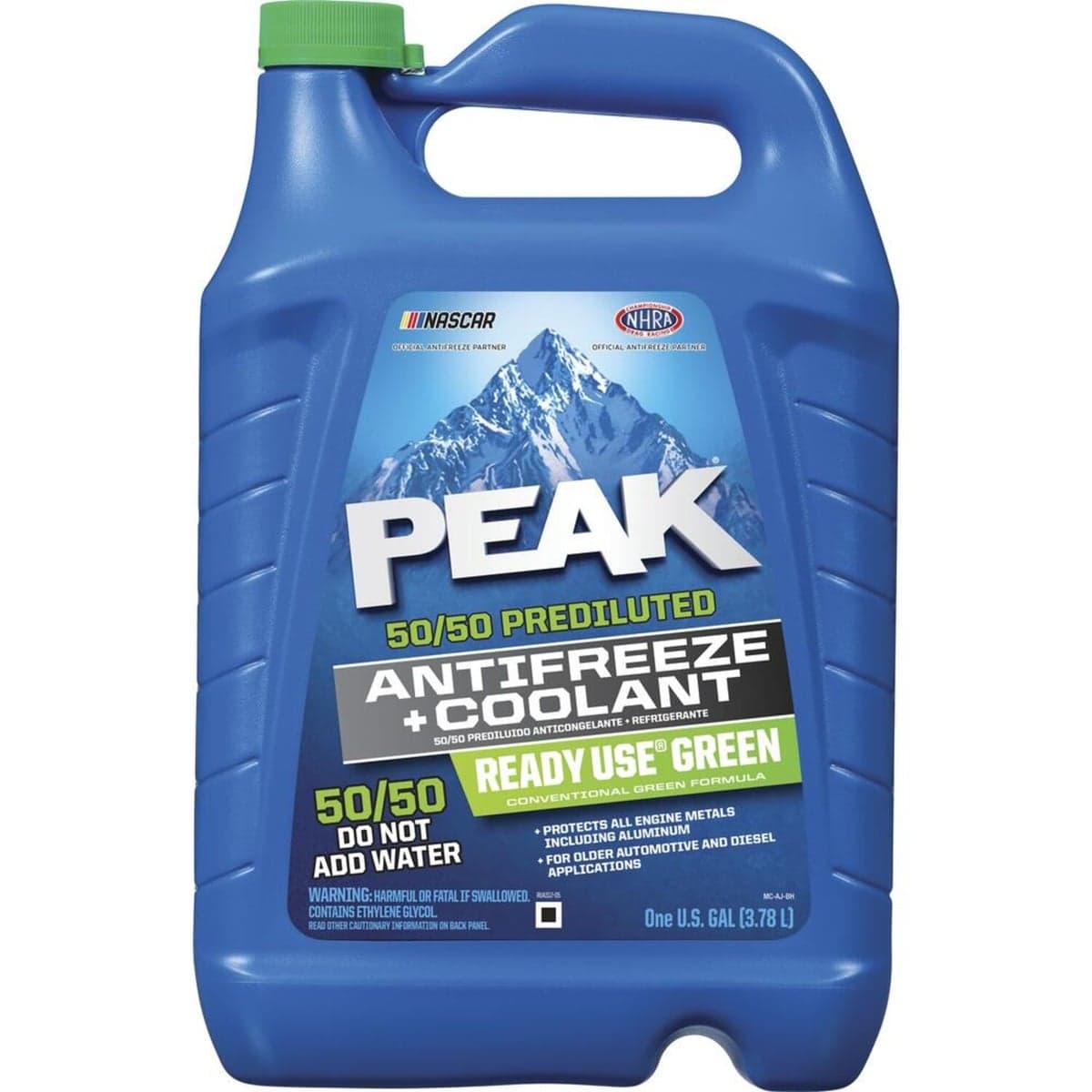
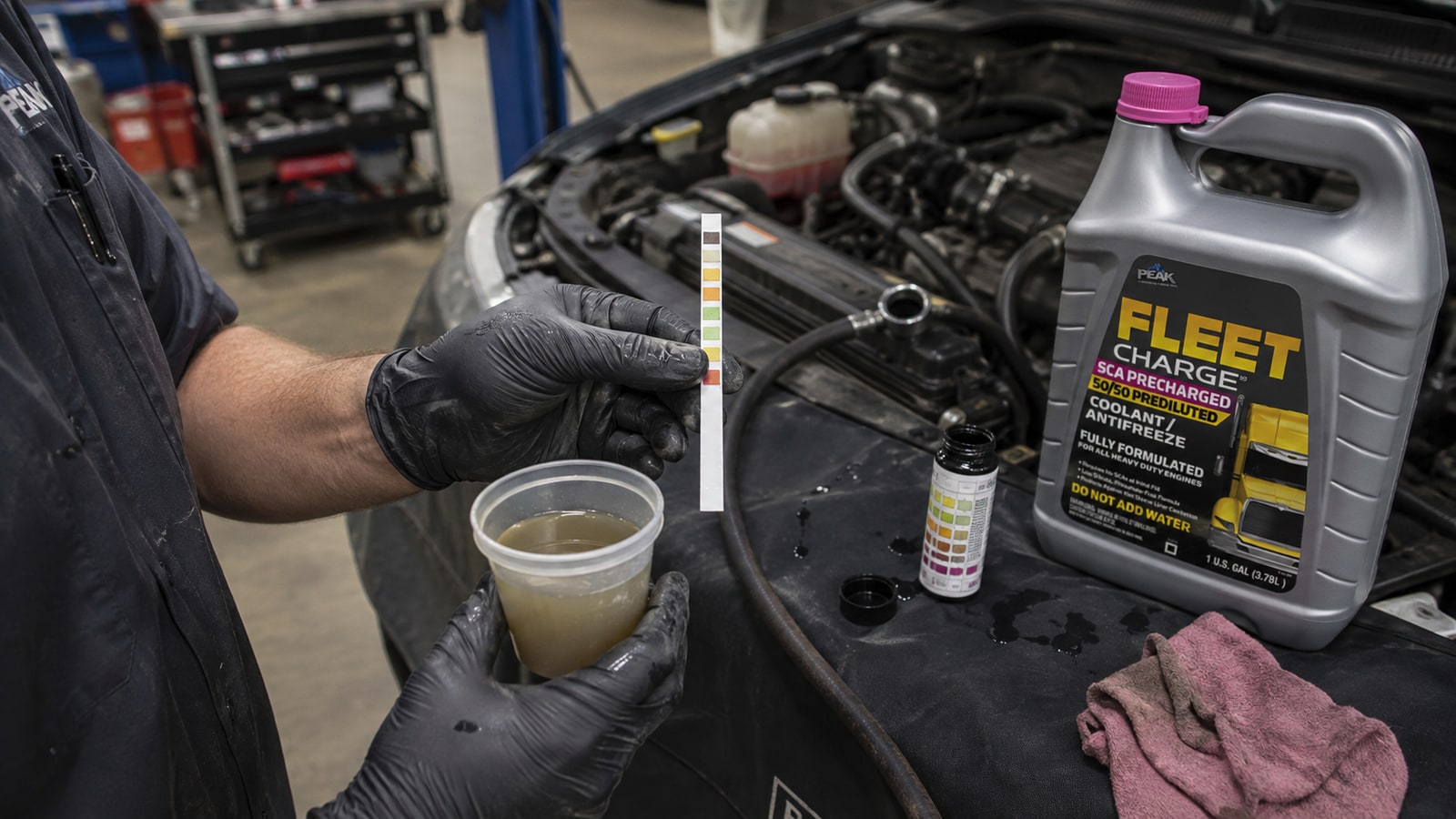
A refractometer checks freeze point: the minimum target for a 50/50 light-duty coolant mix is approximately -34°F (-37°C) per ASTM D3306. SCA test strips check inhibitor concentration in conventional heavy-duty diesel coolant. Together, these two tools tell you in about two minutes whether in-service coolant is still in spec or needs to be exchanged before an inhibitor failure causes corrosion or overheating. American Oil Wholesale and Distribution (aoilw.com), our Hialeah warehouse, stocks replacement coolant in cases, 55-gallon drums, and 275-gallon totes for South Florida shops and fleets, with next-day delivery across Miami-Dade, Broward, and Palm Beach counties.
If you service vehicles that spend their lives in South Florida heat, this guide covers the three tests, what the numbers mean, and when to flush and refill.
Why South Florida shops test for inhibitors, not just freeze point
Miami-Dade County's average July high temperature reaches 91°F (33°C) per NOAA National Centers for Environmental Information climate normals. Engine compartments run well above ambient under load, and sustained high-heat operation oxidizes the inhibitor package faster than OEM drain intervals account for. Most OEM intervals are calibrated on temperate-climate baselines; a South Florida shop servicing vehicles in year-round heat cannot rely on calendar or mileage alone to catch inhibitor depletion.
The real coolant failure mode in a tropical service market is not freeze-protection loss. It is inhibitor depletion. When the inhibitor package breaks down, pH shifts outside the alkaline buffer zone and the coolant becomes corrosive against cast iron, aluminum, and copper alloy components. Catch it with a test before a hose corrodes through or a gasket fails, not after.
Tool one: the refractometer
An optical refractometer measures the refractive index of a coolant sample and converts it to freeze point or glycol concentration on a scale marked for ethylene glycol or propylene glycol. To use one: place two to three drops of coolant on the prism, close the daylight plate, hold it up to a light source, and read the scale through the eyepiece. The freeze point for a 50/50 mix should read approximately -34°F (-37°C) or colder per ASTM D3306. A reading warmer than -34°F means the coolant is diluted: the glycol concentration is below spec, and the inhibitor concentration dissolved with it is also below spec.
In South Florida, a warm freeze-point reading signals concentration loss, not cold-weather risk, and still means the coolant needs adjustment or exchange. Clean the prism between samples with a damp cloth to prevent cross-contamination.
Tool two: SCA test strips
SCA stands for Supplemental Coolant Additive, the corrosion inhibitor package in conventional heavy-duty diesel coolant. SCA test strips measure molybdate and nitrite concentrations and return a pass, low, or add result in about a minute. The target range is printed on the strip packaging and in the OEM service manual for each engine family. A low result means the inhibitors have been consumed and need to be recharged before the next service interval.
One rule that cannot be skipped: SCA test strips apply only to conventional SCA-based heavy-duty coolant. If your fleet runs an OAT extended-life coolant, do not add supplemental SCA to it. Adding conventional additives to an OAT formulation degrades both the organic acid inhibitor package and the additive balance, reducing protection instead of increasing it. Check the drum or jug label before any SCA charge. OAT and extended-life systems are managed by drain interval and condition testing, not SCA addition. See our fleet buyer page for guidance on choosing between conventional and extended-life formulations.
pH: the third data point
pH measures how alkaline the coolant is, using the test method defined in ASTM D1287 (Standard Test Method for pH of Engine Coolants and Antirusts). In-spec coolant is alkaline; the inhibitor package maintains that buffer. When pH drops toward 7.0 or below, the inhibitors are consumed and the coolant is actively corrosive. A reading above about 11.0 can indicate contamination or an incompatible-chemistry mixture. A test strip or calibrated pH meter takes ten seconds.
This test matters because glycol stays intact long after inhibitors are gone. A coolant can give an acceptable freeze-point reading on the refractometer and still have a depleted inhibitor package. pH is the check that the refractometer cannot replace.
What to do with the test results
If all three tests pass (freeze point at -34°F/-37°C or colder, SCA in range for conventional heavy-duty, pH in the alkaline range specified by ASTM D3306/D6210) and the coolant is within its drain interval, top off with the same chemistry. Never top off with a different color family without verifying compatibility first. Our coolant cross-reference chart maps which inhibitor chemistries are compatible and which are not.
If any test fails, flush the system and refill with the correct product:
- Thunder Green 50/50 Antifreeze & Coolant: IAT/green chemistry, ASTM D3306, for light-duty vehicles specifying a conventional green coolant.
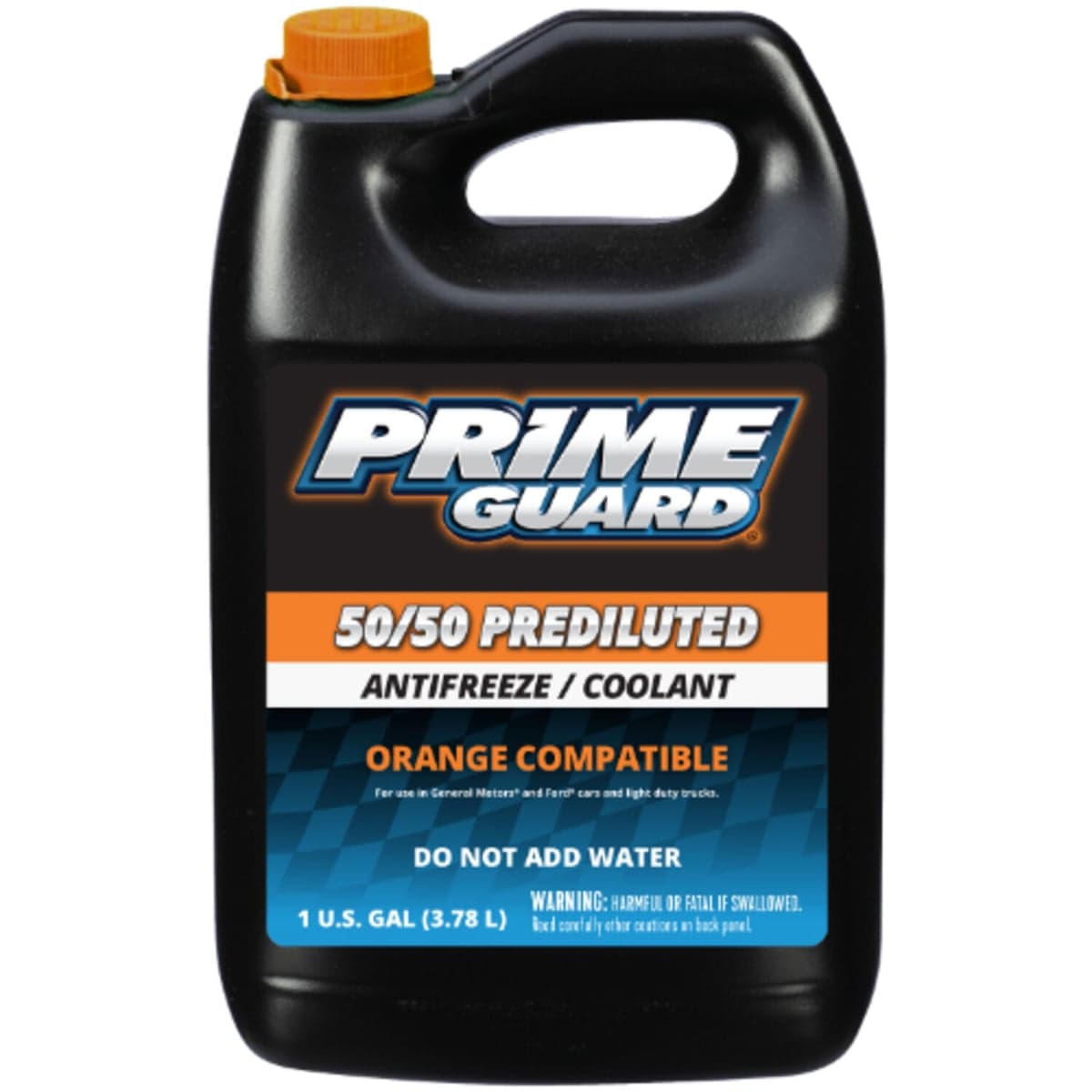
- Thunder Dex-Cool 50/50 Antifreeze & Coolant: OAT/orange chemistry, ASTM D3306, for GM and other vehicles specifying a Dex-Cool or compatible OAT formulation.
- Thunder Heavy-Duty Extended Life 50/50 Antifreeze & Coolant: OAT extended-life, for heavy-duty diesel fleets specifying a long-drain extended-life coolant. Do not add SCA to this product.
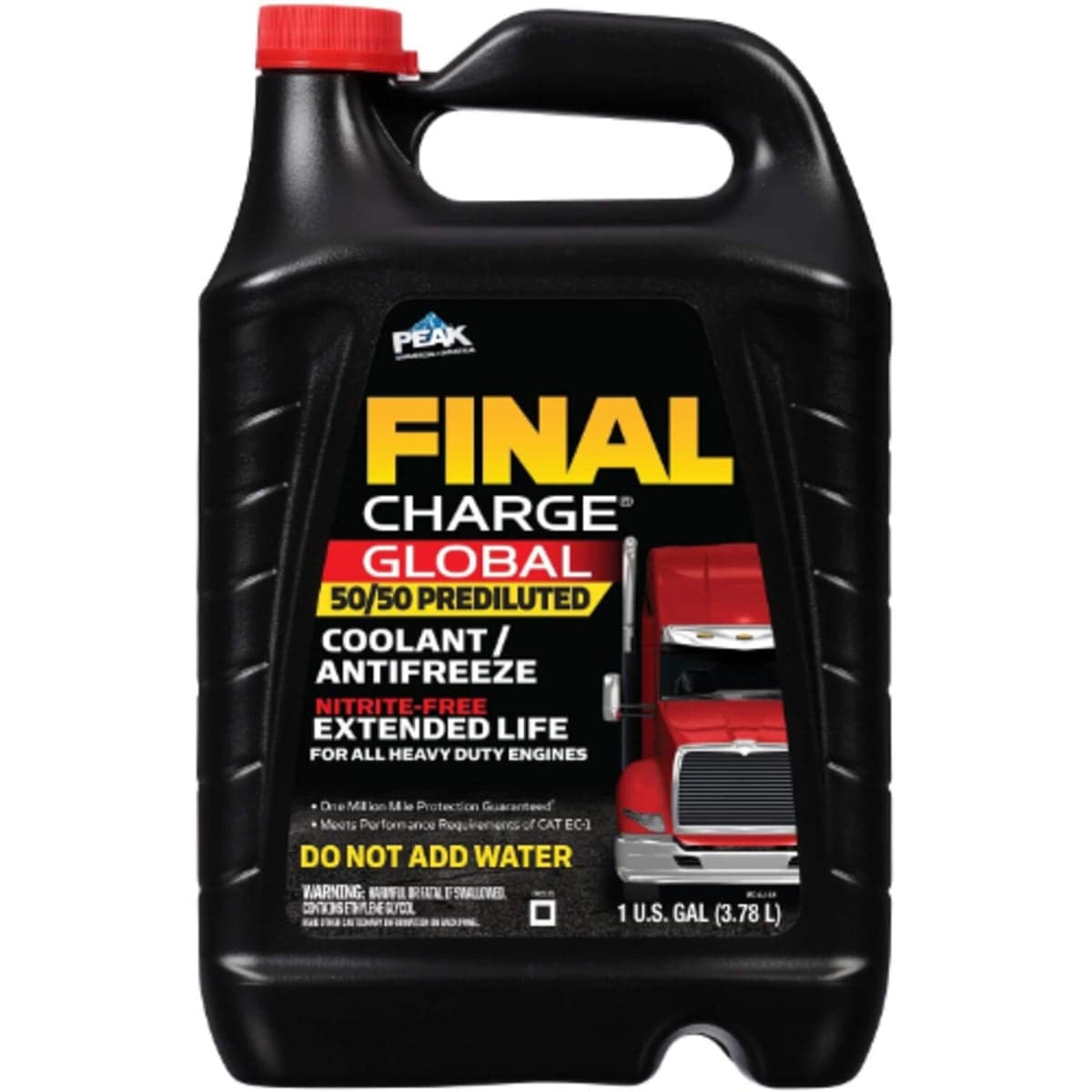
- Peak Final Charge Global 50/50 Heavy Duty Antifreeze: global OAT formulation for applications requiring broad multi-market compatibility.
Stocking coolant for your shop or fleet
A 55-gallon drum holds about 220 quarts (55 gallons × 4 quarts per gallon). A 275-gallon tote holds the equivalent of about 5 drums (275 ÷ 55 ≈ 5), and you receive and store one container instead of five. For a fleet bay running coolant services on a fixed PM schedule, the tote format reduces handling: one pallet slot, one receiving receipt, one dispensing pump connection, one invoice line. We stock Thunder Green 50/50 Antifreeze & Coolant, Thunder Dex-Cool 50/50 Antifreeze & Coolant, and Thunder Heavy-Duty Extended Life 50/50 Antifreeze & Coolant in 6/1-gallon cases, 55-gallon drums, and 275-gallon totes. Visit our auto shop page to open a wholesale account.
Test first, then refill
A refractometer and SCA test strips are inexpensive shop tools that pay back on the first prevented coolant failure. Test at every service visit in South Florida heat, not only at the OEM drain interval. When coolant needs replacing, open your wholesale account at aoilw.com or visit aoilw.com/quote to get case, drum, or tote pricing from American Oil Wholesale and Distribution, with next-day delivery from Homestead to West Palm Beach and export to the Caribbean and Latin America.
Sources
- ASTM D3306, Standard Specification for Glycol Base Engine Coolant. https://www.astm.org
- ASTM D6210, Standard Specification for Fully-Formulated Glycol Base Engine Coolant for Heavy-Duty Engines. https://www.astm.org
- ASTM D1287, Standard Test Method for pH of Engine Coolants and Antirusts. https://www.astm.org
- NOAA National Centers for Environmental Information (NCEI), South Florida climate normals. https://www.ncei.noaa.gov