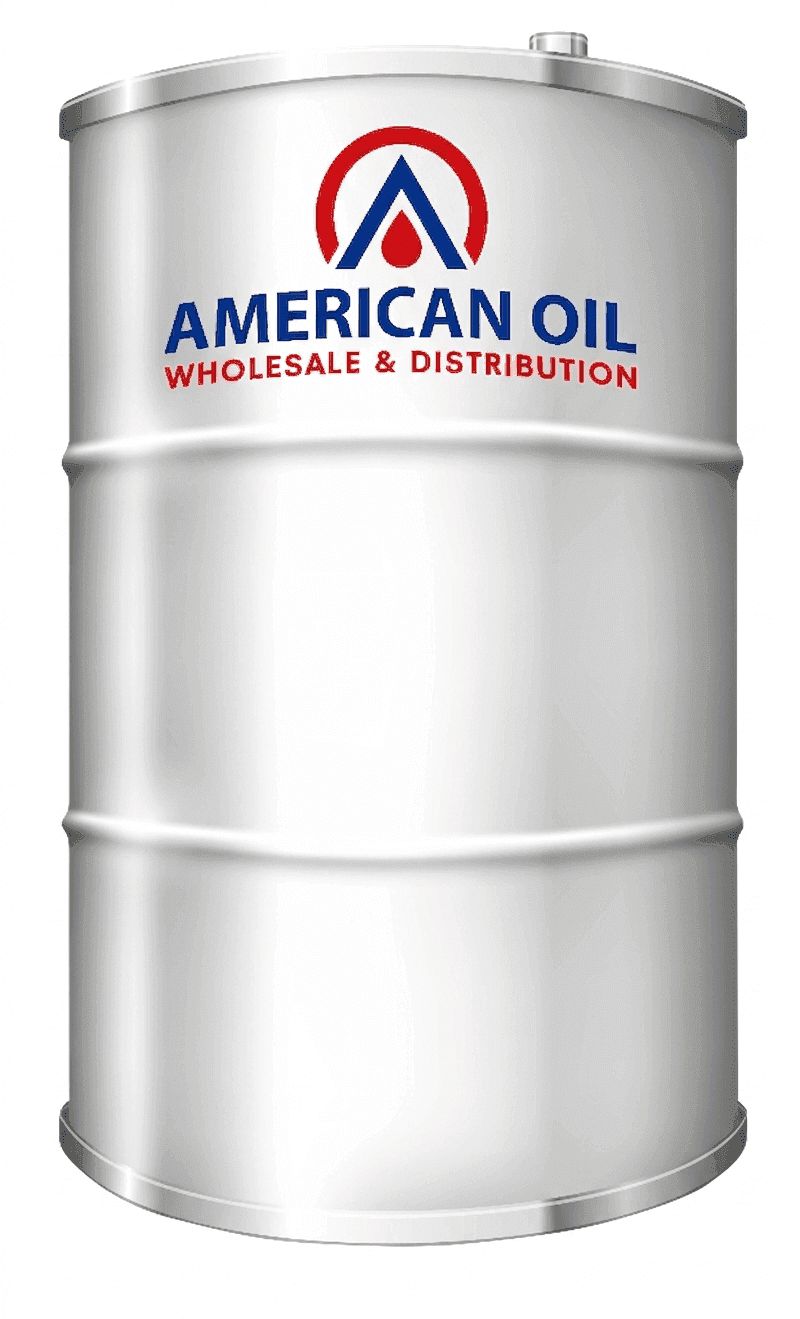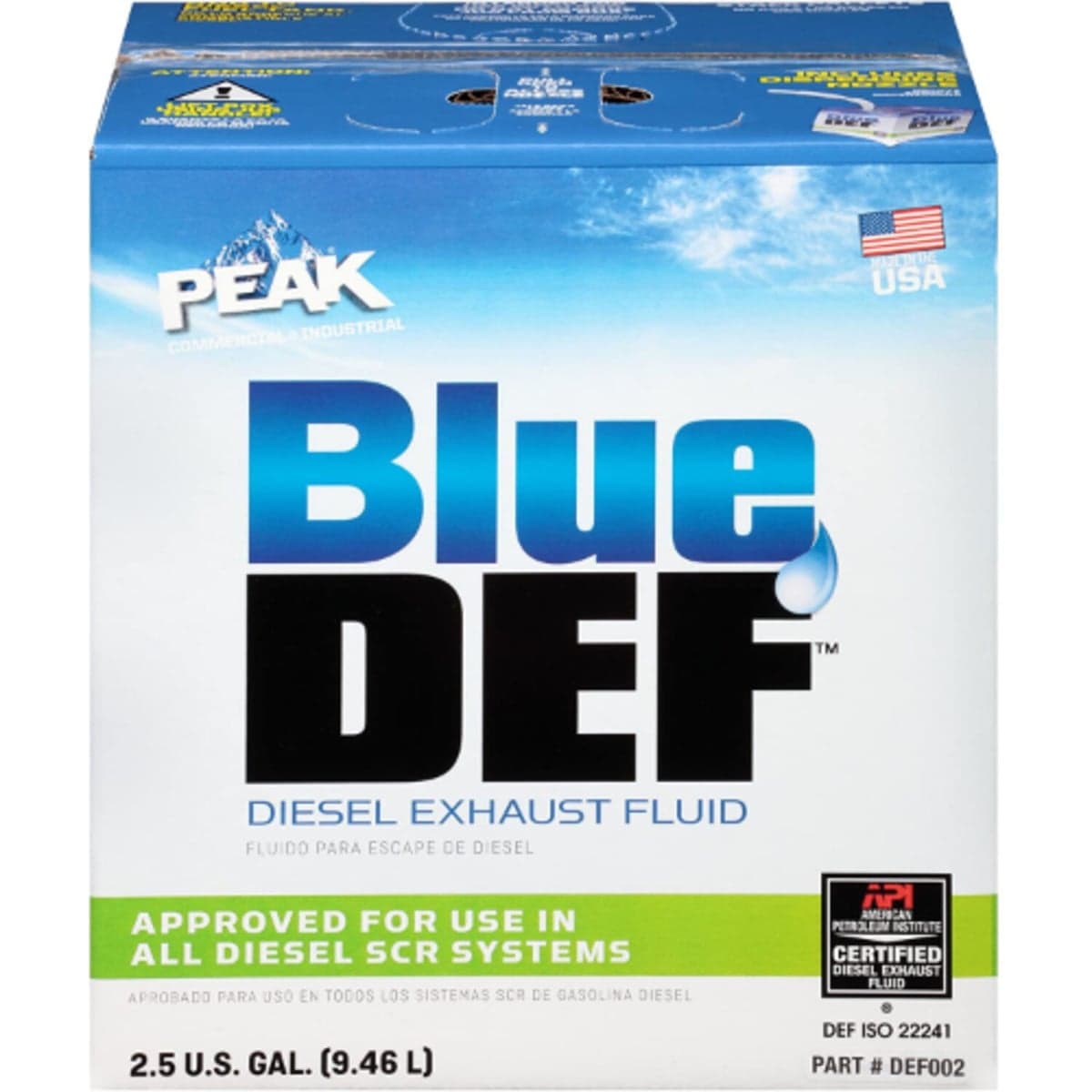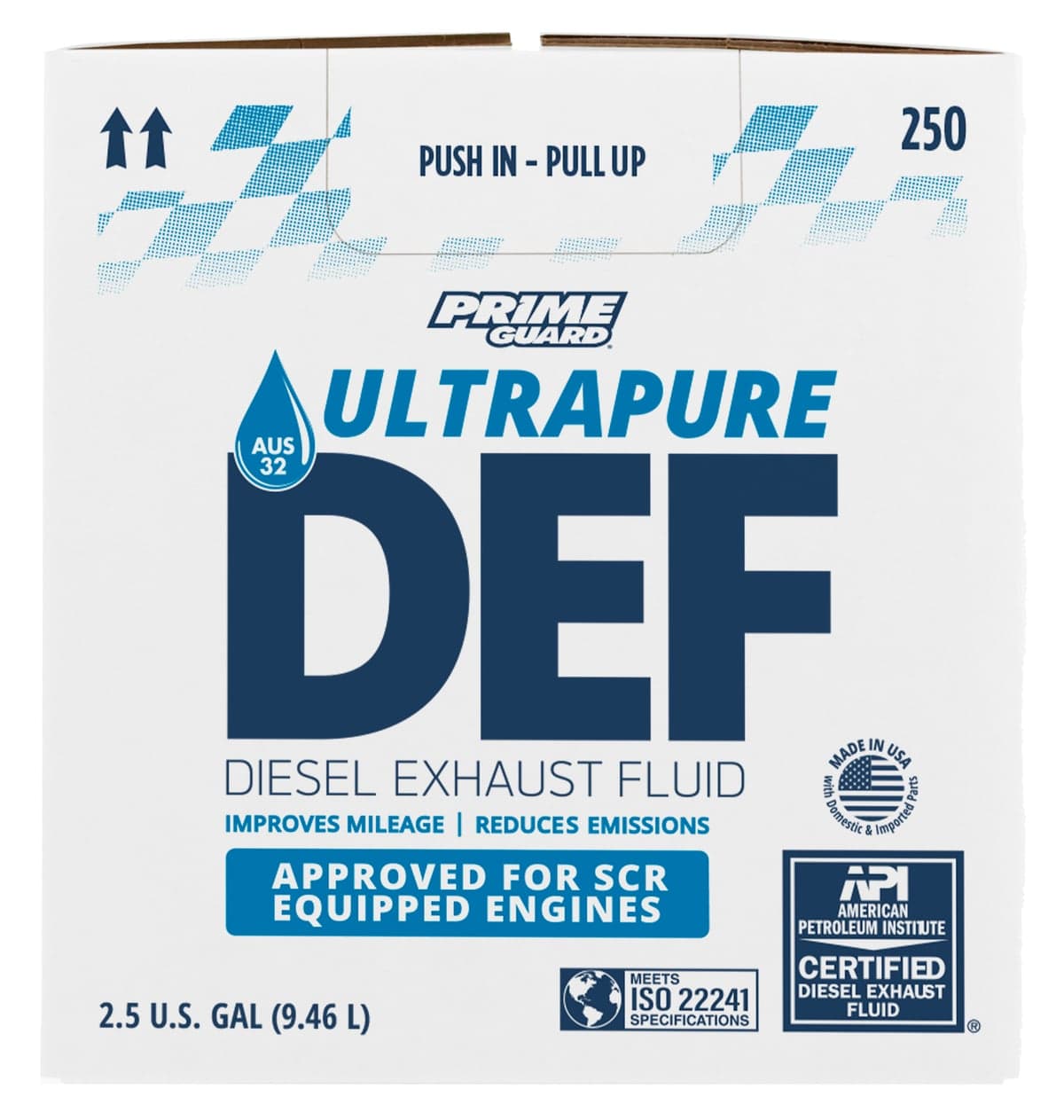
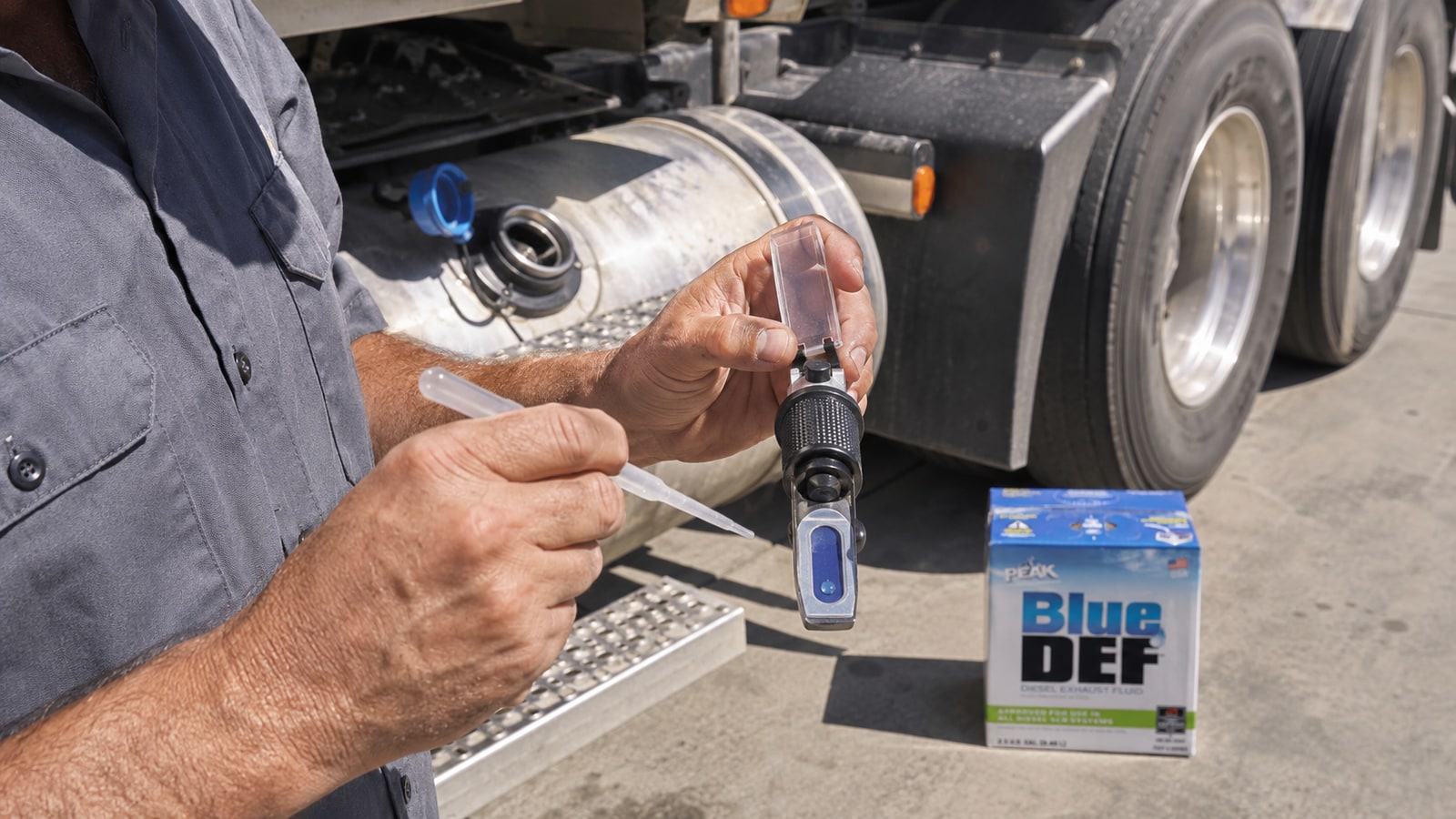
You test DEF quality by checking its urea concentration against the ISO 22241-1 specification of 32.5% (plus or minus 0.7%) with a DEF-specific refractometer, a quick check any technician can run at the drum. In South Florida, where Miami-Dade's average July high reaches 91 degrees F (33 degrees C) per NOAA National Centers for Environmental Information, and ISO 22241-3 sets the maximum recommended DEF storage temperature at 30 degrees C (86 degrees F), any drum or tote stored in an uncooled bay or storage room sits above the standard's temperature threshold for most of the year. Testing before you fill the SCR tank protects a system whose catalyst and injectors can become expensive to replace if degraded or contaminated fluid gets through. We stock Peak Blue Diesel Exhaust Fluid, the brand most shops ask us for, plus Prime Guard Diesel Exhaust Fluid and American Oil Diesel Exhaust Fluid, and fresh, in-spec fluid is the cheapest insurance you have against an SCR derate.
If you run a diesel auto shop or a fleet, you have probably seen a DEF quality fault code at least once, and you may have seen someone assume the sensor was bad before checking the fluid. In South Florida's heat, the fluid is often the more likely culprit. This guide explains how DEF degrades, how to run a refractometer test and what the reading means against the ISO 22241-1 spec, what out-of-spec DEF does to an SCR system, and when to reject a batch and order fresh.
How DEF degrades
DEF degrades through three routes: heat, contamination, and UV exposure. It is a precisely formulated product, 32.5% high-purity urea dissolved in deionized water with nothing else, and that simplicity is also its fragility.
- Heat. ISO 22241-3, the DEF handling and storage standard, sets the maximum storage temperature at 30 degrees C (86 degrees F) for extended periods. Above that threshold, urea concentration can shift outside the ISO 22241-1 specification band as the solution's composition changes with temperature. Stored in a climate-controlled room at or below 25 degrees C (77 degrees F), DEF has an 18-month shelf life per ISO 22241-3. Stored in a hot South Florida shop bay, that window is meaningfully shorter.
- Contamination. DEF is corrosive to zinc, copper, brass, bronze, and galvanized steel. Any contact with those materials, even trace amounts from a fitting or pump, introduces metal ions that degrade the fluid and can damage the SCR catalyst. Diesel fuel contamination is the worst case: even a small amount triggers fault codes and can require a full system flush plus injector and catalyst service. DEF must only contact containers and dispensing equipment made of HDPE, polypropylene, stainless steel grade 304 or 316, or materials specifically certified for DEF service per ISO 22241-3.
- UV exposure. Ultraviolet light breaks down urea over time. Drums and totes kept in direct sunlight degrade faster than those stored indoors. Opaque containers and covered indoor storage are required under ISO 22241-3.
How to test DEF with a refractometer
A DEF refractometer reads urea concentration directly on a urea percentage scale, calibrated for the 32.5% urea solution DEF requires. The test:
- Clean the prism with deionized or distilled water and dry it.
- Place two or three drops of DEF drawn from the drum or tote (not from the vehicle's own DEF tank) on the prism and close the cover plate.
- Hold the instrument up to a light source and read the urea percentage on the scale.
- ISO 22241-1 specifies the acceptable urea concentration as 32.5% plus or minus 0.7%, meaning any reading between 31.8% and 33.2% is within specification. A reading outside that band means the fluid is off-spec and should not be used.
Use only a refractometer calibrated specifically for DEF. A standard Brix refractometer is calibrated for sugar concentration and will not give a reliable urea reading. DEF-specific instruments are available from laboratory and field instrument suppliers.
If the reading is in spec, proceed. If it is out of spec, do not use that fluid. Label the container, set it aside, and test a second sample from a different draw point to confirm. An out-of-spec reading means the fluid has concentrated past spec (evaporation), diluted below spec (moisture intrusion), or been contaminated.
What out-of-spec DEF does to the SCR system
Out-of-spec DEF triggers the vehicle's DEF quality sensor, and a fault code followed by a progressive engine derate is the usual result. The SCR catalyst reduces NOx emissions using the precisely controlled 32.5% urea mix. When urea concentration is too high, excess ammonia can slip through the catalyst and reach downstream components. When concentration is too low, NOx conversion efficiency drops and the OBD system detects the failure, reducing power to move the operator toward repair. In a fleet, a derate takes a truck out of revenue service until the system is cleared. If the contaminating substance was diesel fuel, the clean-out is a full system job: tank flush, line purge, and potential injector and SCR catalyst service.
The South Florida heat reality
Miami-Dade's average high in July is 91 degrees F (33 degrees C) per NOAA NCEI, while ISO 22241-3 sets the maximum recommended DEF storage temperature at 30 degrees C (86 degrees F). A drum or tote in an uncooled South Florida shop, warehouse, or outdoor storage area sits above that threshold for much of the warm season, not just the peak of summer. Indoor, climate-controlled storage is not a preference here, it is the minimum for maintaining the full shelf life that ISO 22241-3 specifies. Shops or fleet yards without dedicated DEF storage in a cooled area should test their drum or tote DEF at least quarterly, and always before drawing from any container that has spent warm months in uncooled storage.
When to test
Test DEF from any drum or tote before use in these situations:
- Before drawing from a new drum or tote for the first time, especially if the container has sat in uncooled storage for an extended period.
- Before any fill from a container that has been in South Florida heat storage during warm months.
- When a DEF quality fault code appears on a vehicle, before assuming the quality sensor is the problem.
- When DEF shows visible discoloration (in-spec DEF is clear and colorless), a strong ammonia odor, or visible crystalline deposits inside the container.
A quarterly check on any drum or tote in active use is a reasonable floor for a South Florida diesel shop or fleet.
Buying fresh DEF from American Oil
If a drum or tote tests out of spec, remove it from service and order fresh. We carry Peak Blue Diesel Exhaust Fluid and Prime Guard Diesel Exhaust Fluid in 2.5-gallon jugs by the case, 55-gallon drums, and 275-gallon totes, and American Oil Diesel Exhaust Fluid in 55-gallon drums and 275-gallon totes. Drums and totes put the same ISO 22241-conforming product in your shop at wholesale economics instead of jug-by-jug retail. We deliver across South Florida from West Palm Beach to Homestead and export to the Caribbean and Latin America, where the same ISO 22241 standard applies to every SCR-equipped diesel in service.
Test before you fill, and buy fresh when in doubt
Testing before every fill and buying fresh when a container fails is the cheapest SCR protection a shop or fleet can run. Request a wholesale DEF quote for Peak Blue Diesel Exhaust Fluid, Prime Guard Diesel Exhaust Fluid, or American Oil Diesel Exhaust Fluid by the case, drum, or tote, tell us your monthly DEF volume, and we will quote the format that keeps your SCR systems clean, with next-day South Florida delivery and export available.