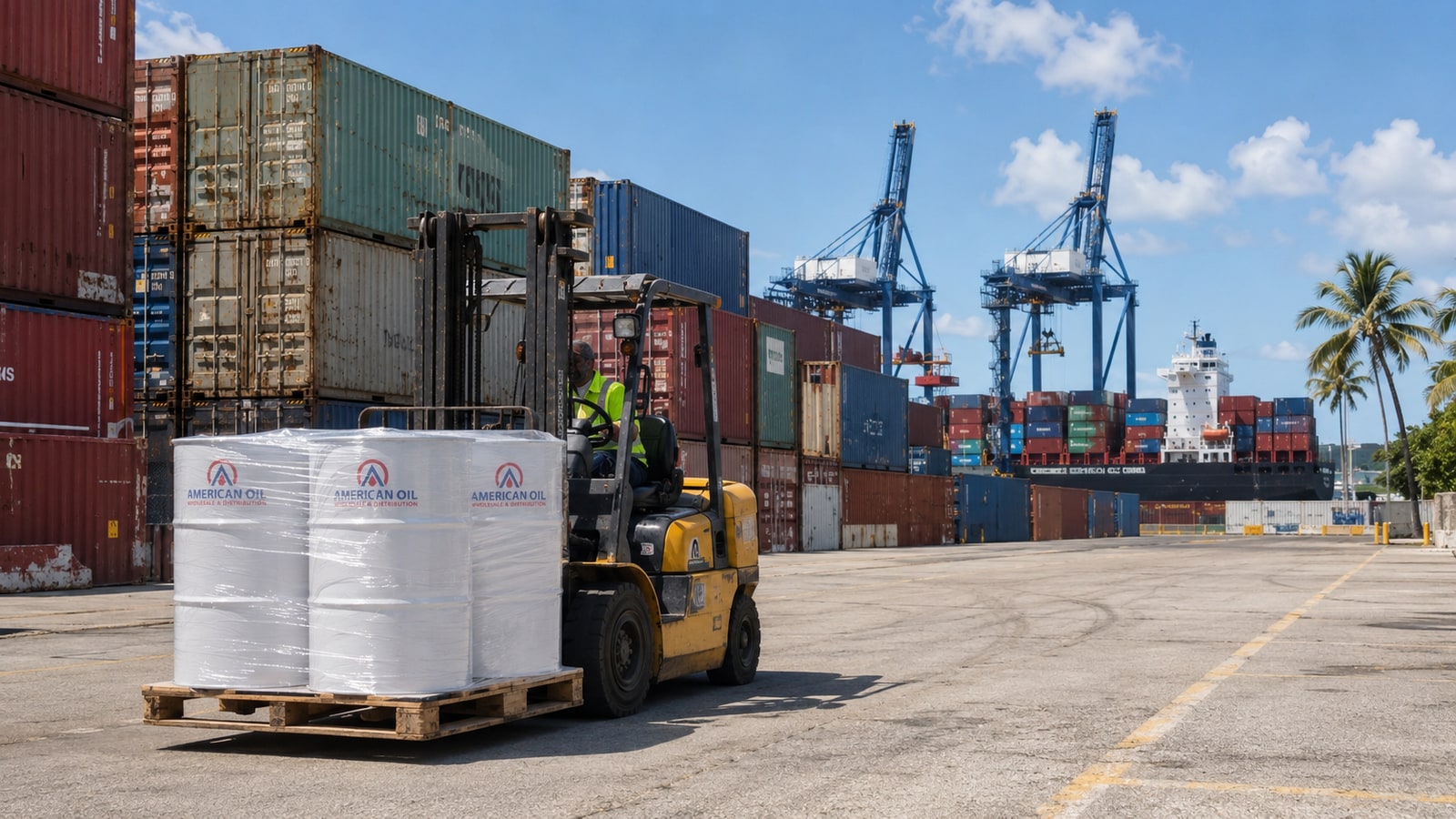
You export motor oil to the Caribbean and Latin America by choosing the right packaging (drum or tote for volume, case for smaller or specialty orders), working with a licensed freight forwarder in or near Miami, preparing the required export document stack, and clearing both US export control requirements and the destination country's import rules before the container ships. American Oil Wholesale and Distribution (aoilw.com), a Hialeah-based full-line distributor, handles this as a regular part of what we do: we supply oil and lubricants by the drum (55-gallon), tote (IBC, about 275 to 330 gallons), or by the case, coordinate with the freight forwarder, and make sure the documentation is correct so the shipment clears without a hold.
If you run a shop, an import business, or a fleet operation in the Caribbean or Latin America, sourcing from South Florida makes sense on logistics alone. Miami's port is the primary US gateway for Caribbean and Latin America trade, the freight forwarding infrastructure that runs through the region is built for this lane, and a full-line wholesale distributor puts motor oil, DEF, coolant, and grease on one pallet and one invoice. This guide covers how the export process actually works, which documents every shipment needs, how finished motor oil is classified for international freight, what export control and sanctions rules apply, and how to structure the relationship with a distributor that already exports regularly.
Packaging for export: drum, tote, and case
The packaging decision for an oil export follows the same cost logic as a domestic wholesale order, with two additional factors: the container must hold up in ocean transit, and the destination must be able to receive and pump from it.
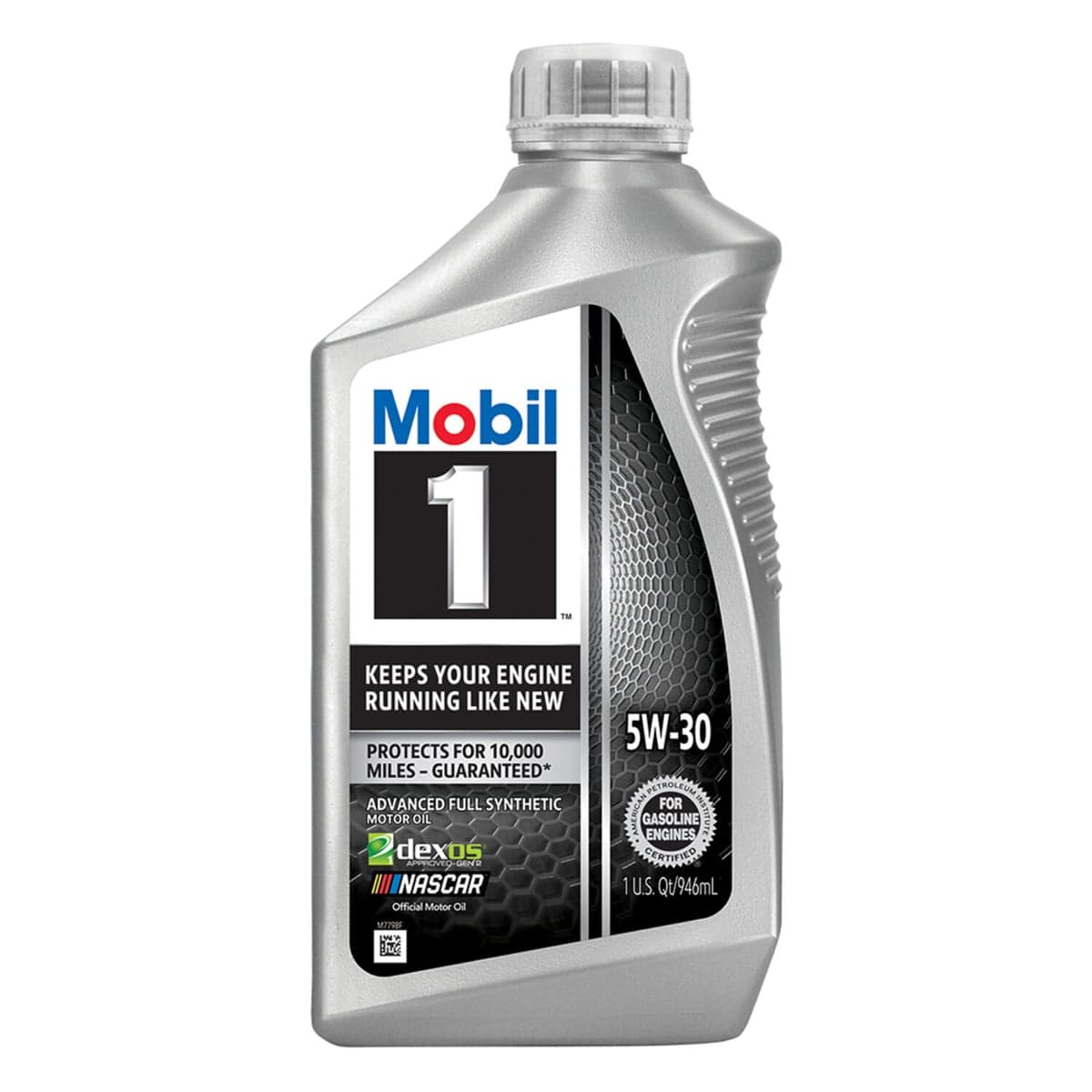
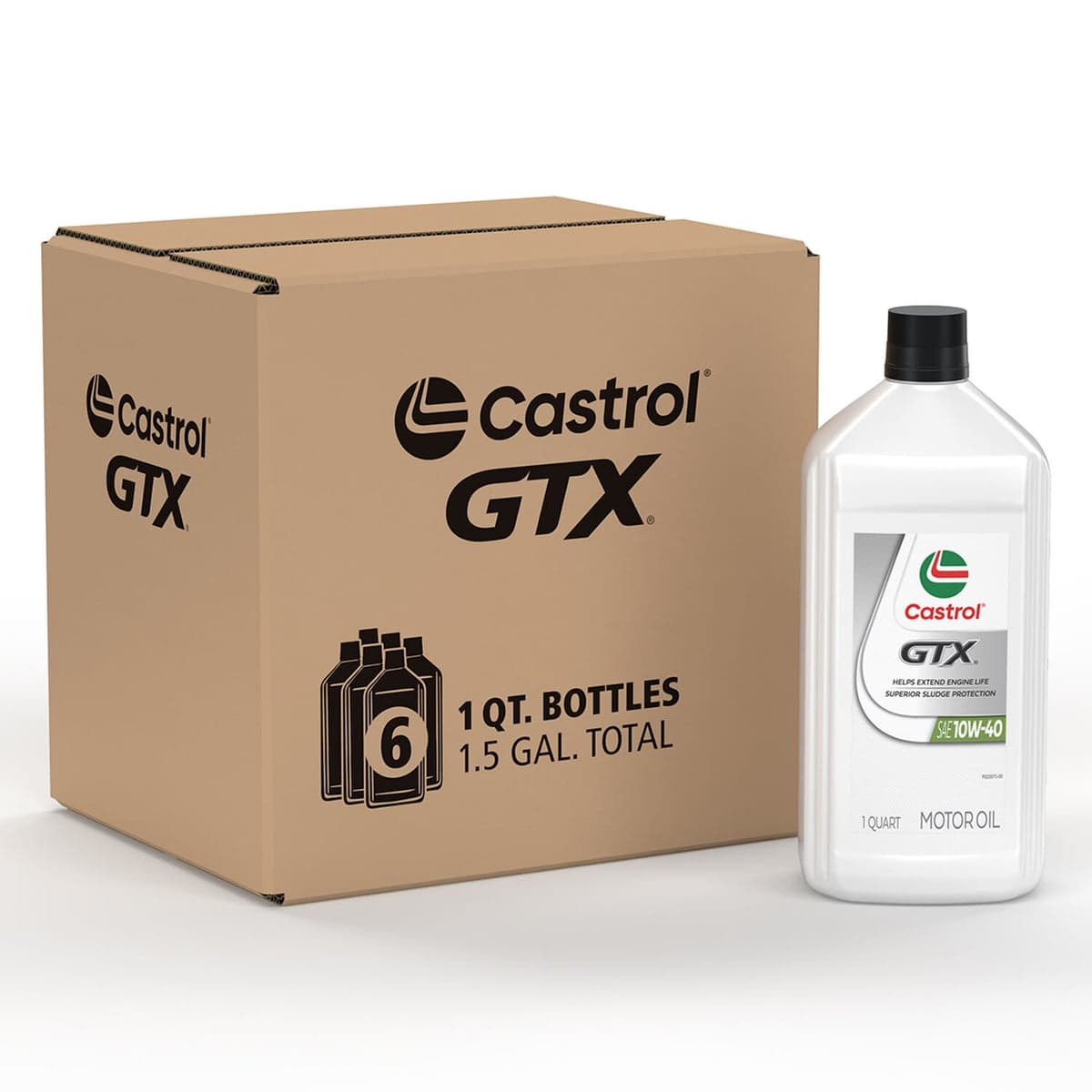
- Cases (cartons of quart or gallon bottles) are the right choice for smaller orders and for specialty grades that turn low volume at the destination. They are the easiest to handle and store at arrival, but they carry the highest cost per quart. A case shipment can move as part of a mixed-product container or as a smaller LCL (less than container load) booking.
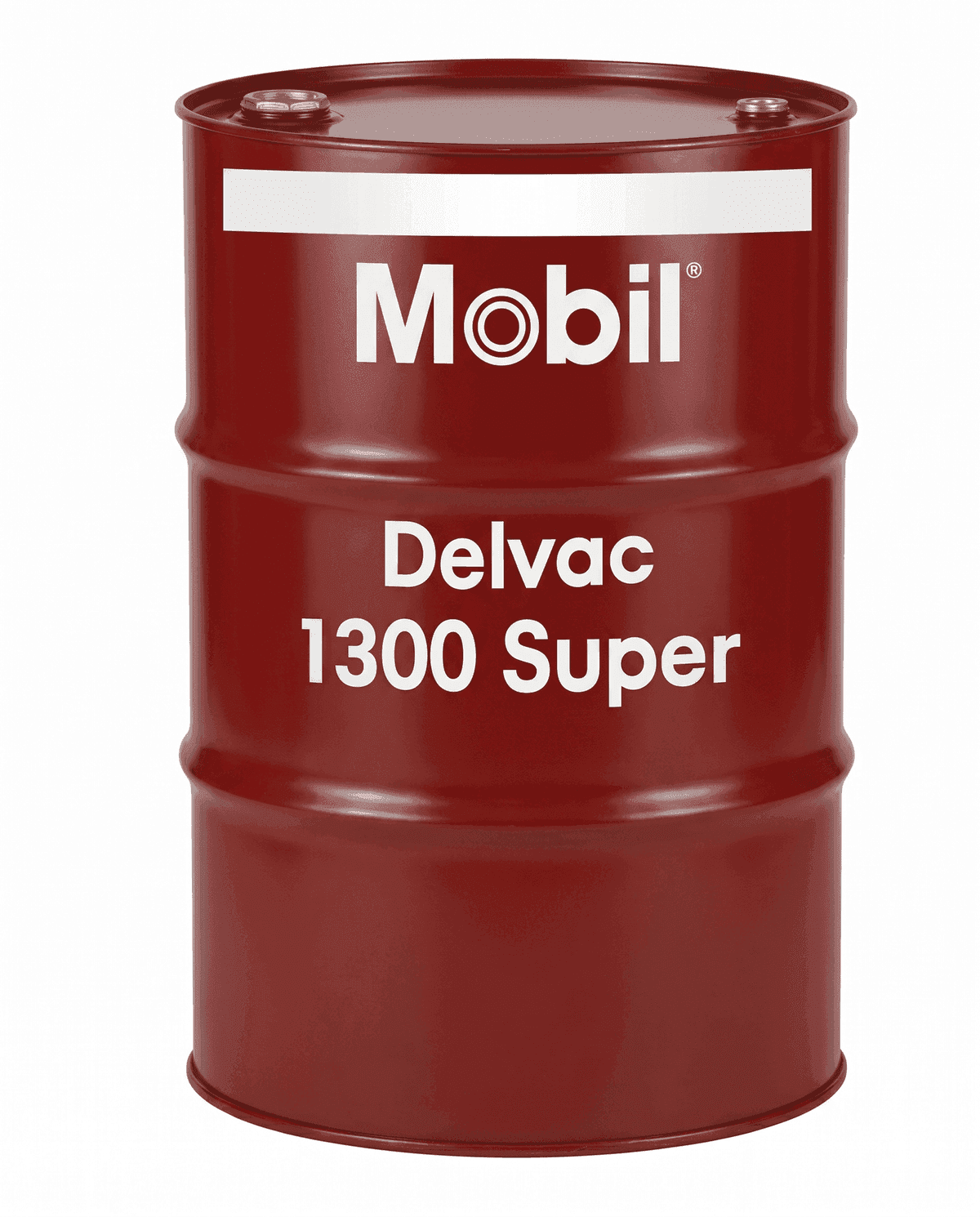
- Drums (55-gallon steel drums) are the standard for mid-volume export oil shipments. Each drum holds 220 quarts, palletizes cleanly, and loads well into an ocean container. The destination needs a drum pump and storage space, but the cost per quart drops sharply versus cases. The exact number of drums per container depends on the grade's weight and the drum tare; your freight forwarder tells you the count for your specific product and container type.
- Totes (IBC, about 275 to 330 gallons) are the highest-volume option and the lowest cost per gallon. A tote holds roughly 1,100 to 1,320 quarts depending on its rated size, and a full-container tote load is the most cost-efficient way to move a single high-volume grade. The destination needs IBC equipment: a pump rated for the container and floor space large enough to hold the tote footprint. Confirm the destination can handle IBC before you book totes. Count per container again depends on grade weight and tote dimensions.
The American Oil house brand for pails, drums, and totes is the American Oil brand. Thunder Oil is the house brand for cases and quarts. For export accounts, drums and totes are the most common choice.
The export document stack
Missing or incorrect paperwork is the most common reason a container gets held at the destination port. Every commercial export shipment of lubricants from the US to the Caribbean or Latin America requires the following:
Commercial invoice. The seller's invoice to the buyer, listing the goods, quantities, unit values, total value, the Incoterms (the agreed delivery terms, such as FOB Miami or CIF destination port), and the details of both parties. This is the document the destination customs authority uses to assess duties.
Packing list. A line-by-line record of what is in the container: case count, drum count, tote count, gross weights, net weights, and dimensions. It must match the invoice item for item.
Bill of lading (B/L). The contract of carriage between the shipper and the ocean carrier. The B/L is also the title document for the goods in transit. It must be accurate and consistent with the invoice and packing list.
Safety Data Sheet (SDS). Finished lubricating oils are chemical products. Under the Globally Harmonized System of Classification and Labelling of Chemicals (GHS), every chemical product requires an SDS. The SDS must accompany the shipment and be available at the destination. Freight forwarders and destination customs brokers routinely ask for it, and it is the document that confirms the product's flash point for hazmat classification purposes.
Electronic Export Information (EEI) filing. US law (the Foreign Trade Regulations, 15 CFR Part 30, administered by the US Census Bureau) requires the shipper or its authorized agent to file EEI through the Automated Commercial Environment (ACE) system for most commercial export shipments valued over $2,500 per Schedule B commodity going to one country. Lubricating oils are classified under Schedule B commodity codes in the 2710.19 heading (petroleum oils, other); the exact 10-digit code depends on the specific product. The freight forwarder files the EEI as part of standard export service, but the legal responsibility rests with the exporter.
Certificate of origin (where applicable). Some Caribbean and Latin American countries grant reduced import duties on US-origin goods under trade agreements. CAFTA-DR (the US-Central America-Dominican Republic Free Trade Agreement) covers certain Central American and Dominican Republic markets; the Caribbean Basin Initiative covers preferential duty treatment for certain island markets. A certificate of origin is the document that unlocks the applicable preferential rate. Your freight forwarder or customs broker advises on which agreements apply to your destination and prepares the certificate.
Hazmat classification: what finished motor oil is and is not
The most common question from first-time oil exporters is whether motor oil triggers hazardous materials rules and what that adds to the shipment cost.
Finished lubricating oils, including most motor oils, have flash points well above 60°C (140°F). Under the International Maritime Dangerous Goods (IMDG) Code, which the International Maritime Organization (IMO) publishes and which governs ocean freight internationally, liquids with flash points at or above 60°C are generally not regulated as Class 3 flammable liquids. Under US DOT regulations (49 CFR), lubricating oils with flash points at or above 140°F (60°C) in non-bulk packaging are similarly not regulated as hazardous materials for transport. That means a standard ocean container shipment of finished motor oil in drums or totes does not typically require the Class 3 hazmat placarding, UN-certified packaging, or special container stowage that a genuinely flammable liquid cargo triggers.
Two things are still required regardless of hazmat classification. First, an SDS for every chemical product in the shipment, as noted above. Second, a check of the destination country's own import-side rules, because some countries apply import classifications that differ from IMDG.
DEF (diesel exhaust fluid, per ISO 22241) is a 32.5% aqueous urea solution. It is not classified as hazardous under DOT or IMDG and ships in its standard 2.5-gallon jugs with no hazmat surcharge.
If your shipment includes base oils rather than finished lubricants, flash points can be lower and the IMDG classification may differ. Confirm the SDS flash point data for every product before the shipping documents are prepared.
Export controls and sanctions screening
US export of finished lubricating oils to most destinations requires no export license. Most motor oils, DEF, and common lubricants are classified as EAR99 under the Bureau of Industry and Security's Export Administration Regulations (EAR): they are subject to the EAR but not listed on the Commerce Control List and can be exported without a license to most countries.
Two checks are required before every export order, regardless of product classification:
OFAC sanctions screening. The US Treasury's Office of Foreign Assets Control (OFAC) administers sanctions programs that restrict or prohibit trade with certain countries, entities, and individuals. Some Caribbean and Latin American destinations or counterparties may be subject to OFAC sanctions. Screen every buyer, end user, and destination against OFAC's Specially Designated Nationals (SDN) list and the current country-level sanctions programs before accepting any order. The legal obligation rests with the exporter even when a freight forwarder assists with the screening. Current OFAC resources are at ofac.treasury.gov.
Destination country import requirements. Some countries require an import permit or prior authorization for petroleum products. A container that arrives at the destination port without the correct import authorization can be held or returned, at the importer's cost. Confirm the destination country's import licensing and any relabeling or local-language labeling requirements before booking the shipment.
Working with a Miami freight forwarder
A licensed freight forwarder (an Ocean Transportation Intermediary licensed by the Federal Maritime Commission) handles the booking, documentation coordination, and ocean logistics between the shipper's warehouse and the destination port. For an oil export from South Florida, the forwarder arranges the container pickup, books the ocean service, coordinates the export documentation package, files the EEI through ACE, and delivers the bill of lading once the container is loaded and sealed.
Customs clearance at the destination is handled by the buyer's customs broker in the destination country, not by the US-side freight forwarder. The buyer's broker needs the full document set (commercial invoice, packing list, bill of lading, SDS, certificate of origin if applicable) before the vessel arrives at the destination port. Make sure that document set is transmitted well ahead of the vessel's scheduled arrival.
For first-time oil exporters, the most reliable path is to source from a distributor that already exports regularly and knows the document requirements for the region. The freight forwarder relationships are already in place, the SDS files are current, and the packing and labeling match what destination customs expects. That is how the export side of our business works: we handle the product and the document package from our warehouse to the freight forwarder, so the shipment is ready when it is booked.
Set up your export account with American Oil
The freight infrastructure for Caribbean and Latin America lubricant exports out of Miami is already built. What you need is a full-line wholesale distributor with an active book of export accounts, current SDS files for every product, and established relationships with the freight forwarders who work this lane regularly. Open your export account at aoilw.com, or call American Oil Wholesale and Distribution, to get a quote by grade, packaging tier (case, drum, or tote), and destination. Tell us your grades, your monthly volume, and where the shipment goes, and we handle the logistics from our Hialeah warehouse to the freight forwarder's hands, with Caribbean and Latin America export as a standard service.
Sources
- US Census Bureau, Foreign Trade Regulations (FTR), 15 CFR Part 30, Electronic Export Information and ACE filing. census.gov/foreign-trade/regulations
- Bureau of Industry and Security (BIS), Export Administration Regulations (EAR), EAR99 classification and Commerce Control List. bis.doc.gov
- US Treasury, Office of Foreign Assets Control (OFAC), sanctions programs and Specially Designated Nationals list. ofac.treasury.gov
- International Maritime Organization (IMO), IMDG Code for dangerous goods by sea. imo.org
- US Department of Transportation (DOT), 49 CFR hazardous materials transportation regulations. ecfr.gov
- American Petroleum Institute (API), engine oil service categories. api.org
- SAE International, SAE J300 engine oil viscosity classification. sae.org
- ISO 22241, diesel exhaust fluid (DEF) specification. iso.org