A fleet without a written PM schedule pays for breakdowns instead of preventing them, and buys oil by the case when a drum or tote would cut cost on every quart of its highest-volume grade. A PM schedule fixes both problems: it names the service interval for each vehicle, the lubricant going in at each visit, and the package size that makes cost-per-quart work at your volume. American Oil Wholesale and Distribution, a Hialeah-based full-line distributor, supplies every fluid on the PM bill, from CK-4 diesel engine oil and DEF to axle gear oil, chassis grease, and ATF, so one account covers the full schedule; our fleet supply page shows how the program works.
Running without a PM program does not save money; it defers the cost until the breakdown, then multiplies it. An engine oil change is scheduled maintenance. A seized bearing or an oxidized transmission is emergency repair plus the downtime cost of a truck off the road. Fleet managers who formalize the schedule, even in a basic spreadsheet, move from reactive to predictive spending and make lubricant purchasing predictable enough to justify buying by the drum or tote instead of the case.
Step 1: Start with the OEM interval, not a rule of thumb
The engine maker's required drain interval is in the service manual, and it is the correct starting point. Oil-change interval rules of thumb exist as marketing copy from oil brands, not as engineering specifications for your engine. The right number for a Class 8 diesel is what the engine maker says it is, given the duty cycle and the API oil category they require.
The oil category matters here. API CK-4 sets a minimum high-temperature high-shear (HTHS) viscosity of 3.5 cP at 150 degrees Celsius (API PC-11 specification), which is why CK-4-rated oil holds its protective film under load conditions that would thin out a lighter category. If your engine maker requires CK-4, the OEM interval is calibrated to that level of protection. Using a different category with the same interval is outside the spec. If you are matching a name-brand 15W-40 CK-4 to an equivalent, our lubricant cross-reference chart lists the controlling spec for each family.
Step 2: Pick the right trigger type for your fleet
OEM intervals are published in one of three units, and your PM schedule should match the one the engine maker uses.
| Trigger type | When to use | Common South Florida application |
|---|---|---|
| Mileage | On-highway trucks with a reliable odometer | Over-the-road freight, regional delivery |
| Engine hours | Heavy-idle or off-road equipment where mileage understates wear | Yard trucks, jockeys, forklifts, pumps |
| Calendar | Low-mileage or infrequently used vehicles | Backup units, seasonal equipment |
- Mileage triggers are standard for on-highway trucks with a functioning odometer. Pull a truck at the interval the OEM specifies, every time.
- Engine hour triggers apply to equipment that idles heavily or operates off-road, where mileage does not reflect actual engine load. A delivery truck that idles several hours per day accumulates wear without moving significant mileage.
- Calendar triggers cover vehicles at low mileage or use. Oil degrades through oxidation even when the engine is not running, so a calendar backstop, quarterly or biannual for low-use vehicles, catches intervals that mileage alone would miss.
Most South Florida delivery and logistics fleets need all three, because a mixed fleet typically has over-the-road trucks (mileage trigger), yard trucks and jockeys (hour trigger), and low-use backup vehicles (calendar trigger). One PM program, three trigger types, one supplier.
Step 3: Account for South Florida's heat
South Florida runs ambient heat year-round, and temperature affects how fast oil degrades. Oxidation, which breaks down base oil and depletes TBN (total base number, measured by ASTM D4739), accelerates at higher operating and ambient temperatures. Trucks running in Miami-Dade, Broward, and Palm Beach in July are running harder thermally than the same engine in a northern climate.
This is not a reason to shorten intervals below the OEM recommendation without data. It is the South Florida-specific reason to use oil analysis to monitor drain intervals rather than extending them past the OEM baseline. Analysis reports on TBN remaining, wear metal levels, viscosity shift, and contamination, so you know whether the oil is still in spec rather than estimating it.
DEF storage is the other South Florida heat consideration. ISO 22241 defines DEF quality parameters, and DEF degrades above 86 degrees Fahrenheit. South Florida fleet yards that store DEF in outdoor tanks or exposed containers are degrading fluid quality before it reaches the truck. Indoor, shaded, or temperature-controlled DEF storage is a PM discipline unique to this market.
Step 4: Map the full lubricant bill for each PM visit
An oil change is one line on the PM visit, not the whole bill. A complete PM visit for a Class 6-8 commercial truck covers these items:
- Engine oil: API CK-4 at the grade the OEM specifies, replaced at the service interval. CK-4 is the backward-compatible category that covers most mixed and older diesel fleets per the API PC-11 program. FA-4 applies only when the specific engine maker calls for it at the lower-viscosity grades FA-4 is defined for; confirm the required category before switching.
- Engine oil filter: replaced with the oil.
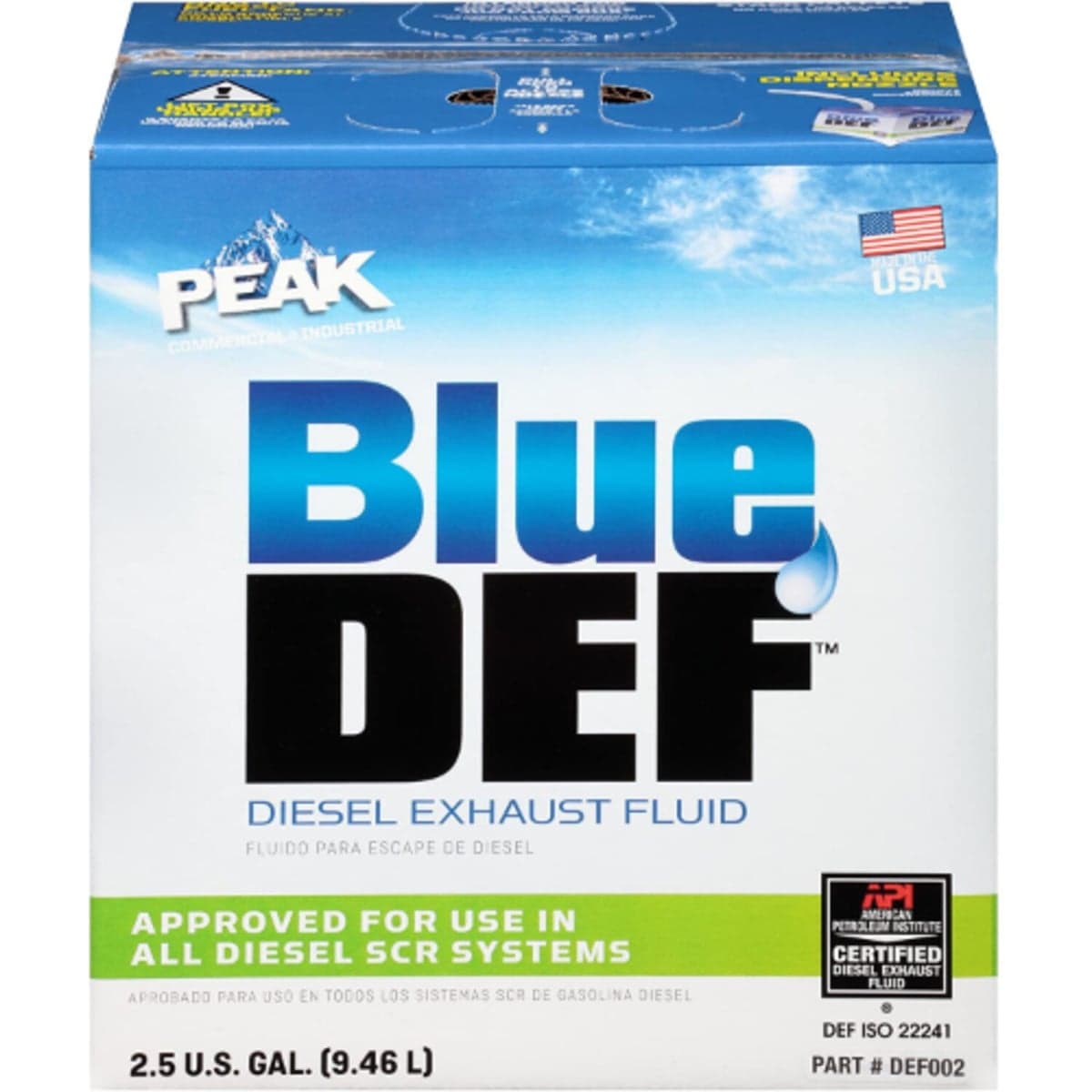
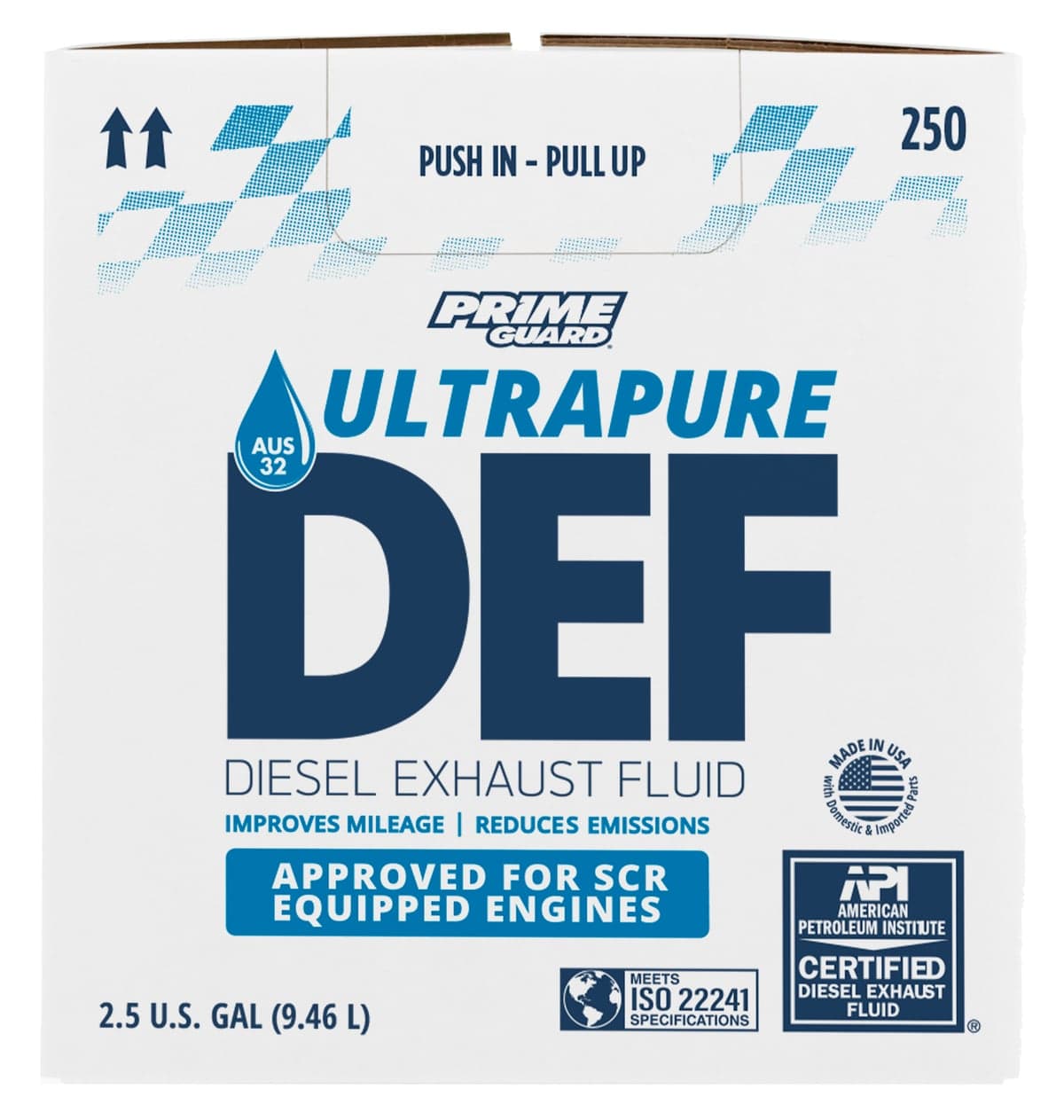
- DEF: topped off at every engine service to keep the SCR system running. We stock Peak Blue Diesel Exhaust Fluid, Prime Guard Diesel Exhaust Fluid, and American Oil Diesel Exhaust Fluid, all available in 2.5-gallon jugs, 55-gallon drums, and 275-gallon totes.
- Axle gear oil: checked at intervals the axle maker specifies, typically longer than the engine interval. API GL-5 gear oil at the viscosity the drive axle maker requires protects the differential under load; lines like American Oil GL-5 Gear Oil SAE 80W-90 and American Oil GL-5 Gear Oil SAE 85W-140 cover the common heavy-duty grades.
- Chassis grease: NLGI 2 GC-LB chassis grease (per ASTM D4950) for kingpins, U-joints, fifth-wheel plates, and wheel bearings, applied at every PM visit on a manual-zerk chassis.
- Transmission fluid: checked at intervals per the transmission maker's spec, using the fluid specification that maker licenses for the unit. ATF drain intervals are long but should be on the schedule by mileage or calendar.
- Coolant: checked and topped off per the OEM coolant type. A full drain-and-fill lives on a longer interval, but a concentration check at every PM confirms protection.
Step 5: Match the package size to the PM volume
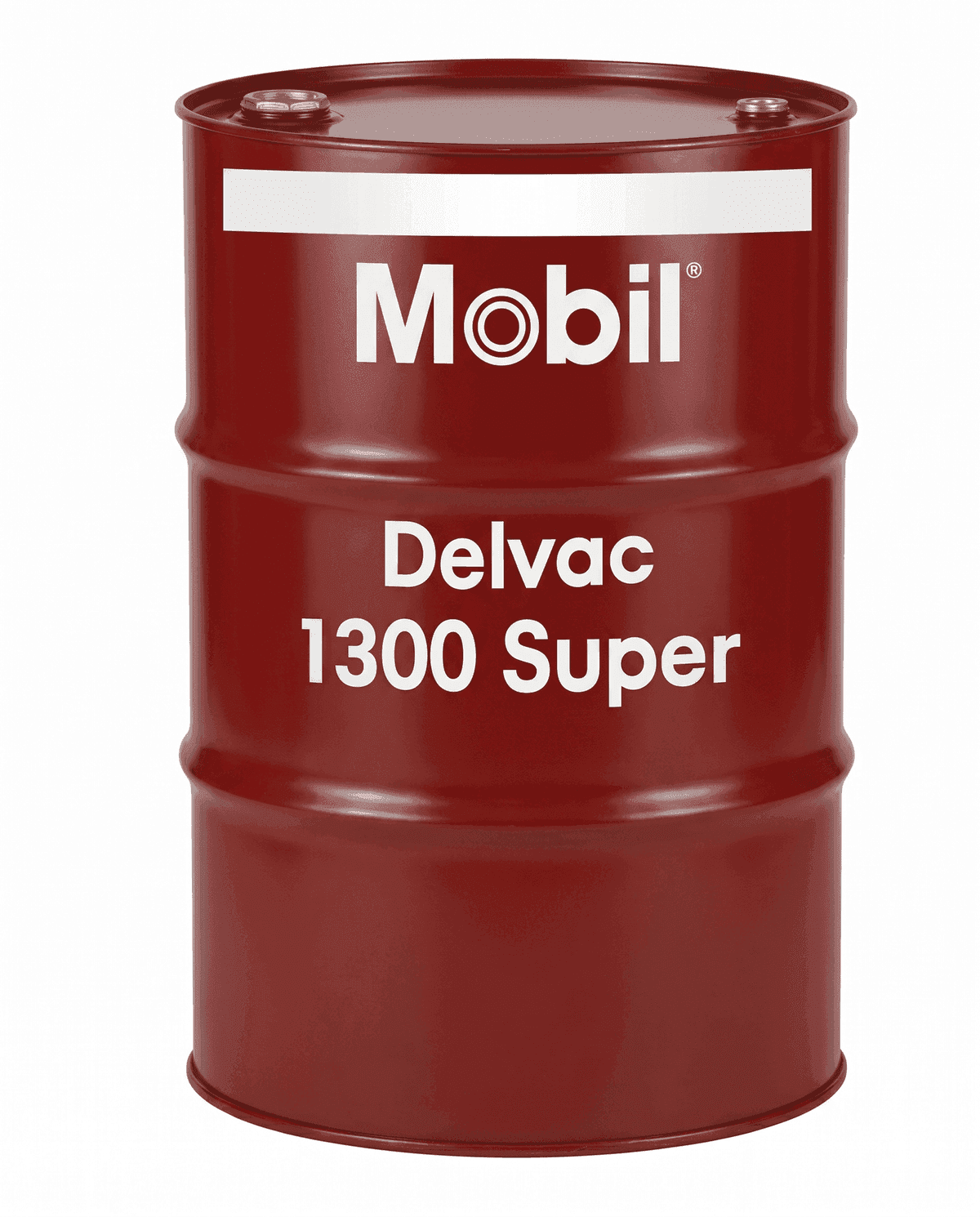
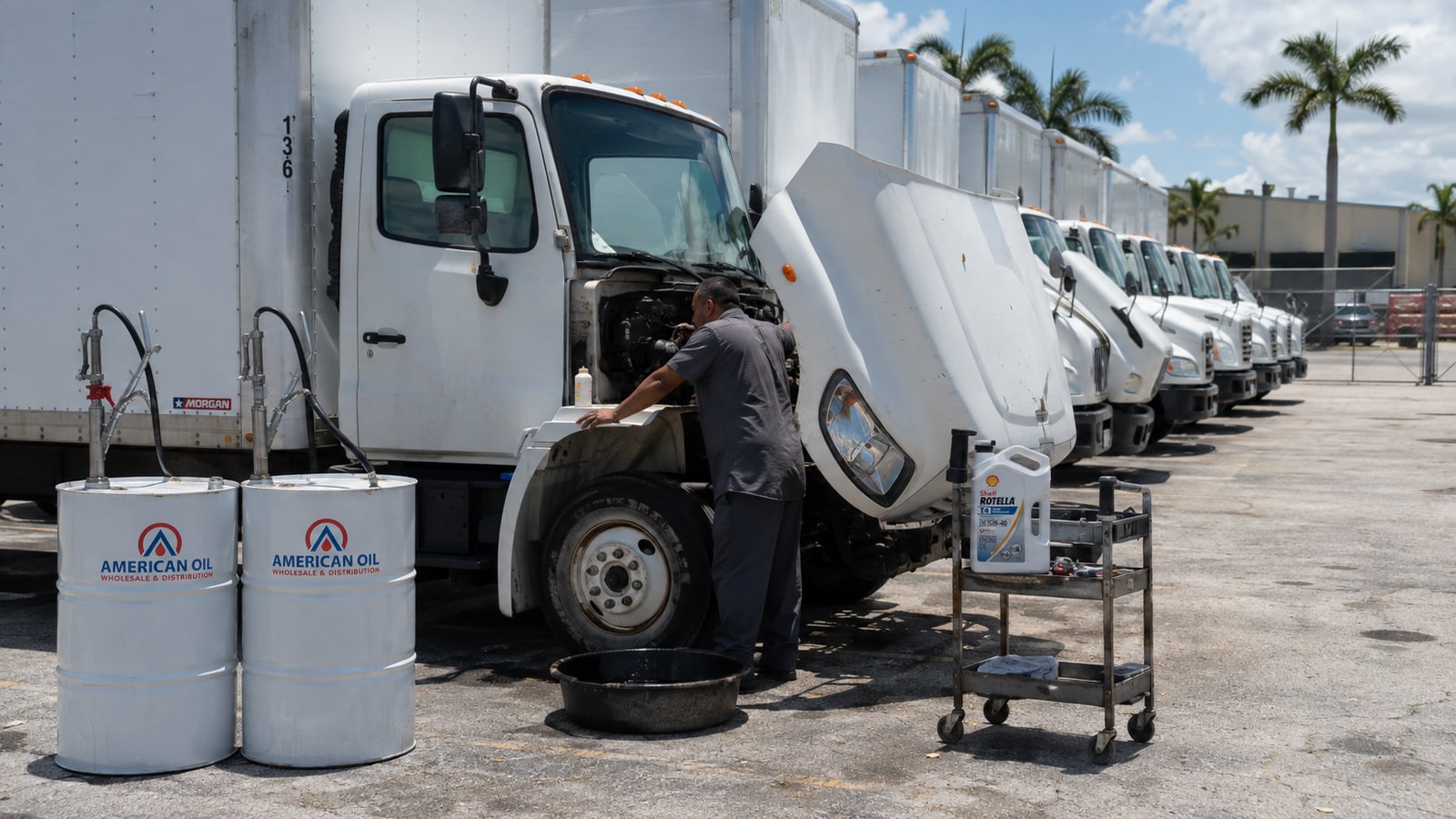
Once you know how much of each fluid a PM visit consumes and how many PMs you run per month, the package decision is mechanical: buy the largest container you can finish in a reasonable time. For CK-4 engine oil at a fleet running steady monthly volume on one common grade, a 55-gallon drum holds 220 quarts (55 gallons times 4 quarts per gallon) and is the standard working unit at the bay. Items like American Oil Heavy Duty Motor Oil CK-4 SAE 15W-40 come in 5-gallon pails and 55-gallon drums, and Mobil Delvac 1300 Super Heavy Duty Motor Oil CK-4 SAE 15W-40 runs up to the 55-gallon drum and 275-gallon tote.
At higher volume, a 275-gallon tote holds 1,100 quarts (275 times 4) and lowers cost per quart further, because one wholesale rate spreads across a larger volume and one delivery handles more of the schedule. Cases of quart or gallon bottles are right for specialty fluids, low-volume grades, or top-off use. DEF follows the same logic: the 2.5-gallon jug by the case for low-consumption vehicles, moving to the drum or tote when monthly volume justifies the step up. Our South Florida delivery routes run weekly from West Palm Beach down to Homestead, so the schedule and the deliveries line up.
Build the schedule, then stock it right
Start with the OEM interval, choose the trigger type that matches how your fleet operates, and map the full lubricant bill for each PM visit. We carry CK-4 diesel engine oil, DEF, GL-5 gear oil, chassis grease, ATF, and coolant for the full PM bill on one account, with a $250 minimum domestic order and next-day delivery across Miami-Dade, Broward, and Palm Beach; fleets that supply operations in the Caribbean and Latin America can also buy through our EXW Miami export program. Tell us your grades and monthly PM volume and request a wholesale quote; we quote the package tier that drops your cost per quart the most.