A standard 20-ft ISO container holds approximately 74 drums of motor oil, 16 x 275-gallon totes, or between 360 and 480 five-gallon pails on standard pallets, for a practical cargo total of roughly 4,000 to 4,400 gallons. The ceiling is almost never cubic space: motor oil weighs 7.2 to 7.4 pounds per gallon, and a full drum load reaches the practical road weight limit on a standard US chassis long before the container runs out of room. At American Oil Wholesale and Distribution (aoilw.com) in Hialeah, FL, we ship all four packaging formats to 31 countries on EXW Hialeah, FL terms from our warehouse at 8090 W 30th Ct. This guide walks through the pallet math, the container math, and the weight arithmetic that sets the real ceiling on every lubricant load.
How Many Cases of Motor Oil Fit on a Pallet?
Pallet math is the foundation of any container load plan. Standard 48 x 40-inch GMA pallets are the baseline for lubricant shipments moving through Miami-area warehouses, and the number of units per pallet changes with pack size:
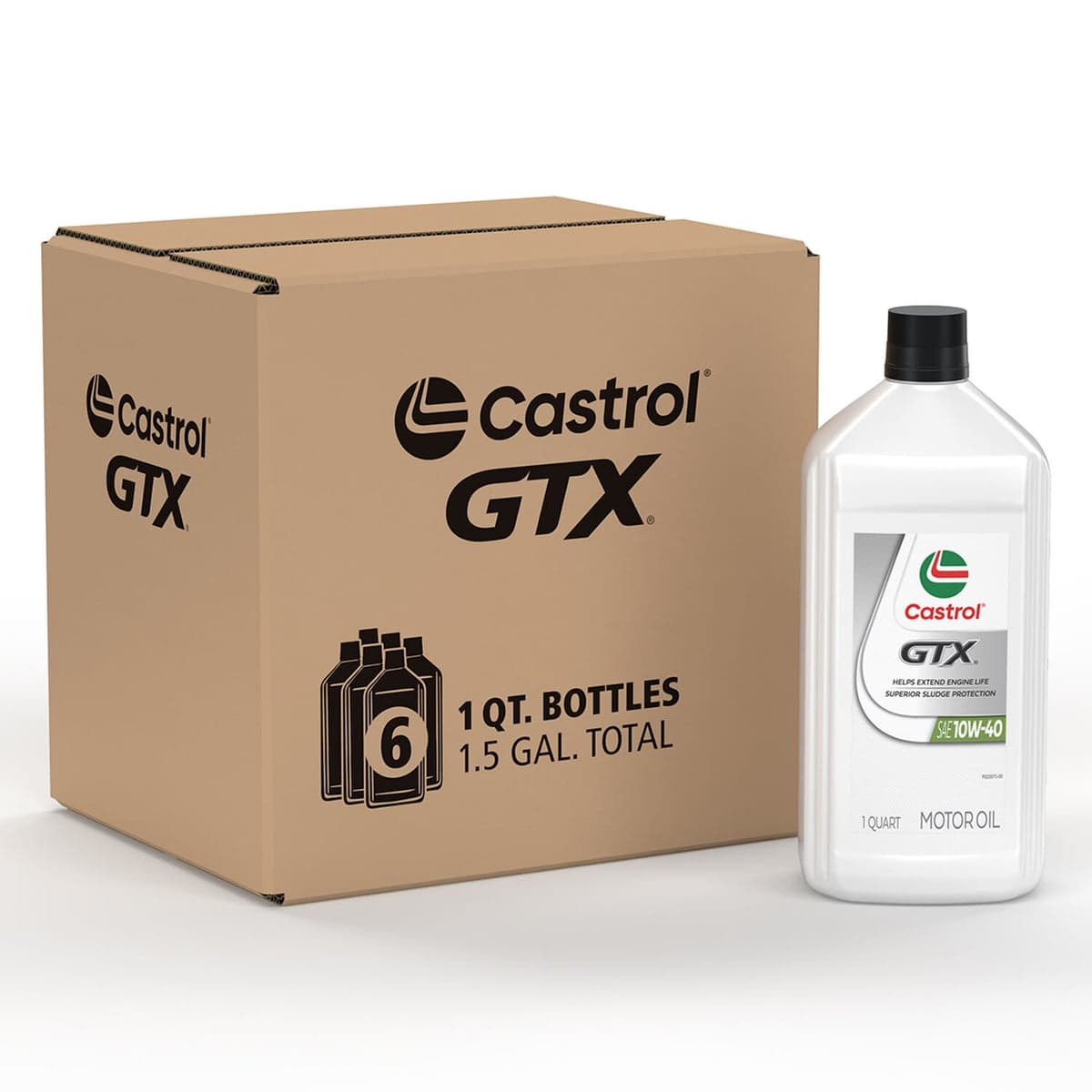
- 12/1-quart cases: 84 cases per pallet, or 1,008 individual quarts per pallet
- 6/1-quart cases: 156 to 186 cases per pallet, depending on the bottler and stack configuration
- Five-gallon pails: 36 pails per pallet standard; up to 48 per pallet with a tighter arrangement
- 55-gallon drums: 4 per pallet
- 275-gallon totes (IBC): 1 per pallet; the tote base footprint is approximately 48 x 40 inches, matching the standard pallet
These are the inputs for every container load calculation. Drums and totes are typically floor-loaded rather than palletized for a full container, so their pallet numbers matter most for mixed or partial loads.
How Many Pallets Fit in a 20-Ft Container?
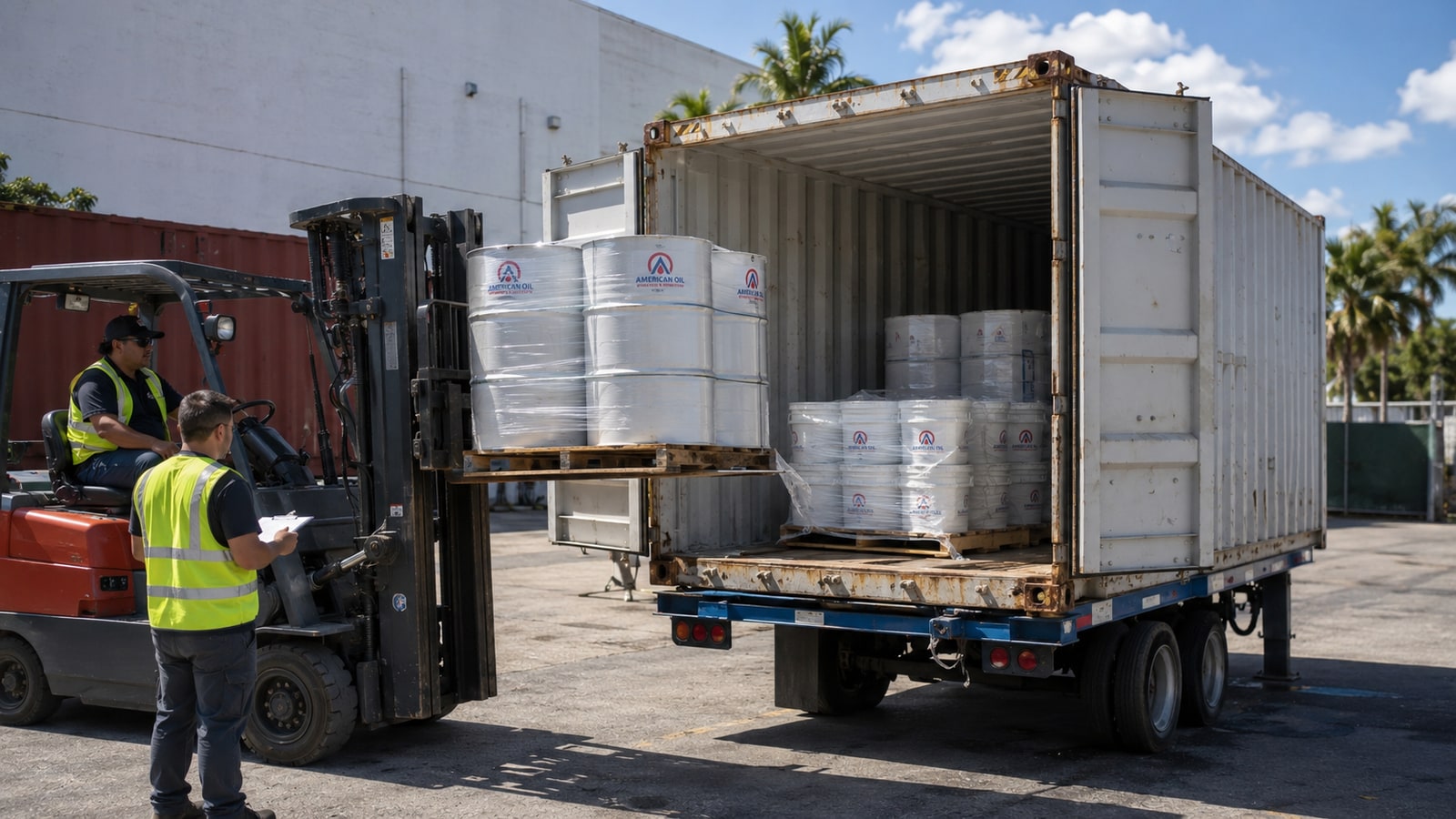
A standard 20-ft ISO container accepts 9 to 10 standard 48 x 40-inch pallets in a single-depth floor-to-ceiling load. Ten pallets is the physical maximum; nine is the common load plan when you need clearance to wrap or strap (iContainers; ConexWest). Running the pallet numbers through:
- 10 pallets of 12/1-quart cases at 84 per pallet: 840 cases, or 10,080 individual quarts
- 10 pallets of five-gallon pails at 36 standard: 360 pails, carrying 1,800 gallons
- 10 pallets of five-gallon pails at 48 maximum: 480 pails, carrying 2,400 gallons
- 9 pallets of drums at 4 per pallet: 36 palletized drums
For drums and totes, most Caribbean and Latin American export buyers floor-load rather than palletize, and this changes the count significantly. A 20-ft container floor-loaded with 55-gallon drums holds approximately 74 drums, with 80 as the physical maximum before the door closes, for a total of roughly 4,070 gallons. Sixteen 275-gallon totes fit in the same floor-loaded container, for 4,400 gallons total. For the full pallet and container spec table, see the export hub.
Why Does a Motor Oil Load Hit the Weight Limit Before It Runs Out of Space?
The short answer: oil is heavy. Motor oil weighs 7.2 to 7.4 pounds per gallon, making it one of the denser liquid cargoes in common export shipping. A full 55-gallon drum holds approximately 396 to 407 pounds of net product (7.2 to 7.4 lb/gal × 55 gal); with a standard drum, the gross weight runs approximately 434 to 451 pounds (BarrelWarmer).
The gap between the sea rating and the road limit is where the weight problem lives. A 20-ft ISO container is rated for approximately 47,900 pounds of cargo for ocean transport (ConexWest). Once that container is on a US road chassis, the effective cargo ceiling drops to roughly 38,000 pounds on a standard chassis or 42,000 to 44,000 pounds on a tri-axle configuration (Technogroup; ACL Cargo). At 80 drums, the motor oil cargo reaches approximately 34,700 to 36,100 pounds, putting it at 91 to 95 percent of the standard road cargo ceiling. Seventy-four drums is the practical load plan that preserves clearance for weight variation at the scale and keeps the shipment inside that ceiling.
The planning rule: you are buying weight capacity, not cubic footage. A palletized load of quart cases has weight headroom to spare; a drum or tote load fills weight before it fills the container. This is also why a mixed container, combining lighter packaged goods with heavier drums, can sometimes carry more total product value than a single-format load.
55-Gallon Drum or 275-Gallon Tote for a 20-Ft Export Container?
Both formats floor-load in a 20-ft container. The decision comes down to handling equipment at the destination and the size of the draw.
Volume: one 275-gallon tote carries the equivalent of five 55-gallon drums in one unit. Sixteen totes in a container total 4,400 gallons; 74 drums total roughly 4,070 gallons. Totes pack slightly more product into the same container.
Handling: a tote requires a forklift at both pickup and the receiving dock. A drum can be hand-rolled off a truck, moved with a drum dolly, and dispensed on site without lifting equipment. If the destination facility does not have a forklift, drums are the practical choice.
Resale flexibility: a 55-gallon drum is easier to split into smaller customer portions on arrival. A tote feeds a single draw point and requires transfer or a pump system to portion out. For resellers who distribute to multiple accounts from a single shipment, drums are usually the more flexible format.
Per-gallon packaging cost: a single tote unit typically has a lower per-gallon packaging cost than five individual drums, though the actual difference depends on the product and brand.
For your first export order with us, drums tend to be the lower-barrier starting point: no forklift requirement, portable, and easy to portion if needed. For established buyers with forklift infrastructure who draw from a fixed facility, totes reduce handling steps on both ends of the shipment.
Place Your Export Container Order with American Oil
We export motor oil, gear oil, DEF, coolant, and ATF to 31 countries on EXW Hialeah, FL terms, with a $1,250 minimum export order. To confirm how many drums, totes, or pallets of cases your order fills in a container, request a quote at aoilw.com/quote: give us your grades, formats, and quantities and we will send a proforma invoice with the full packing details. Customers in the Dominican Republic and across the Caribbean typically start with a mixed LCL load to test which grades move fastest, then shift the repeating SKUs to a full 20-ft container once they know their velocity.
Sources
- ACDelco truckload product specifications (case and drum pallet counts). https://delcoline.com/wp-content/uploads/2017/02/OIL-ATF-FLUIDS.pdf
- Golden Eagle Distributors, motor oil quart case product data (84 per pallet). https://goldeneagledistributors.com/product/generic-motor-oil-quarts-12-quarts-case/
- PLC Corp, motor oil 6/1-qt pallet data (182 cases, range reference). https://theplccorp.com/products/4-seasons-motor-oil-10w30-bulk-pallet-182-cases
- PailHQ, 5-gallon pail pallet quantity guide (36 standard, 48 max). https://pailhq.com/blog/5-gallon-pail-pallet-quantity-guide
- Repackify, IBC tote dimensions and sizes (footprint; tare ~132 lb). https://www.repackify.com/blog/ibc-tote-dimensions-and-sizes
- iContainers, how many pallets fit in a container (9-10 per 20-ft). https://www.icontainers.com/help/how-many-pallets-fit-in-a-container/
- ConexWest, pallets in a 20-ft container and container dimensions guide (rated 47,900 lb sea cargo). https://www.conexwest.com/blog/how-many-pallets-fit-20ft-container; https://www.conexwest.com/blog/shipping-container-dimensions-size-guide-20ft-and-40ft-containers
- BarrelWarmer, weight of a 55-gallon drum of oil (434-451 lb gross; density 7.2-7.4 lb/gal derived from 396-407 lb net ÷ 55 gal). https://barrelwarmer.com/blogs/news/tipping-the-scales-the-weight-of-a-55-gallon-drum-of-oil
- Technogroup, US road weight limits table (~38,000 lb standard; 42,000-44,000 lb tri-axle). https://www.technogroupusa.com/brochures/US_Road_weight_limits_table.pdf
- ACL Cargo, payload guidelines. https://www.aclcargo.com/shipping-info/payload-guidelines/
- InterlogUSA, liquid shipping options (floor-loaded drum counts). https://www.interlogusa.com/answers/blog/quit-wasting-money-on-liquid-shipments-know-your-liquid-shipping-options/
- Alken-Murray, ocean container guide (drum load per 20-ft). https://www.alken-murray.com/OceanContainer.pdf
- Ariyan Corp, IBC tote standard specification (16 per 20-ft container). https://www.ariyancorp.com/wp-content/uploads/2022/10/Standard-Specification-of-IBC-TOTE.pdf
- mContainer, IBC totes vs 55-gallon drums comparison (one tote replaces 5-6 drums). https://mcontainer.com/ibcs-and-55-gallon-drums-a-comparison/