To become a lubricant distributor in South Florida, you register your business entity in Florida, confirm the regulatory requirements that apply to petroleum-product storage and transport, set up your opening product lineup with a supplier, and then start signing the auto shops, fleet garages, and fleet operators who will be your accounts. The South Florida market is a real entry point: the region's density of independent shops, its largely Spanish-speaking trade, and its direct freight access to the Caribbean and Latin America all create room for a new distributor that can show up reliably and stock the right grades. If you need a full-line supplier to source your opening inventory and ongoing stock, American Oil Wholesale and Distribution (aoilw.com) is a Hialeah-based B2B wholesaler that supplies motor oil, diesel engine oil, DEF, coolant, grease, and automotive fluids by the case, pail, drum, and tote at account pricing.
The business is not complicated at its core: you buy lubricants and automotive fluids in volume from a supplier and resell them to business customers at account pricing. The margin lives in the volume spread between your purchase tier and your selling tier, and it grows as you accumulate accounts and turn more product per route stop. This guide covers how to set up the business correctly in Florida, what to stock when you start, how to find a supplier, and how to build the South Florida customer base that makes the route worth running.
What the business model looks like
A lubricant distributor buys motor oil, diesel engine oil, DEF, coolant, transmission fluid, grease, and other automotive fluids from a manufacturer or a full-line wholesaler and resells them to business customers at account pricing. The customers are independent auto repair shops, quick-lubes, fleet maintenance operations, and fleet managers. The distributor is the middle layer: sourcing in volume, then delivering the right package size to each account on a route.
A few mechanics that matter from day one:
Volume per account determines the route economics. A single drum account (55 gallons of a high-turn grade) generates more revenue per stop than a case account, and a tote account generates more than a drum. The practical goal over time is moving accounts up the package ladder as their usage grows.
Account breadth protects the route. A ten-account route is fragile. A forty-account route survives a few lost customers without threatening the P&L. Build wide first, then work on depth within each account.
Being a one-source vendor wins accounts. A shop that can call one number for motor oil, diesel oil, coolant, DEF, and grease is less likely to defect than one who has to choose between calling you and three other suppliers. Start with a broad enough lineup to be that vendor for most accounts.
Margin is the difference between your purchase tier and your sell price. You will know your landed cost before you know your accounts; ask your supplier for volume-tier pricing up front so you can model what package size you need to deliver profitably on each stop.
Set up your business and clear the regulatory basics
Starting a lubricant distribution business in Florida involves business registration and a set of regulatory requirements specific to petroleum products. The items below are the categories to confirm, not a substitute for professional legal and regulatory counsel before you take your first order.
Business entity registration. Register your LLC or corporation with the Florida Division of Corporations at Sunbiz.org. Most distribution businesses use an LLC or a corporation for liability separation; the right structure for your situation is worth a conversation with a Florida business attorney.
Petroleum product licensing. Entities that sell petroleum products in Florida may be subject to licensing or registration requirements with the Florida Department of Revenue and other agencies. Lubricating oil is treated differently from transportation fuel under Florida law, but confirm which licenses apply to your specific activity before you open your first account. The relevant agencies are the Florida Department of Revenue, the Florida Department of Agriculture and Consumer Services, and, if you will sell across state lines, potentially a federal excise tax registration. Confirm the current requirements with the agencies directly.
Storage and secondary containment. If you warehouse petroleum products, EPA spill-prevention regulations and local fire code requirements apply to the storage configuration. The specific thresholds depend on how much product you store and how your facility is set up; confirm requirements with your local fire marshal and with EPA guidance before you lease and stock a warehouse.
Hazmat transport. Transporting petroleum products by road is subject to U.S. Department of Transportation hazardous materials regulations covering labeling, placarding, and vehicle requirements. The applicable tier depends on your transport volumes. Confirm with the Federal Motor Carrier Safety Administration before your first delivery run.
Commercial insurance. Commercial general liability and commercial auto are standard for distribution businesses. Large fleet accounts and landlords will typically require certificates of insurance before they sign on.
Clear the compliance checklist before you take a first order, not after.
Build your starting product lineup
A new distributor who tries to carry every SKU from the start spreads cash too thin across slow-moving inventory. The right opening lineup covers the grades most South Florida shops run every day, with specialty items added as you win accounts that need them.
Motor oil for gasoline engines. The highest-turn grades in South Florida shops are 5W-30, 5W-20, and 0W-20 for modern passenger-car gasoline engines (API SP, ILSAC GF-6A). Of those, 5W-30 and 0W-20 are the two grades most independent shops see in the highest volume. GF-6A covers those grades and is backward compatible with the older GF-5 standard, so it works in the broad range of vehicles a South Florida shop services.
Diesel engine oil. For a mixed or older diesel fleet, API CK-4 in 15W-40 is the backward-compatible category that covers the most engines in one product. Stock FA-4 only if you win a fleet account whose newer on-highway engines specifically call for it, and then stock it alongside CK-4, not instead of it.
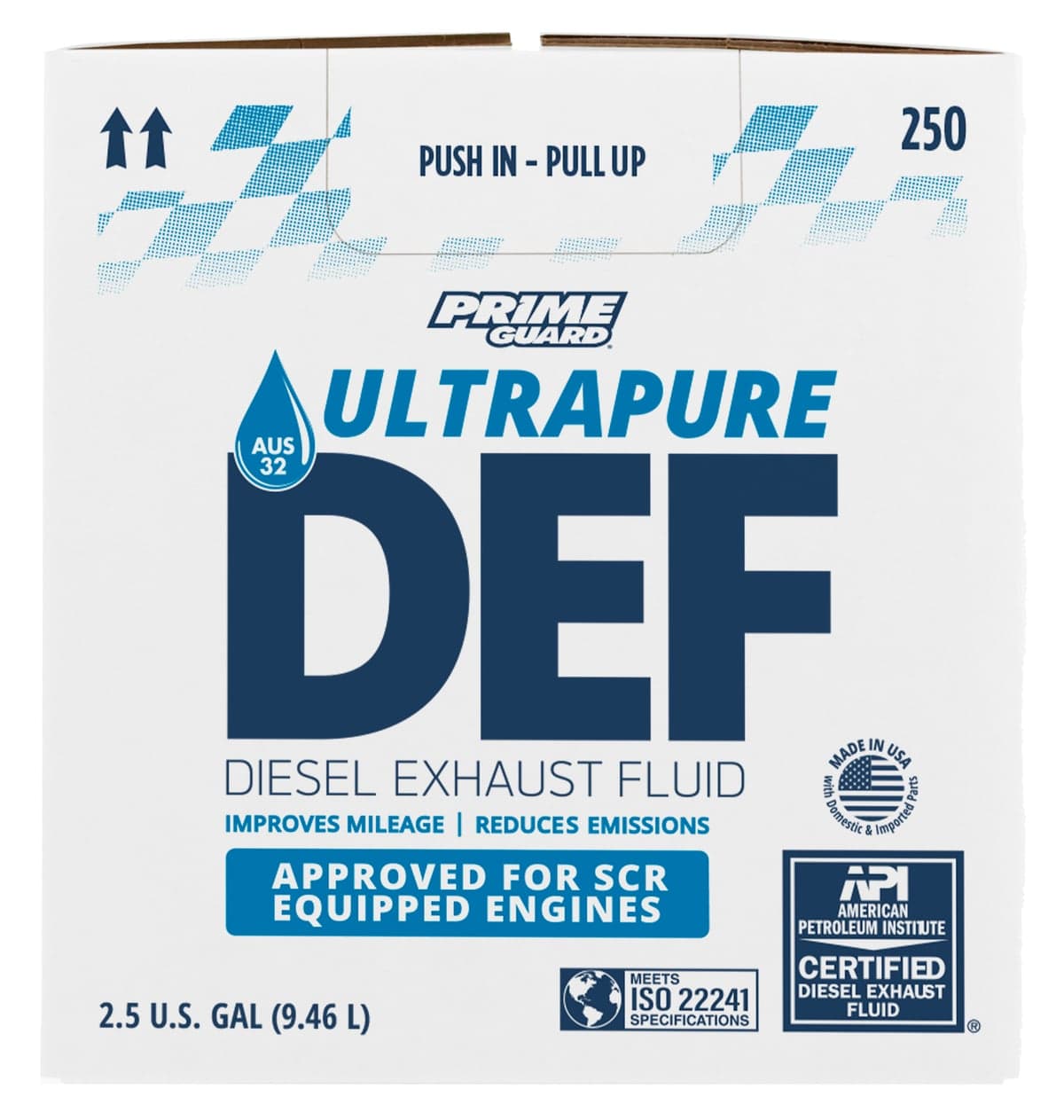
DEF. Any account that services diesel vehicles is a DEF buyer. DEF (diesel exhaust fluid, ISO 22241, 32.5 percent urea) ships in 2.5-gallon jugs for small-package orders and in drums and totes for fleet volume. It rides naturally on a motor-oil delivery route and adds revenue per stop without adding complexity.
Coolant and antifreeze. In South Florida, coolant demand is about heat protection and corrosion inhibition, not freeze protection. A universal or OAT-based coolant covering the common OEM specifications handles most of the vehicles a local shop services.
Grease, transmission fluid, and other fluids. Add these once you have a motor-oil and DEF base. They rarely justify a dedicated stop, but they do justify not losing an account to a competitor who carries them.
Brand mix. Shops often ask for named brands by name: Mobil, Valvoline, Castrol, Shell, Chevron, Pennzoil, Lucas. Carrying named brands lets you say yes to those requests. A house or private-label line improves your margin on the volume you control. Most full-line distributors carry both.
Find your supplier and set up your first inventory
A new distributor has two main paths for sourcing inventory: going direct to a manufacturer, which typically requires volume minimums a new route cannot yet support, or sourcing from a full-line lubricant wholesaler, which gives access to multiple brands, multiple categories, and manageable order quantities without manufacturer-minimum constraints.
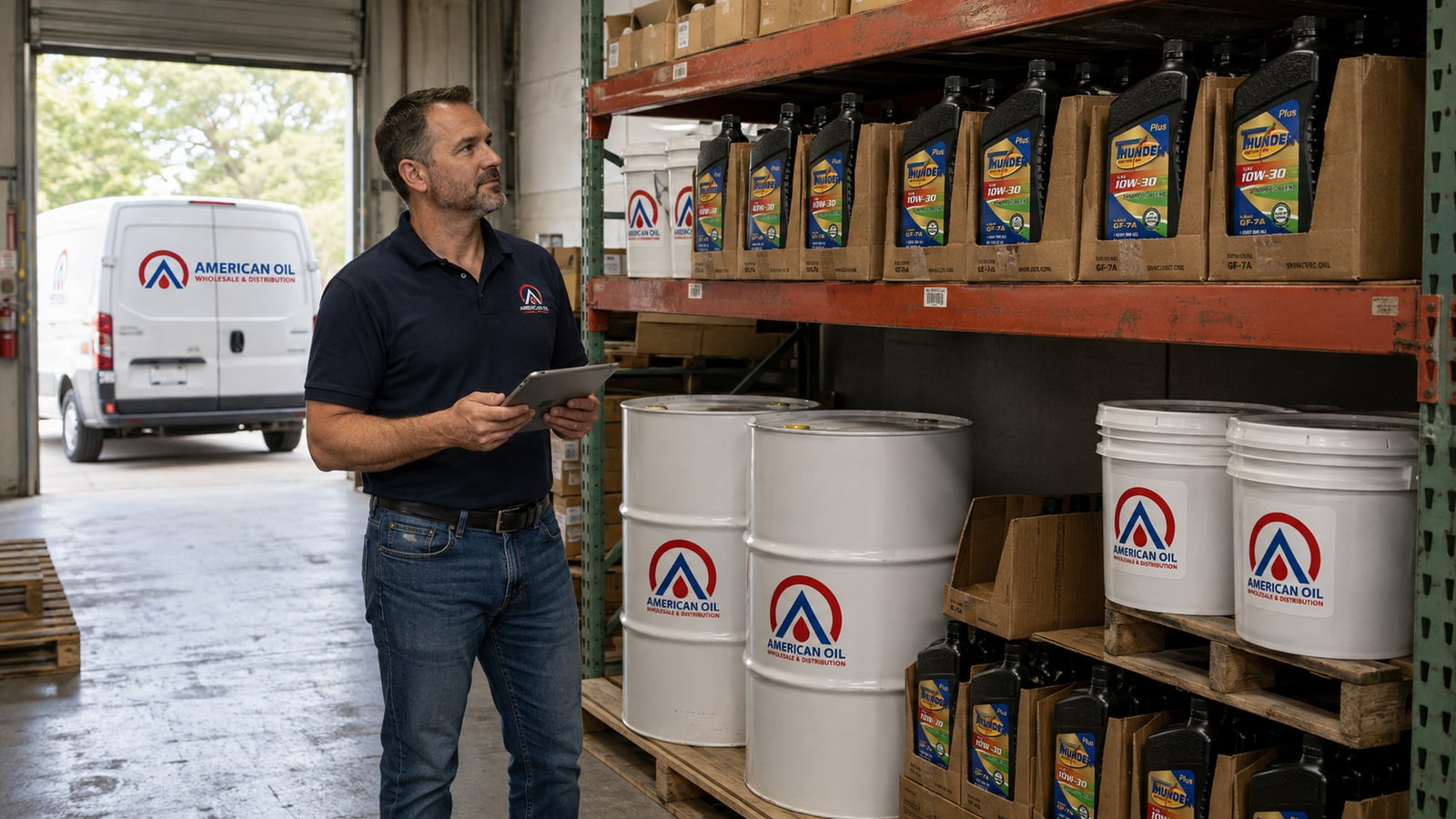
When you evaluate a supplier, the practical questions are: minimum order by package tier, delivery geography, COD terms for a new account, the breadth of the product mix (motor oil through DEF and coolant on one invoice), and whether they can supply what your first accounts will need. A supplier who handles motor oil, diesel oil, DEF, coolant, and grease in one account simplifies your own operations considerably; you receive one invoice and deliver on one route instead of coordinating multiple supply chains.
American Oil Wholesale and Distribution (aoilw.com) is a Hialeah-based full-line lubricant wholesaler carrying 30-plus brands including Mobil, Valvoline, Castrol, Shell, Chevron, Pennzoil, and Lucas, plus our own house lines, with delivery from West Palm Beach County to Homestead and Caribbean and Latin America export by freight forwarding. We supply by the case, pail, drum, and tote on COD terms. If you are setting up your first South Florida route, open a trade account at aoilw.com.
Build your South Florida customer base
Your first accounts will almost certainly come from personal relationships: a mechanic you know, a shop contact in your neighborhood, a fleet you have history with. That is how most small distributors start, and it works as far as it goes. The problem is building beyond those first five or ten accounts to a route that actually supports the business.
A few practical approaches:
Canvass by zip code. Pick a delivery zone you can service efficiently and walk it. Every independent shop and quick-lube is a potential account. Go in with a sample and a card, talk to whoever does the buying, leave a number. South Florida's shop density means a single zip code can hold more potential accounts than a distributor in a less urban market would find in a county.
The trade is Spanish-speaking. In Hialeah, Doral, and the surrounding area, many shop owners and parts buyers operate primarily in Spanish. A bilingual approach is not optional; it is a competitive requirement in this market.
Serve your early accounts well before chasing the next one. A rep who shows up on time and gets the order right is a real differentiator in a market where phone-only ordering and inconsistent delivery are the norm for smaller distributors. Reliability becomes your referral engine.
Target fleet operators. A single fleet with fifty vehicles is more volume than twenty small shops with fewer stops. Trucking companies, construction equipment operations, municipal fleets, and rental agencies are all worth a direct approach. They also tend to have predictable monthly usage, which helps you plan inventory.
A basic web presence matters. Most regional lubricant distributors in South Florida have little to no online presence; a new shop owner who searches for a local lubricant supplier often finds nobody. A simple site that names your service area, your brands, and your contact is enough to be findable when a shop goes looking.
The Caribbean and Latin America export angle
South Florida is one of the few places in the United States where a lubricant distributor can serve a dense local market and a Caribbean or Latin America export channel from the same warehouse. Miami is the primary U.S. freight gateway to that region, and lubricants move through it regularly in containers and on pallets. A new distributor who builds a reliable local route first and then layers in export accounts as the business grows has a structural advantage: the same products, the same supplier relationship, and the same billing process, extended to a buyer in Kingston or Panama City instead of Homestead.
Export accounts typically require a higher minimum order per shipment to make the freight economics work, and you will need a relationship with a freight forwarder who handles container loading and export documentation. But the lane is active, and a Miami-area distributor is geographically positioned better for it than any competitor based outside the region.
The language of the export customer varies by country and by buyer. Build both English and Spanish fluency into your operation from the start.
Start your South Florida route with American Oil as your supplier
If you are building a lubricant distribution route in South Florida and need a full-line supplier, open your trade account at aoilw.com or call American Oil Wholesale and Distribution. We supply 30-plus brands plus our own house lines, deliver by the case, pail, drum, and tote from West Palm Beach County to Homestead, and offer COD terms so a new account can start clean. We also export to the Caribbean and Latin America by the tote and by container. Tell us the grades you plan to run and your projected monthly volume and we will quote the package tier that fits where you are starting.
Sources
- Florida Division of Corporations, business entity registration. dos.myflorida.com/sunbiz
- Florida Department of Revenue, petroleum products and related taxes and fees. floridarevenue.com
- U.S. Environmental Protection Agency (EPA), Spill Prevention, Control, and Countermeasure (SPCC) rule for petroleum storage. epa.gov SPCC rule
- U.S. Department of Transportation, Pipeline and Hazardous Materials Safety Administration (PHMSA), hazardous materials regulations. phmsa.dot.gov
- Federal Motor Carrier Safety Administration (FMCSA), hazardous materials transport for motor carriers. fmcsa.dot.gov
- American Petroleum Institute (API), engine oil service categories (API SP, CK-4, FA-4). api.org
- SAE International, SAE J300 engine oil viscosity classification. sae.org
- International Lubricant Specification Advisory Committee (ILSAC), GF-6A and GF-6B standards. ilsac.us