Contamination from water, particulate, and cross-product mixing degrades lubricants in storage before they ever reach an engine, and South Florida's heat makes proper storage more critical than in cooler climates. A drum or tote of oil represents a substantial share of your supply budget, and how you store it determines whether the product that reaches your bay is still the product you paid for. We deliver lubricants, DEF, and fluids by the case, pail, drum, and tote to auto shops and fleets across South Florida, and here is how to make that supply hold its value on your shelf.
Buying in volume earns the cost savings. Proper storage is what keeps them.
Why storage conditions matter
Lubricants are blended to exact API service categories, SAE viscosity grades, and OEM specifications, and contamination or heat can push a stored product out of that spec before it is ever used. The oil in a sealed drum meets its marks because its base oil and additive package were combined under controlled conditions. Contamination introduces materials that were never part of that formulation. Heat accelerates oxidation and additive depletion, the same degradation processes the oil resists inside a running engine.
Four contamination pathways account for most storage problems in a shop or fleet garage:
- Water. Water contamination causes emulsification, promotes rust and corrosion inside the components the oil is meant to protect, and in some cases encourages microbial growth in hydraulic systems. Water enters through a damaged or missing drum bung, through condensation inside a partly-emptied container, or through dispensing equipment that has contacted coolant or water.
- Particulate. Dirt, metal chips, and airborne grit enter an open or improperly sealed container. Unlike dissolved contamination, particulate does not break down inside the oil; it circulates through the engine and accelerates wear on every surface it reaches.
- Cross-product mixing. Even a small amount of the wrong fluid added to a container can alter the additive package enough to move the product out of its rated spec. A few quarts of the wrong viscosity changes the effective grade; gear oil introduced into a motor oil drum brings sulfur-based extreme-pressure additives not designed for internal combustion engines.
- Thermal degradation. High ambient temperatures accelerate oxidative degradation and deplete the antioxidant package in lubricants held for extended periods. DEF is the most temperature-sensitive product we carry, and it gets its own section below.
How to store drums and totes correctly
Correct drum and tote storage comes down to four controls: keep containers sealed, keep them out of the heat, keep them off bare concrete, and keep every container labeled.
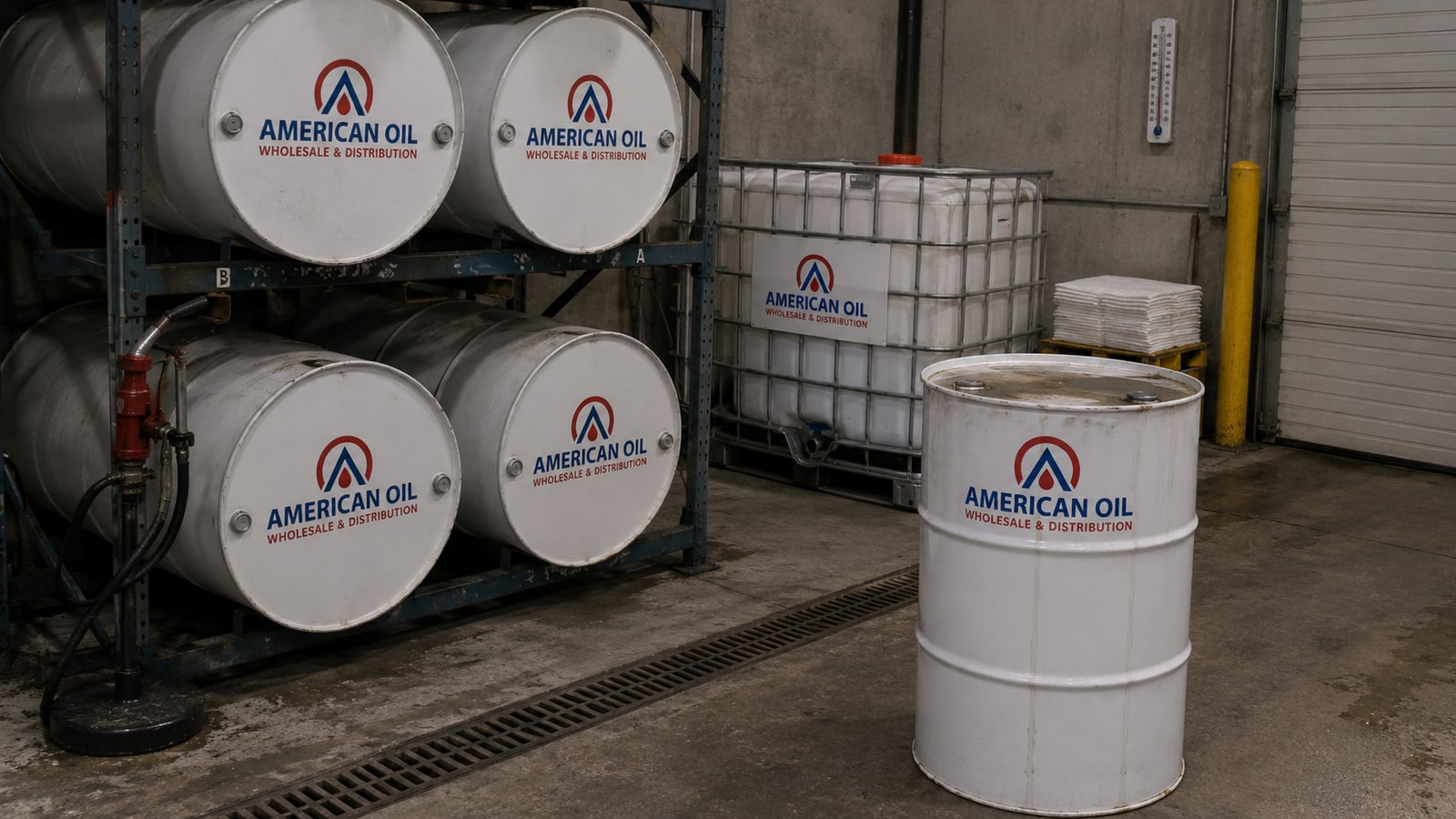
Orientation and sealing. For long-term storage, a 55-gallon drum stored horizontally with its two bungs positioned at three o'clock and nine o'clock keeps both bung openings submerged in oil. This preserves the bung gasket seal and prevents the gasket from drying out and allowing air or moisture ingress. For short-term or space-constrained storage, upright with bungs sealed tight is also standard practice. Whatever the orientation, the rule is the same: reseal immediately after every dispensing operation. Never leave a drum or tote open.
Temperature. Motor oil, ATF, hydraulic fluid, and most lubricants tolerate a broad storage temperature range, but sustained high temperatures accelerate additive depletion and shorten useful shelf life. Store lubricants away from direct sunlight, boilers, and engine bay exhaust areas. Miami-Dade's average July high temperature is 90°F (32°C) per NOAA historical climate data, and an unventilated steel storage shed or outdoor enclosure in South Florida can run well above that outdoor ambient temperature on summer afternoons. Sustained high heat does not destroy a drum of motor oil overnight, but repeated exposure over weeks shortens effective shelf life.
Flooring and containment. Store drums and totes on pallets or racks that keep them off concrete. Concrete wicks moisture and accelerates rust on drum hoops and bottoms. A secondary containment tray or bermed area able to hold the volume of the largest single container in the storage area is sound operational and regulatory practice for petroleum product storage in volume.
Labeling. Every container must carry a legible product label from the time it enters your storage area until it is empty. If a label is damaged on arrival, replace it before putting the drum on the shelf. An unlabeled drum is how a cross-product contamination error happens.
DEF is the most storage-sensitive product you buy
Diesel exhaust fluid is a 32.5 percent urea solution in deionized water (ISO 22241-1), and it degrades faster than any lubricant in your storage area when conditions fall outside the spec. It is the fluid your diesel SCR systems consume to control NOx emissions. DEF storage requirements are set by ISO 22241-3, the part of the standard governing handling, transportation, and storage.
Temperature. ISO 22241-3 sets the maximum recommended long-term DEF storage temperature at 30°C (86°F); at or below 25°C (77°F) shelf life extends to 18 months. Miami-Dade's average July high of 90°F (32°C) already exceeds the 30°C ceiling during normal outdoor ambient conditions, and an unventilated enclosure will run significantly hotter. DEF stored above 30°C degrades faster: the urea breaks down to biuret and other byproducts that can damage or foul SCR catalysts. Store DEF indoors in a shaded or air-conditioned space. A rack near an interior wall away from the loading dock is a better location than a shelf near a south-facing exterior door.
Shelf life. ISO 22241-3 guarantees a minimum 12-month shelf life at storage temperatures up to 30°C (86°F); at or below 25°C (77°F) that extends to 18 months. In South Florida heat, effective shelf life is shorter. FIFO rotation is critical for DEF specifically: use the oldest jug or drum first and do not let any DEF stock sit past its printed expiration date.
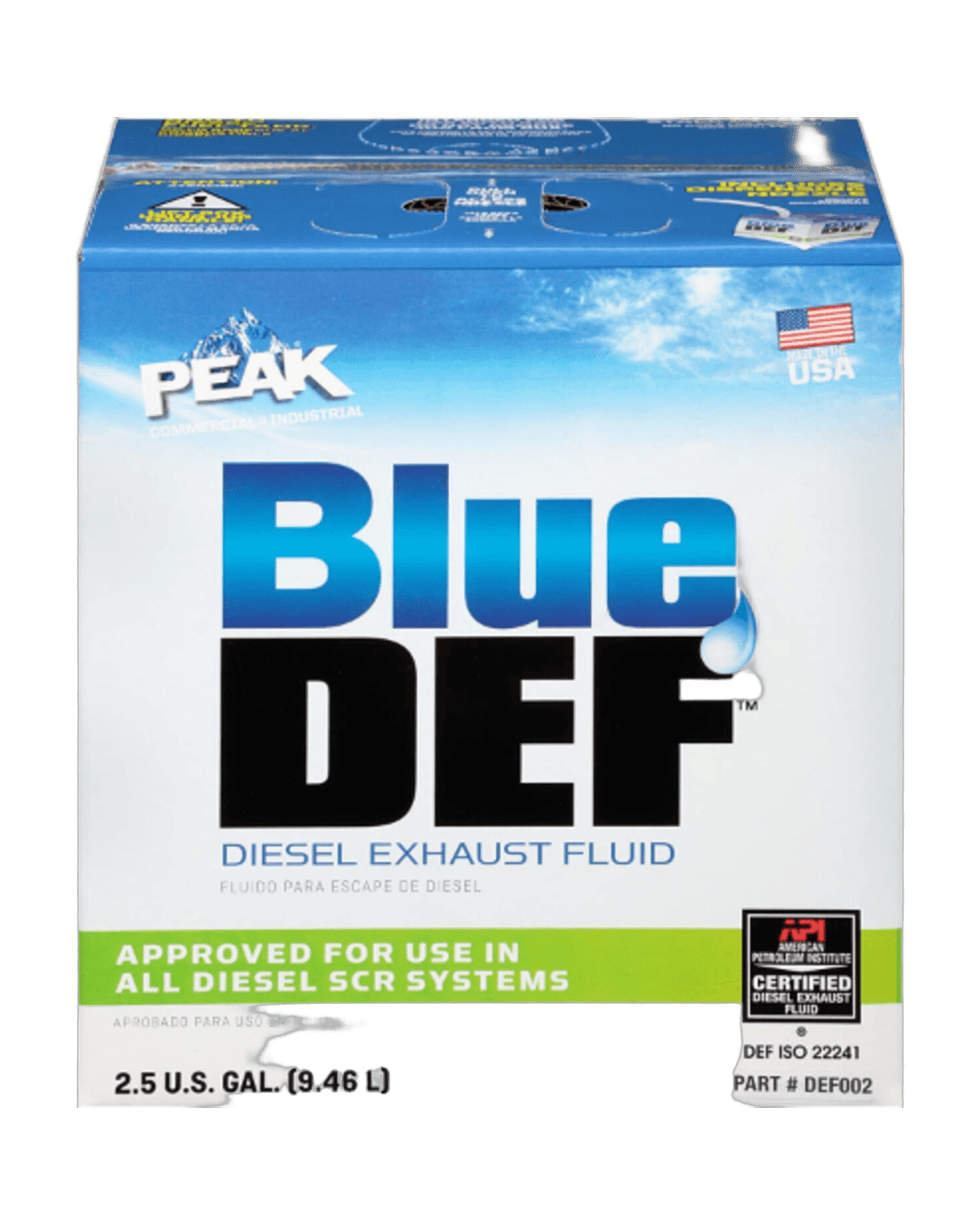
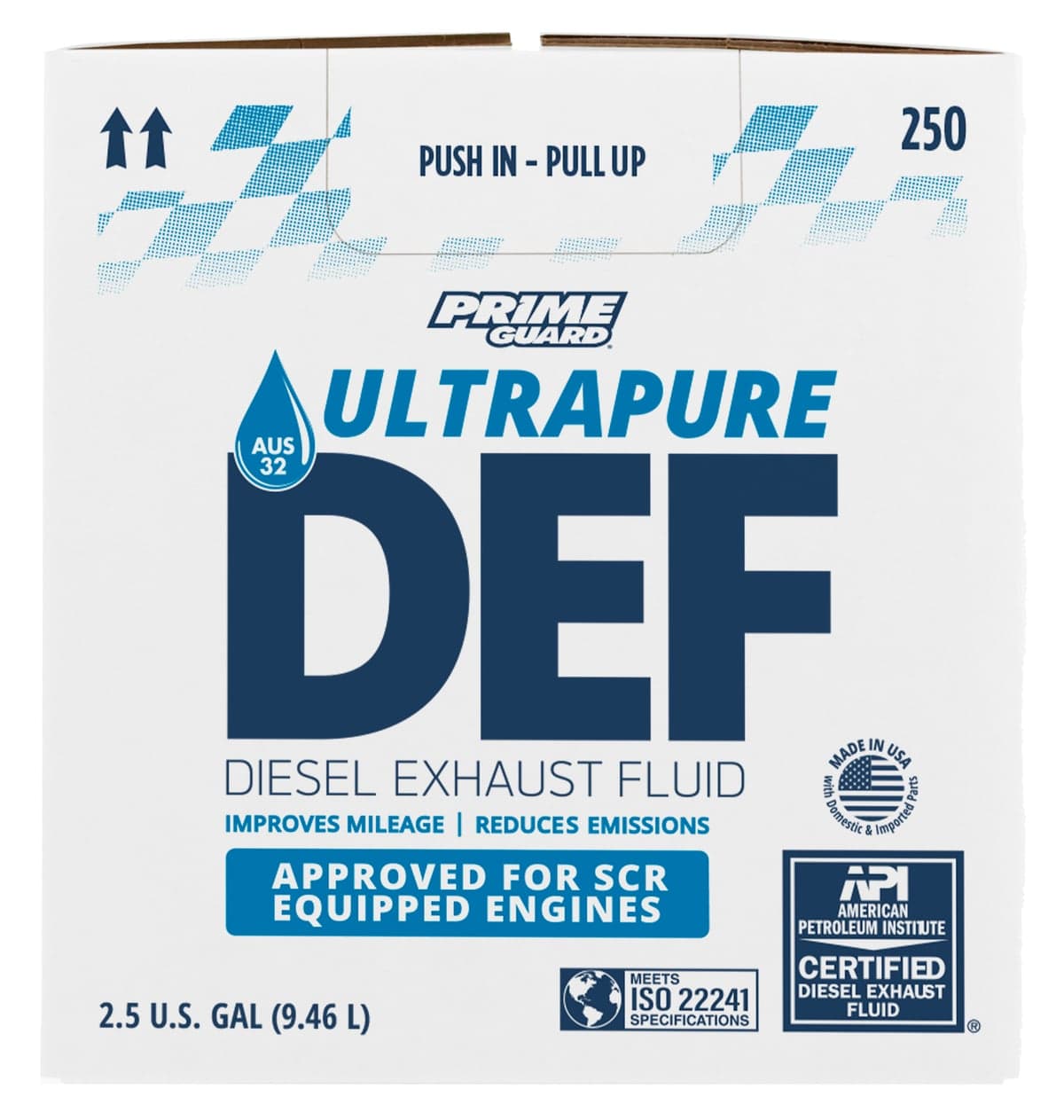
Container materials. DEF is corrosive to zinc, copper, brass, bronze, and galvanized steel (ISO 22241-3). Store and dispense DEF only in containers made of high-density polyethylene (HDPE), polypropylene, or stainless steel grade 304 or 316. Never transfer DEF into a galvanized container, a standard metal jerry can, or any container not confirmed as DEF-compatible. Metallic contamination deposits into the urea solution and can damage or destroy an SCR catalyst, which costs far more than the DEF. We carry Peak Blue Diesel Exhaust Fluid, Prime Guard Diesel Exhaust Fluid, and our own American Oil Diesel Exhaust Fluid in 2.5-gallon jugs, 55-gallon drums, and 275-gallon totes, each in packaging that meets the ISO 22241-3 material requirement.
FIFO rotation: first in, first out
FIFO is the discipline that keeps stored product inside its shelf life: new stock goes behind existing stock, and existing stock is used first. Every lubricant and fluid has a finite shelf life even in correctly stored conditions. For high-volume grades you turn every few weeks, FIFO is automatic. For specialty grades you reorder infrequently, mark the receive date on each drum when it arrives, and draw from the oldest drum first. If a drum has been in storage longer than you can reasonably expect its product to remain in spec, or if storage conditions in your area have been substandard, send it to a used-oil recycler rather than use it in service.
Dedicated dispensing equipment per product
A dispensing pump, hose, or transfer container used for two different products is a cross-contamination event waiting to happen. Each product in your storage area should have its own dedicated dispensing equipment, labeled to match the specific product it serves. A pump assigned to a 15W-40 CK-4 diesel engine oil should not be moved to the ATF drum or the hydraulic fluid tote. A DEF dispenser must be DEF-only, and its materials must meet the same HDPE or stainless requirement as the storage containers. Labeling both the container and the dispensing equipment eliminates the operator-error mixing that causes most cross-contamination events.
Signs that a product in storage may be compromised
A compromised lubricant usually announces itself through appearance, odor, or behavior during dispensing, so check incoming drums and totes on delivery and periodically during extended storage.
- Cloudiness or milky appearance. Motor oil that has turned milky or hazy has water contamination. Do not use it.
- Unusual odor. A sharp, sour, or chemical smell that does not match the product indicates contamination.
- Foam during dispensing. Lubricant that foams when pumped may contain water or a contaminating fluid.
- Discoloration. Heavily discolored oil from a factory-sealed drum suggests prior mishandling in the supply chain.
- DEF color change. DEF is clear and colorless. Yellow, green, or cloudy DEF is contaminated and should not be used in an SCR system.
If you are uncertain about a product in storage, call us before you put it in an engine or an SCR system.
Keep what you bought wholesale in top condition
The cost savings from buying by the drum or tote are real, but they depend on the oil still meeting the label spec when it reaches the bay. We deliver next day across Miami-Dade, Broward, and Palm Beach counties, from Homestead up to West Palm Beach, with a $250 minimum domestic order, and our reps can walk you through the storage requirements for any product you carry, in English or Spanish. Request a wholesale quote and stock your storage area with product that arrives in spec and stays there.