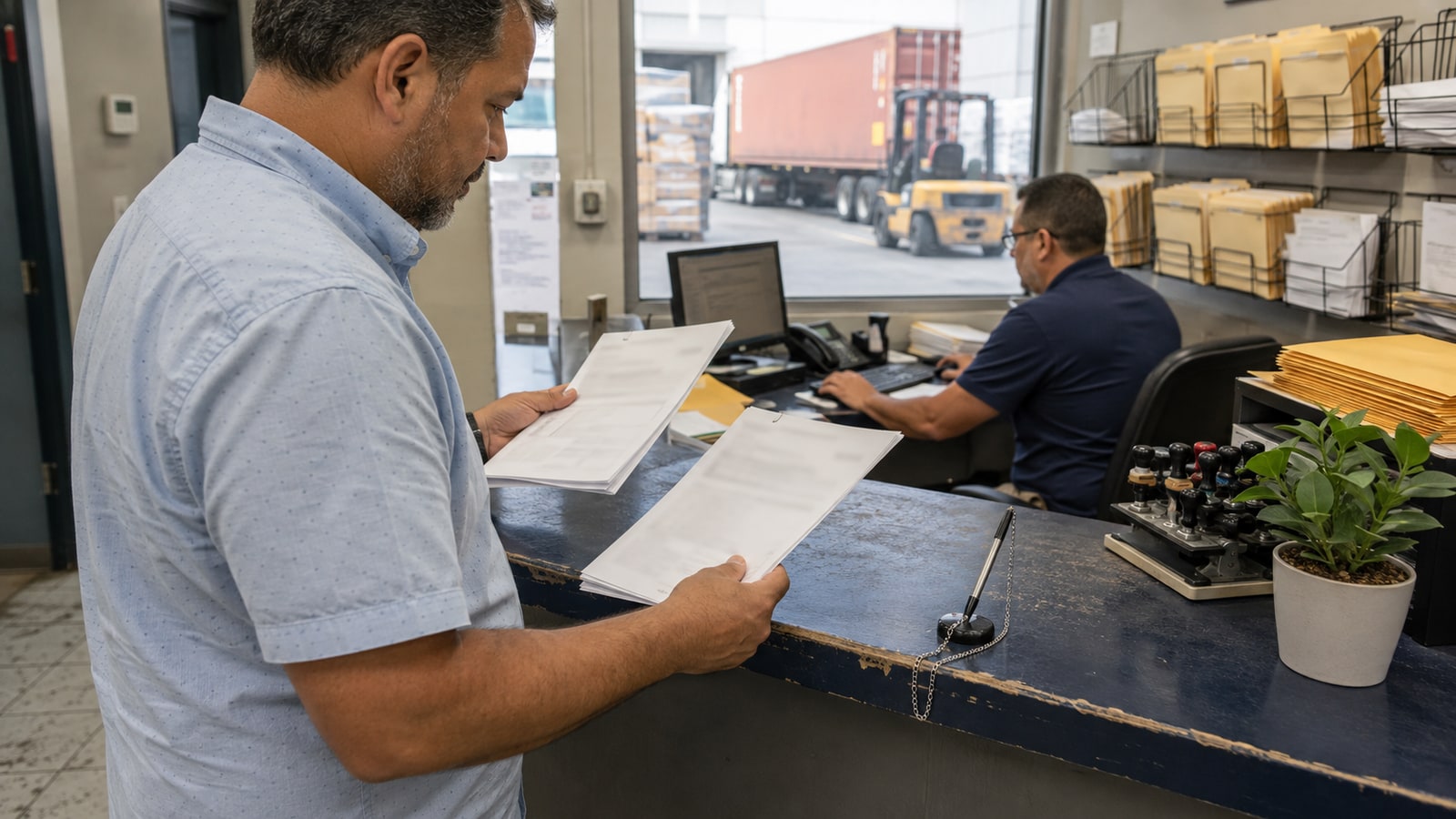
The pro forma invoice and the commercial invoice serve two different purposes in an export transaction, and they are not interchangeable. The pro forma invoice comes first: it is a preliminary quote in invoice format, issued before the shipment, used by the buyer to arrange payment or import authorization. The commercial invoice comes at or after shipment: it is the binding legal document that identifies the goods, their value, and their origin, and it is the main document customs authorities use to assess duties and clear the load.
At American Oil Wholesale and Distribution (aoilw.com), our export buyers in the Caribbean and Latin America receive both documents in sequence as part of every EXW Miami transaction. Knowing what each document is, when it is issued, and what it must contain protects you from customs holds, letter-of-credit mismatches, and duty disputes before your shipment leaves our Hialeah loading dock.
What Is a Pro Forma Invoice?
The U.S. International Trade Administration describes the pro forma invoice as "an important document used as a negotiating tool between the seller and the buyer prior to an export shipment" (ITA, Pro Forma Invoice). It functions as a quote in invoice format: the seller states the products, quantities, prices, and commercial terms so the buyer can take preparatory steps before the goods are ready.
Buyers typically use a pro forma invoice to:
- Apply for an import license at the destination country's authority
- Open a letter of credit or arrange payment in advance
- Apply for a hard-currency allocation or central bank approval in markets that require prior authorization
- Initiate pre-shipment inspection where required
A pro forma invoice is not a shipping document. It does not travel with the goods through customs and cannot substitute for a commercial invoice at the destination port. Submitting a pro forma to customs in place of a commercial invoice will result in rejection.
What Is a Commercial Invoice?
A commercial invoice is a legal document between the exporter and the buyer that clearly states the goods being sold and the amount the customer is to pay (ITA, Commercial Invoice). It is one of the main documents customs authorities use to determine duties and taxes.
For lubricant exports shipped from our Hialeah, FL warehouse, a commercial invoice should include:
- Seller's full name and address (American Oil Wholesale and Distribution, Hialeah, FL)
- Buyer's full name and address
- Invoice date and number
- Product description, grade, and quantity per line item
- Unit price and total value in a stated currency
- Country of origin (United States)
- Incoterms (EXW Miami for our standard export transactions)
- Net and gross weight and package type
- The Harmonized System (HS) code (the ITA notes that including the HS code can speed the export clearance process and may assist import clearance at the destination authority)
Lubricating oils and preparations are classified under HS Chapter 27, Heading 2710. Your customs broker determines the correct eight-digit subheading based on the product's viscosity grade and base oil type. A commercial invoice that omits the HS code or states an incorrect subheading can trigger a customs hold or a reclassification at the destination.
The Sequence in an EXW Miami Order
In a standard EXW transaction with American Oil Wholesale and Distribution, the two documents follow this sequence:
- Quote stage. You request pricing. We issue a pro forma invoice listing the products, quantities, per-unit pricing, and the Incoterm (EXW, Hialeah, FL). You use this document to open an LC, apply for an import license, or confirm the budget before committing.
- Order confirmation. You confirm the quantities and arrange freight. Your consolidator or freight forwarder schedules pickup at our Hialeah loading dock. The $1,250 minimum export order applies at this stage.
- Shipment. The goods are ready for pickup. We issue the commercial invoice for the confirmed order, along with the packing list. Under EXW terms, risk and freight responsibility transfer to you at our dock. Your freight forwarder presents the commercial invoice and packing list to customs at the destination port.
The Miami Customs District processed $144 billion in trade in 2024 (Global Miami Magazine, The State of Trade 2025), and PortMiami is one of the most active gateways for Caribbean and Latin American lubricant buyers. Getting both documents right the first time keeps your shipment moving.
See our Export Center for pallet specifications, container load guidance, and order minimums. For buyers new to EXW terms, our EXW vs. FOB guide explains how risk and freight responsibility transfer differently under each Incoterm.
What to Verify Before the Load Leaves Hialeah
Before your consolidator picks up at our dock, run this check on both documents:
Pro forma invoice:
- Product names, grades, and quantities match your intended order exactly
- Pricing and currency match what you are using for your LC or import license application
- Your company name and address are spelled exactly as they appear in your import license or LC
Commercial invoice:
- All line items match what is physically packed and reflected in the packing list
- The HS code appears for each line item and has been confirmed by your customs broker
- Country of origin states "United States"
- Invoice total matches the agreed pricing from the pro forma (document and explain any differences)
- Destination control statement is included if required
Mismatches between the pro forma and the commercial invoice are a common customs trigger. If the pro forma showed 10 drums and the commercial invoice reflects 8 because you adjusted the order before shipment, the discrepancy needs a documented explanation your customs broker can present.
Request an Export Quote from American Oil
We supply lubricants in 55-gallon drums and 275-gallon totes from our Hialeah, FL warehouse to buyers across 31 markets in the Caribbean and Latin America. For every export order, we issue a pro forma invoice with your quote and a commercial invoice with your shipment, along with the packing list and supporting product documentation. For related export documentation, see our Certificate of Origin guide.
To request a pro forma quote or open an export account, call (305) 825-2788 or write to Info@aoilw.com.